
If you’re exploring sustainable home materials, bamboo, seagrass, and recycled wood are excellent choices. Bamboo grows incredibly fast and regrows quickly after harvest, making it eco-friendly and durable. Seagrass absorbs significant CO2, helping fight climate change while supporting marine health. Recycled wood reduces deforestation and waste, offering stylish, eco-conscious options for furniture and decor. These materials not only benefit the environment but also add unique textures to your home. Keep exploring to discover how these sustainable options can transform your space.

Get travel and outdoor gear delivered free with Prime
- Fast, free delivery on millions of items
- Prime Video, Amazon Music and more included
- Member-only deals all year
Key Takeaways
- Bamboo’s rapid growth and regenerative ability make it a highly sustainable, strong, and versatile building material.
- Seagrass absorbs significant CO2, promoting climate change mitigation and supporting marine ecosystem health.
- Recycled wood reduces deforestation, minimizes waste, and offers eco-friendly options for furniture and interior design.
- Advances in material science are enhancing the durability and application of bamboo, seagrass, and recycled wood in construction.
- Incorporating these materials aligns with future building standards focused on sustainability and environmentally responsible development.
As an affiliate, we earn on qualifying purchases.
The Environmental and Growth Benefits of Bamboo, Seagrass, and Recycled Wood
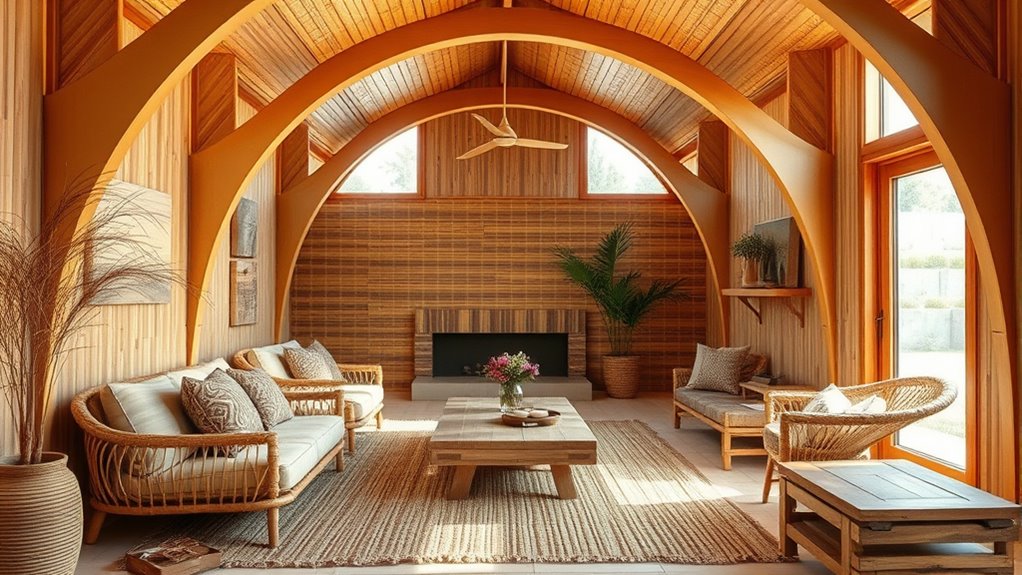
Bamboo, seagrass, and recycled wood each offer significant environmental and growth benefits that make them sustainable choices for construction and design. Bamboo is the fastest-growing plant, capable of reaching over a meter a day, and it regenerates naturally after harvesting, reducing the need for replanting. Its exceptional strength and resilience surpass traditional wood and even steel in some cases, making it highly durable. Seagrass plays a crucial role in marine ecosystems, absorbing large amounts of CO2 and helping combat climate change, though it’s not directly used as a building material. Recycled wood minimizes deforestation by repurposing existing timber, lowering carbon emissions, and reducing habitat destruction. Together, these materials support eco-friendly development and promote sustainable growth in various applications.
Practical Uses of These Materials in Modern Construction and Design
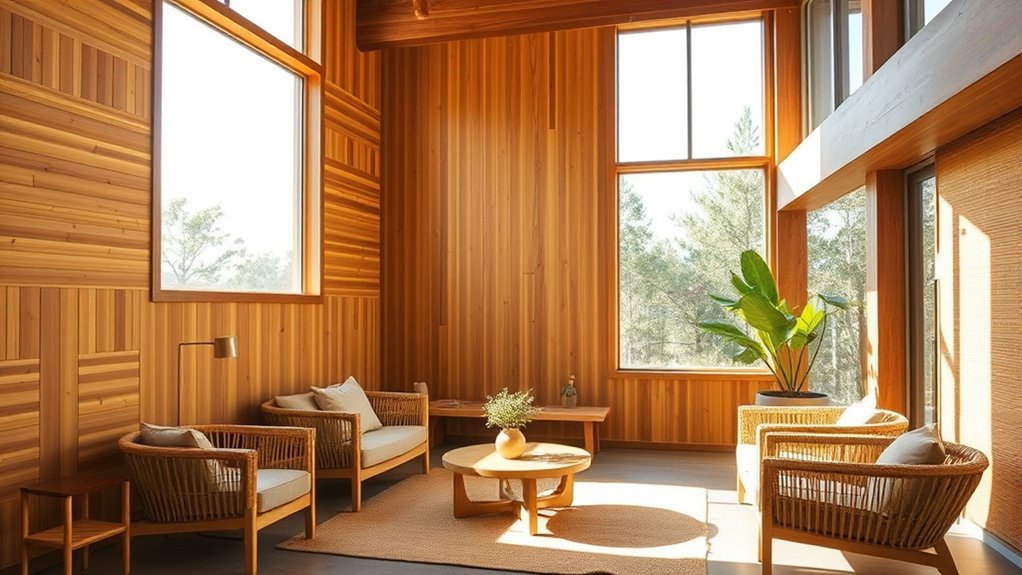
Modern construction increasingly incorporates sustainable materials to create eco-friendly and innovative designs. You can use bamboo for framing, flooring, and furniture, thanks to its high strength and quick regrowth. Its flexibility allows for creative architectural features that are both durable and environmentally responsible. Recycled wood finds its place in furniture, paneling, and decorative accents, reducing waste and adding character to your space. Its versatility and cost-effectiveness make it a popular choice for sustainable interiors. Although seagrass isn’t used structurally, its by-products can enhance insulation or serve as eco-friendly packaging. Incorporating these materials into your project not only lowers environmental impact but also adds unique textures and aesthetics, showcasing your commitment to sustainable living and innovative design solutions. Additionally, utilizing organic farming methods in the cultivation of materials like bamboo and seagrass can further enhance their sustainability credentials and reduce environmental impact.
Exploring Future Opportunities for Sustainable Building With Bamboo, Seagrass, and Recycled Wood
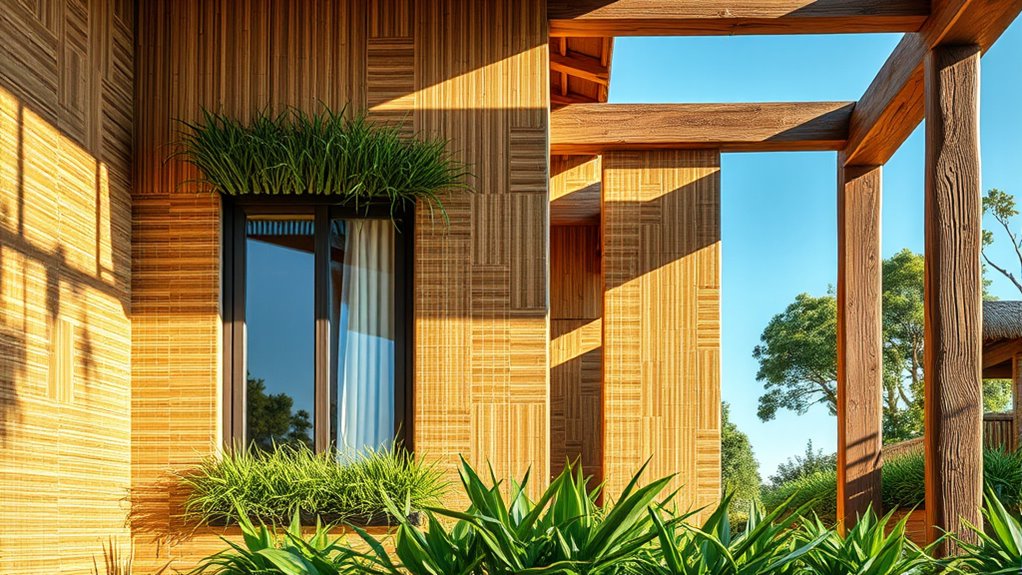
Have you considered how innovative technologies and growing environmental awareness could transform the future of sustainable building? Advances in material science now enable us to enhance bamboo, seagrass, and recycled wood’s properties, making them even more viable for construction. For example, engineered bamboo composites could improve strength and durability, expanding their use beyond traditional applications. Seagrass by-products might be developed into eco-friendly insulation or bioplastics, supporting sustainable coastal management. Recycled wood could benefit from new processing techniques, increasing its structural integrity and aesthetic appeal. Additionally, understanding local zoning regulations will be crucial for integrating these materials into mainstream construction practices. As building standards shift toward sustainability, integrating these materials will become more common. Future innovations will likely focus on combining these resources, creating hybrid materials that maximize environmental benefits, reduce costs, and improve performance—paving the way for a greener, more resilient built environment.
Frequently Asked Questions
How Do Bamboo, Seagrass, and Recycled Wood Compare in Overall Cost?
You’ll find that recycled wood is often the most cost-effective option due to its availability and lower processing costs. Bamboo can be affordable, especially in regions where it’s cultivated locally, but transportation may increase expenses. Seagrass, however, isn’t typically used as a building material, so costs vary widely based on its application. Overall, recycled wood usually offers the best balance of cost and sustainability for your projects.
Are There Any Health or Safety Concerns Using These Materials Indoors?
Ever consider if your home’s materials could impact your health? You should be aware that bamboo and recycled wood are generally safe when properly treated, but some low-quality options might emit volatile organic compounds (VOCs). Seagrass, mainly used outdoors, poses limited indoor risks. Always choose certified, non-toxic finishes and guarantee good ventilation to minimize any safety concerns with these eco-friendly materials.
What Maintenance Is Required to Ensure Durability of These Sustainable Materials?
You should regularly clean and inspect these materials to maintain their durability. For bamboo and recycled wood, keep them dry and avoid excessive moisture to prevent warping or mold. Use gentle cleaners and sealants as needed to protect against wear and pests. Seagrass by-products require minimal maintenance but should be kept clean and free of debris. Proper care extends their lifespan and keeps your home looking great.
Can These Materials Be Combined Effectively in a Single Building Project?
Yes, you can combine bamboo, seagrass, and recycled wood effectively in a building project. Use bamboo for structural elements due to its strength and quick growth, recycled wood for interior finishes, and seagrass by-products for insulation or erosion control. Just guarantee compatibility by considering each material’s properties, proper treatment, and maintenance to maximize durability and sustainability. This mix creates a resilient, eco-friendly, and innovative design.
What Certifications or Standards Support the Use of These Sustainable Building Materials?
You should look for certifications like LEED, WELL, and BREEAM, which support sustainable building practices. These standards recognize the use of eco-friendly materials such as bamboo, recycled wood, and other renewable resources. When choosing materials, guarantee they meet regional building codes and standards that verify their environmental impact, durability, and safety. Certifications help validate your project’s sustainability and can enhance its market value and environmental performance.
Conclusion
By choosing bamboo, seagrass, and recycled wood, you’re shaping a greener future—like planting seeds that grow into a lush, sustainable forest. These materials aren’t just eco-friendly; they’re versatile and inspiring for modern construction. Embracing them means you’re part of a movement that values innovation and conservation. So, let these natural options be the foundation for building a world where beauty and sustainability grow hand in hand.
Halloween Picks
halloween
As an affiliate, we earn on qualifying purchases.