
Upcycling furniture lets you transform old or discarded pieces into unique, eco-friendly treasures that boost your space and help the environment. By using sustainable materials, eco-friendly paints, and creative techniques, you can give furniture new life while reducing waste and conserving resources. Upcycling also supports local communities and offers affordable, personalized options. Want to discover practical steps and inspiring ideas to get started? Keep exploring to learn how you can turn antiques into beautiful, sustainable furniture.

Get travel and outdoor gear delivered free with Prime
- Fast, free delivery on millions of items
- Prime Video, Amazon Music and more included
- Member-only deals all year
Key Takeaways
- Assess furniture condition thoroughly to determine necessary repairs and suitable upcycling techniques.
- Use eco-friendly paints and finishes, such as natural waxes or plant-based oils, for sustainable and durable results.
- Enhance pieces with creative hardware upgrades and personalized touches like stencils or decoupage.
- Incorporate regional techniques and unconventional materials to add authenticity and uniqueness.
- Showcase finished upcycled furniture through quality photography and social media to attract buyers and build a brand.
Benefits of Upcycling for the Environment and Community
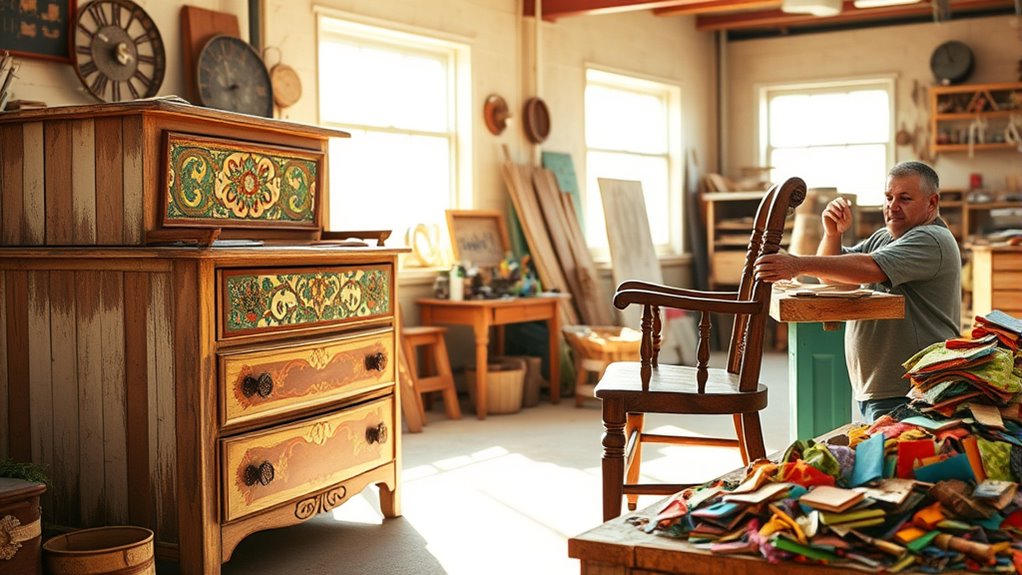
Upcycling furniture offers significant benefits for both the environment and local communities. By repurposing old pieces, you help reduce landfill waste—over 22 million furniture items are discarded annually in the UK alone. This practice cuts down on the demand for new resources, preserving natural materials and decreasing environmental strain. Upcycling also minimizes carbon emissions through local sourcing and craftsmanship, creating a smaller ecological footprint. For communities, it fosters local employment and supports small businesses focused on creative restoration. Additionally, upcycled furniture often becomes a unique, affordable option, making sustainable choices accessible. When you choose to upcycle, you’re not just giving furniture a second life—you actively contribute to waste reduction, resource conservation, and community resilience. Incorporating cultural and regional techniques into upcycling projects can further enhance their uniqueness and cultural value.
Key Materials and Techniques for Creative Restorations
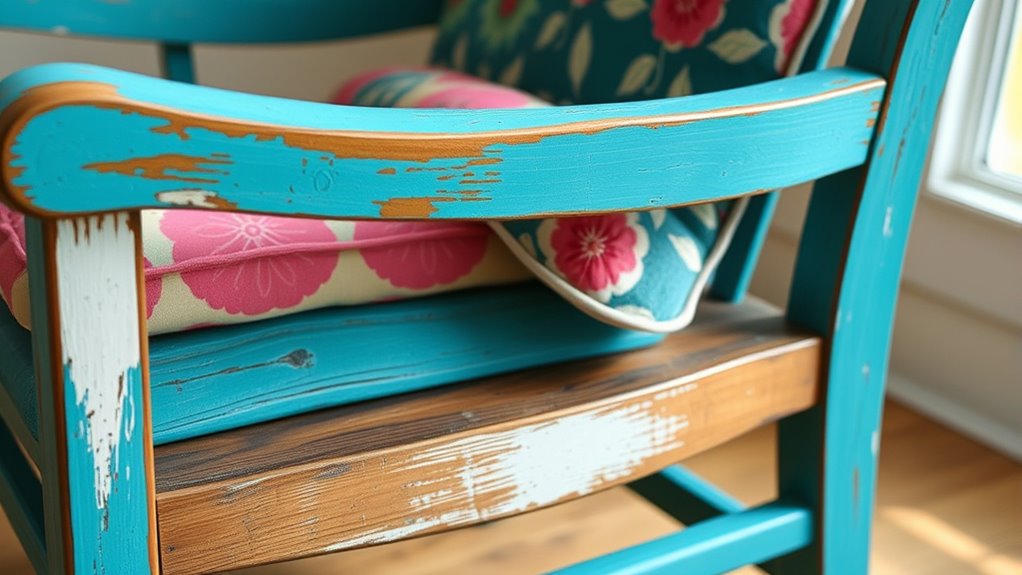
When restoring furniture creatively, choosing eco-friendly paints helps uphold sustainability and guarantees safety. Upgrading hardware with unique handles or decorative knobs instantly adds personality and style. By combining these materials and techniques, you can transform pieces into eye-catching, environmentally conscious creations. Additionally, selecting vetted paints ensures your project maintains high quality and durability.
Eco-Friendly Paint Options
Eco-friendly paint options are essential for creating sustainable and safe furniture restorations. These paints have low or zero volatile organic compounds (VOCs), reducing harmful emissions and protecting your health and the environment. Look for water-based acrylics, milk paints, or natural mineral-based paints, which are non-toxic and biodegradable. They often require less energy to produce and emit fewer fumes during application. Using eco-friendly paints also helps preserve indoor air quality and minimizes your carbon footprint. When selecting paints, consider the durability and finish needed for your piece—many eco options are now designed to match traditional paints in longevity and appearance. Proper preparation, including cleaning and sanding, ensures better adhesion and a smooth finish, making your upcycled furniture safer and more environmentally friendly. Additionally, choosing eco-friendly paints can contribute to reducing the environmental impact of your projects.
Creative Hardware Upgrades
Adding creative hardware upgrades can transform the look and feel of your upcycled furniture, making it stand out. You can replace outdated knobs and pulls with unique vintage finds, modern geometric shapes, or repurposed items like old utensils or jewelry. Using colorful or textured hardware adds personality and visual interest. Consider painting or distressing new hardware for a custom look. Incorporate unconventional materials such as leather, fabric-covered knobs, or reclaimed metal accents to enhance the piece’s character. Mounting decorative hooks or handles in unexpected places can also add functionality and style. Always choose eco-friendly finishes and durable materials to ensure longevity. These small but impactful upgrades allow you to personalize your furniture while maintaining an environmentally conscious approach. Additionally, selecting hardware with the right drivetrain components ensures smooth operation and durability over time.
Trends Shaping the Market for Upcycled Furniture

What are the key trends driving the growth of the upcycled furniture market today? You’ll notice increasing consumer awareness of environmental issues is a major driver. People want stylish pieces that also reduce waste and lower carbon footprints. The demand for one-of-a-kind, personalized furniture boosts upcycling’s appeal, allowing you to showcase creativity. Social media platforms help spread the trend, inspiring more DIY projects and business ventures. Additionally, affordable pricing compared to new furniture makes upcycled items attractive to budget-conscious buyers. Support from local governments and eco-conscious brands further accelerates market growth. As more people seek sustainable living options, the market’s expansion reflects a shift towards eco-friendly consumption, emphasizing craftsmanship, storytelling, and environmental impact—all of which you can leverage in your upcycling projects.
Overcoming Challenges in Upcycling Projects
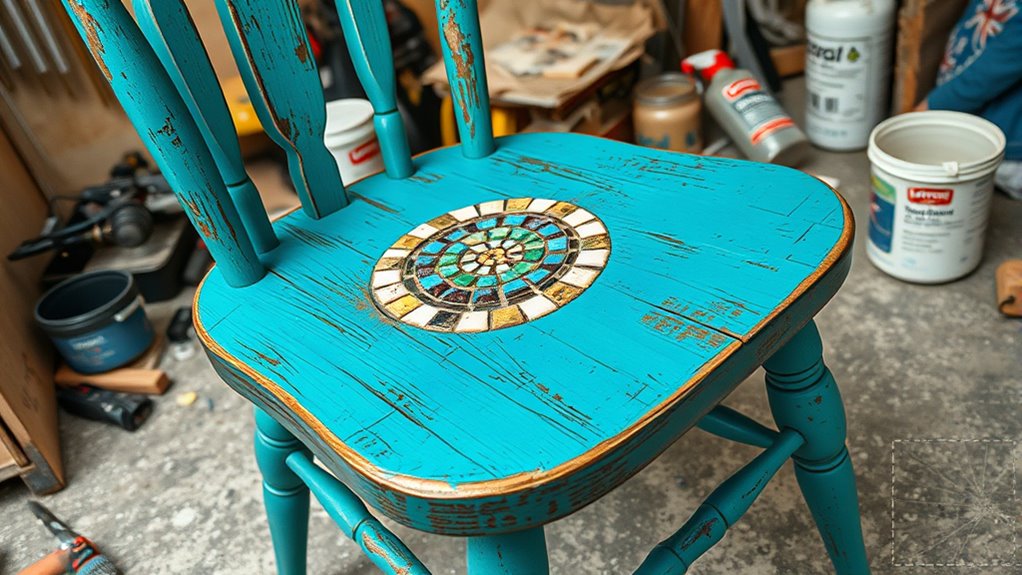
Overcoming challenges in upcycling projects requires careful planning and problem-solving, as many obstacles stem from limited resources and technical complexities. You might encounter difficulties sourcing quality pieces or managing storage space for raw materials. Repairing structurally compromised furniture demands skill and patience, especially when ensuring safety and durability. Budget constraints can make restoring pieces labor-intensive and costly, so you need to balance quality with affordability. Technical hurdles include stripping old finishes, applying eco-friendly paints, and achieving a smooth, lasting finish. To succeed, plan your project step-by-step, prioritize repairs, and use the right tools. Embrace creativity to solve unexpected issues, like repurposing materials or customizing hardware. Staying organized and flexible helps you navigate setbacks and turn challenges into opportunities for innovative upcycling. Additionally, understanding the importance of mental clarity and health can enhance your focus and problem-solving abilities during complex projects.
Preserving Cultural Heritage Through Craftsmanship
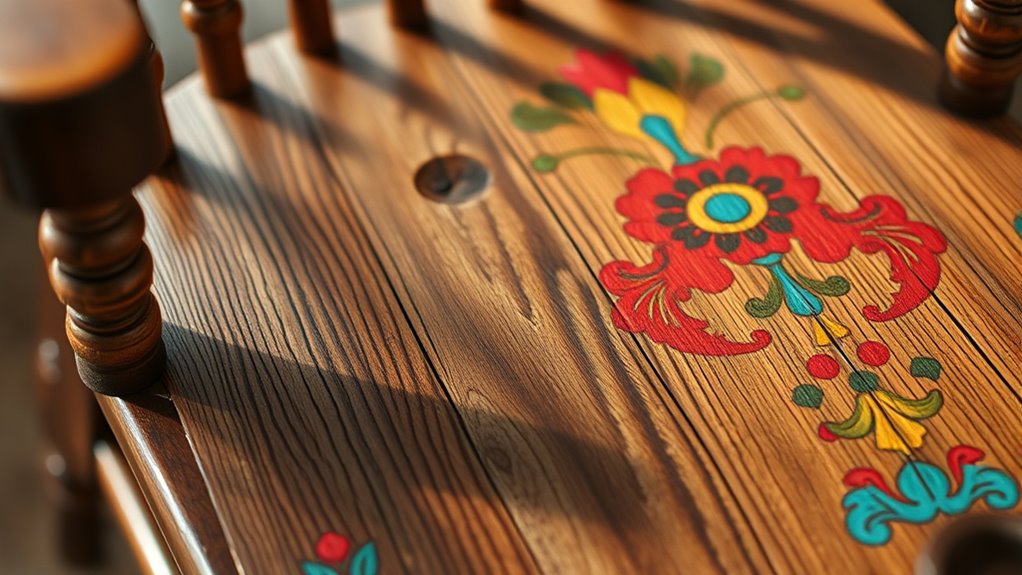
Preserving cultural heritage through craftsmanship is a vital aspect of upcycling furniture, as it maintains traditional skills and knowledge that might otherwise fade away. By upcycling, you keep alive techniques like carving, joinery, and finishing that reflect regional identities and artisan expertise. This process not only restores furniture but also honors the history embedded in each piece. You can:
Upcycling furniture preserves traditional craftsmanship and regional artistry, honoring the history and skills embedded in each piece.
- Revive traditional woodworking methods, such as hand carving or dovetail joints
- Incorporate authentic finishes like natural dyes or hand-applied stains
- Retain unique design elements that showcase regional or historical styles
- Regularly monitoring and updating security measures on payment data protects payment data, ensuring the integrity of transactions involved in furniture restoration or sales.
Through these efforts, you help sustain cultural stories and craft techniques, transforming old furniture into meaningful art while fostering a deeper appreciation for craftsmanship’s role in heritage preservation.
Practical Steps to Transform Your Old Furniture

To successfully upcycle your furniture, start by carefully evaluating its overall condition, checking for structural issues or damage. Once you’ve determined what needs fixing, prepare the surface thoroughly through cleaning and sanding to ensure a smooth finish. Finally, choose eco-friendly paints and finishes that will protect your piece while reducing environmental impact. Being aware of material durability can help you select the best finishes for longevity and sustainability.
Assessing Furniture Condition
Before starting your furniture upcycling project, it’s essential to carefully assess its condition to determine what can be restored and what might need replacing. Examine the overall structure for stability, checking for loose joints, warped wood, or cracks. Look closely at the surface for peeling paint, deep scratches, or water damage. Test for soft or rotten wood, as these may compromise durability. Consider the hardware—handles, hinges, and knobs—that might need replacement or refurbishment. Assessing furniture condition helps you decide whether to restore, reinforce, or replace parts, ensuring your upcycling effort results in a durable, attractive piece.
Applying Eco-Friendly Finishes
Applying eco-friendly finishes is a crucial step that not only enhances the look of your upcycled furniture but also guarantees it remains safe for the environment and your health. Start by selecting low-VOC or non-toxic paints, sealers, and varnishes. These finishes emit fewer harmful fumes and are safer to work with. Before applying, ensure the surface is clean, sanded, and free of dust to promote proper adhesion. Use brushes or sprayers designed for eco-friendly products to achieve an even coat. Consider natural alternatives like beeswax or plant-based oils for a more sustainable finish. Apply thin, even layers, allowing each coat to dry thoroughly. This process not only adds durability but also preserves the eco-conscious integrity of your project. Additionally, choosing water-based finishes can further reduce environmental impact and improve indoor air quality during and after application.
Inspiring Upcycling Ideas for Different Pieces
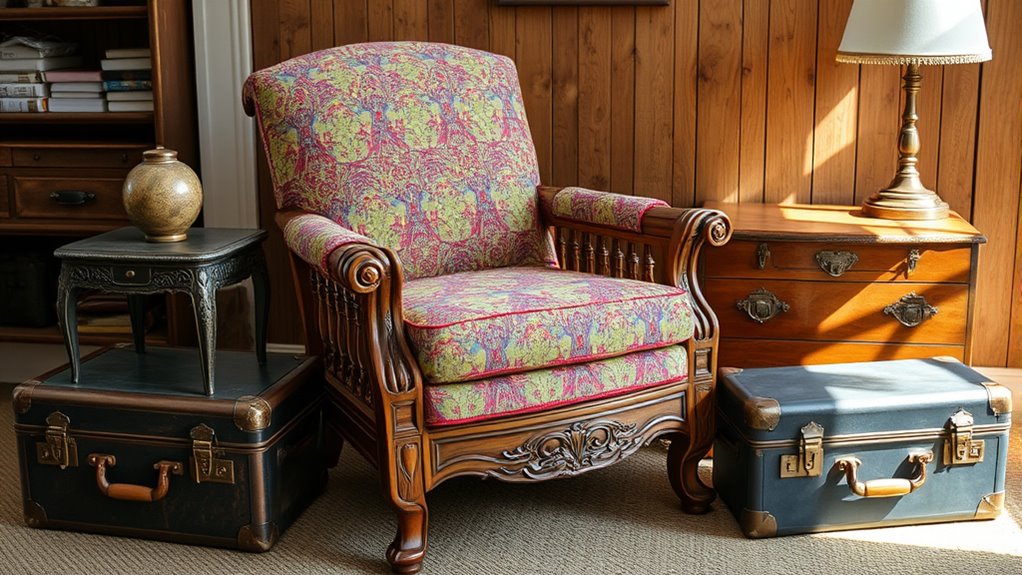
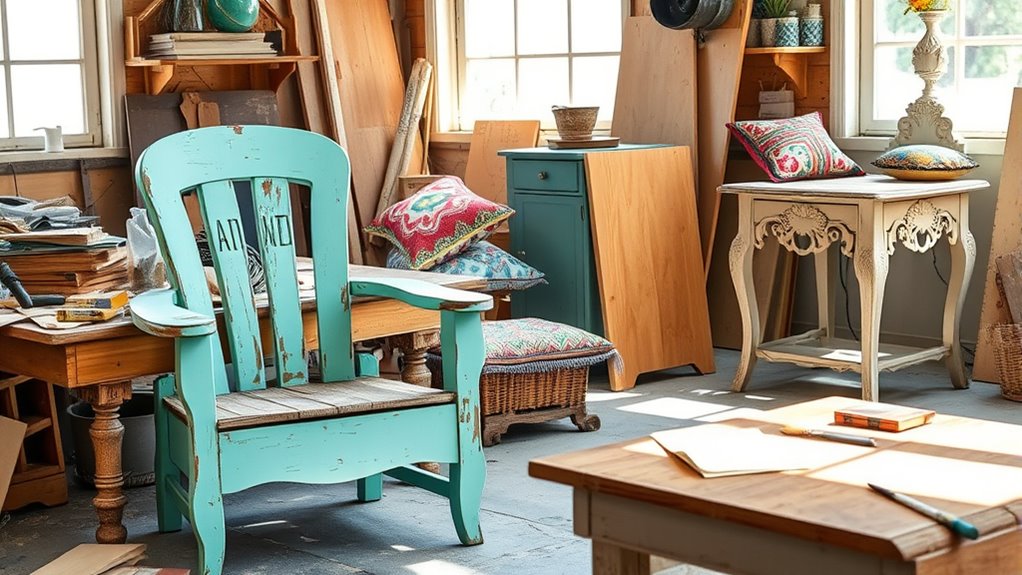
Transforming different furniture pieces offers endless opportunities to showcase your creativity while promoting sustainability. Whether it’s an old coffee table, a worn-out chair, or a tired dresser, each piece can become a unique masterpiece. For example, turn a vintage door into a striking headboard, or repurpose an old ladder as a bookshelf. You could also transform a tired wooden crate into a charming storage bench. To elevate your projects, consider:
- Adding bold colors or artistic finishes to give a new personality
- Incorporating mismatched hardware or decorative accents for character
- Using stencils or decoupage techniques to create personalized patterns
- Exploring upcycling trends and how they influence sustainable furniture design
These ideas encourage you to think outside the box, breathe new life into furniture, and create functional art that reflects your style and commitment to sustainability.
Showcasing and Selling Your Upcycled Creations
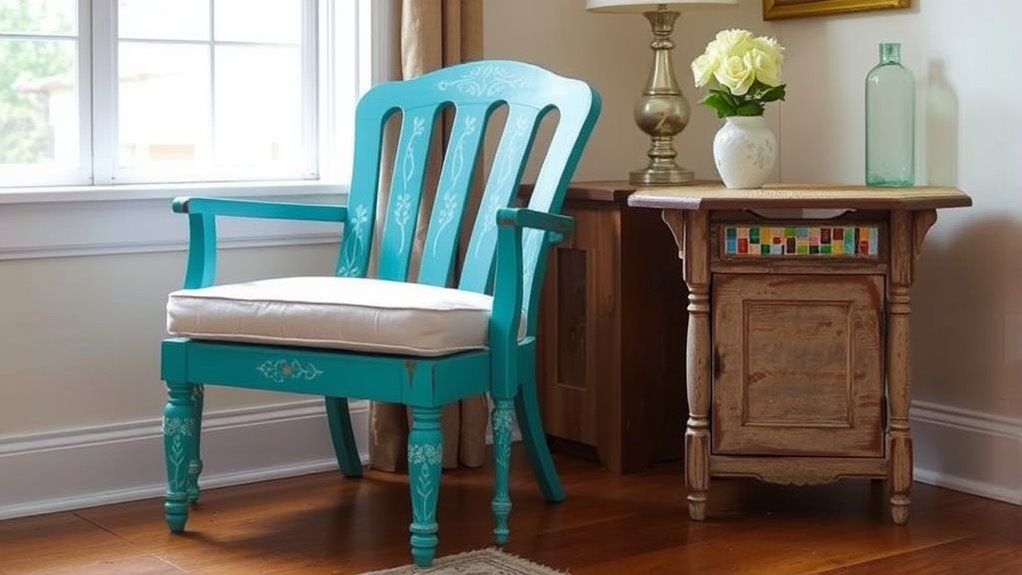
Showcasing and selling your upcycled creations is essential for turning your craftsmanship into a sustainable business or personal venture. Start by photographing your pieces in good lighting and with clean backgrounds to highlight details and craftsmanship. Use social media platforms like Instagram, Pinterest, and Facebook to reach a broad audience, sharing stories about each piece’s transformation and environmental impact. Consider setting up an online shop on Etsy or a personal website to showcase your portfolio. Participating in local craft fairs, markets, or pop-up events helps build community and trust. Be honest about your process and materials, emphasizing the eco-friendly aspects. Good presentation and storytelling can elevate your pieces’ appeal, attract buyers, and establish your reputation as a dedicated upcycler.
Frequently Asked Questions
How Do I Find Quality Furniture Suitable for Upcycling?
You find quality furniture suitable for upcycling by inspecting pieces for structural integrity, ensuring they’re sturdy and free from major damage. Look for well-built frames, solid wood, and minimal signs of rot or weak joints. Avoid warped or heavily compromised furniture. Choose items with cosmetic issues like scratches or outdated finishes, which are easier to refurbish. Prioritize pieces that match your style and upcycling skills, making sure they’re clean and ready for transformation.
What Are the Best Eco-Friendly Paints for Furniture Restoration?
You should select eco-friendly paints like low-VOC or zero-VOC options, which emit fewer harmful chemicals. Brands like AFM Safecoat, ECOS Paints, or Benjamin Moore Natura are great choices for furniture restoration. These paints are non-toxic, safe for your health, and environmentally friendly. Always read labels to guarantee the paint is suitable for furniture and provides durable coverage, so your upcycled piece stays beautiful and sustainable for years.
How Can I Ensure Safety and Durability in My Upcycled Pieces?
Imagine your upcycled furniture standing strong and safe, like a sturdy oak in a storm. To guarantee safety and durability, you should thoroughly clean, sand, and fill any dents or cracks. Use eco-friendly, high-quality paints and finishes designed for durability. Reinforce structural weak spots, and test the piece for stability before use. With attention to detail, your creation will serve reliably and beautifully for years to come.
What Are Effective Ways to Market and Sell Upcycled Furniture Locally?
You can effectively market and sell your upcycled furniture locally by sharing its story—highlighting its eco-friendly origin, craftsmanship, and unique features. Use social media platforms and local markets to showcase high-quality photos and customer testimonials. Partner with community events and collaborate with interior designers or local shops to expand your reach. Offering workshops or demonstrations can also attract attention and build a loyal customer base that values sustainability.
How Do I Preserve the Original Craftsmanship While Updating the Design?
You keep the soul alive like a heartbeat by carefully preserving original craftsmanship while updating the design. Focus on maintaining key details—like carvings or joints—and use gentle techniques to restore without erasing craftsmanship. Choose complementary finishes that enhance the piece’s character, blending old and new seamlessly. Respect the artisan’s touch, and your updates will honor the piece’s history while giving it a fresh, modern breath of life.
Conclusion
By embracing upcycling, you help the environment, support your community, and release your creativity. You breathe new life into old pieces, preserve cultural traditions, and express your unique style. You challenge yourself with new techniques, overcome obstacles with patience, and turn simple furniture into treasured masterpieces. Upcycling isn’t just about transformation; it’s about making a difference, enjoying the process, and creating beauty that lasts. So start your journey today and let your imagination redefine what’s possible.
Halloween Picks
halloween
As an affiliate, we earn on qualifying purchases.