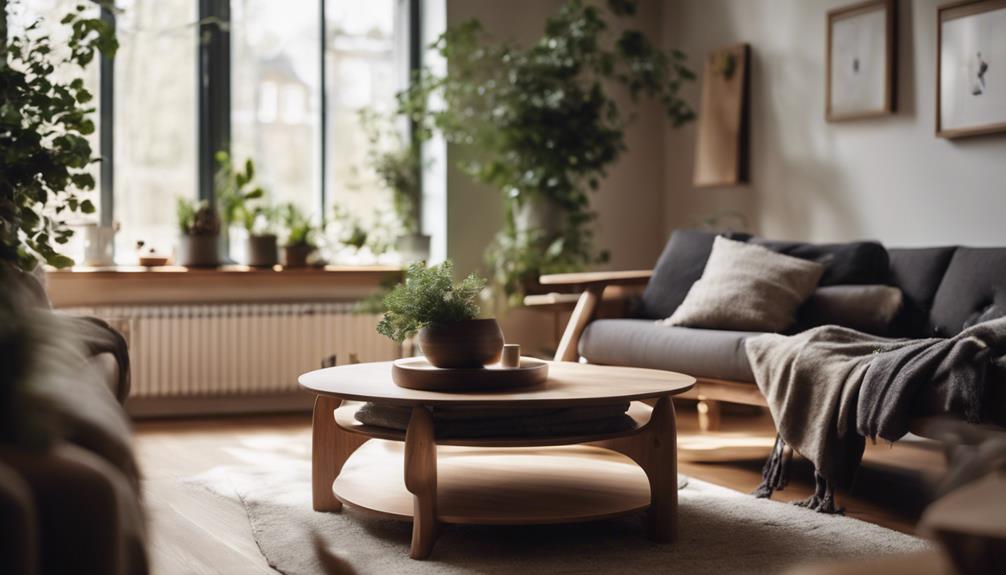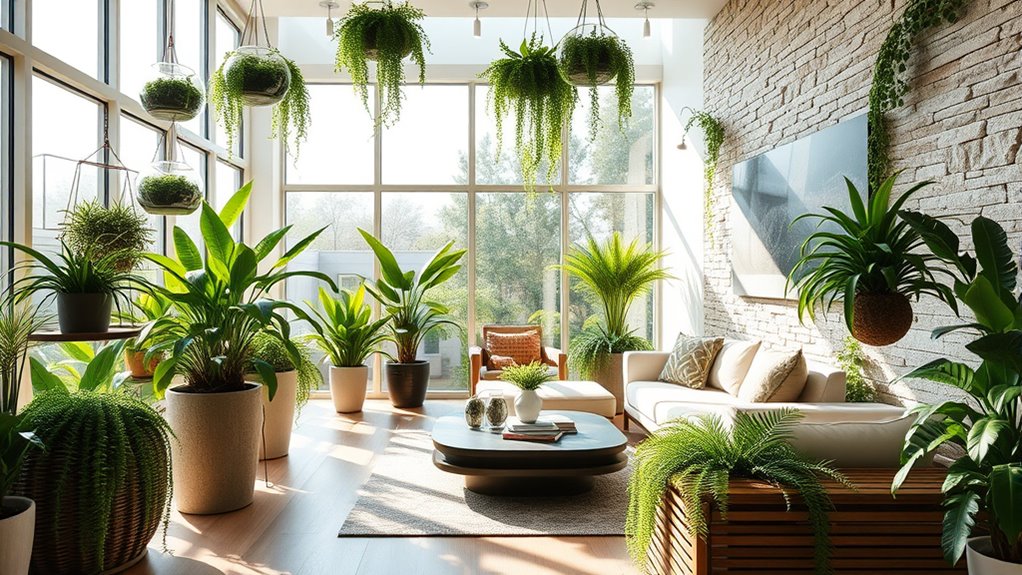

Biophilic design involves integrating natural elements like plants, water, natural light, and organic shapes into your indoor spaces to boost well-being and create a stronger connection to nature. By incorporating features such as views of greenery, water features, and natural materials, you can reduce stress, improve mood, and support your physical health. If you want to learn how these elements can transform your environment, there’s much more to explore about making spaces truly biophilic.
Key Takeaways
- Incorporate natural elements like plants, water features, and natural materials to foster well-being and authenticity indoors.
- Maximize natural light through strategic window placement, skylights, and dynamic lighting to support circadian rhythms.
- Use nature-inspired shapes, patterns, colors, and textures to create calming, organic environments that connect occupants to nature.
- Provide views of greenery and outdoor scenery to reduce stress and promote relaxation within indoor spaces.
- Integrate sensory elements such as natural scents, textures, and sounds to enhance psychological and physiological benefits.

Odoland Portable LED Camping Lantern with Ceiling Fan - Hurricane Emergency
Why you need this great camping gear: Spending a night outdoors is something everyone should experience. So you...
As an affiliate, we earn on qualifying purchases.
The Biological Foundations of Human-Nature Connection

Humans have an inherent biological affinity for nature, rooted in our evolutionary history. Over millennia, our survival depended on understanding and adapting to natural environments. This deep connection is encoded in our biology, driving us to seek out natural elements like sunlight, water, and plant life. When we encounter nature, our brains release feel-good chemicals, reducing stress and enhancing mood. Our visual and sensory systems are wired to recognize natural patterns, shapes, and rhythms that promote safety and well-being. This innate response explains why natural environments make us feel more relaxed, focused, and inspired. Additionally, natural light plays a crucial role in regulating our circadian rhythms, further supporting our physical and mental health. Our evolutionary past has shaped a subconscious craving for nature, making it essential for our mental and physical health. Understanding this biological foundation underscores why integrating nature into our spaces benefits us profoundly.

FRIZCOL 3-in-1 Camping Fan - Portable Fans Rechargeable - 24000mAh Battery Powered Fan with Light & Remote for Indoor, Outdoor, Tent, Travel, Fishing, Jobsite, Gifts for Men Dad Him - Green
【24000mAh Super Large Battery】FRIZCOL Portable Rechargeable Fan with unique advanced cell technology. It is equipped with 24000mAh rechargeable...
As an affiliate, we earn on qualifying purchases.
Core Elements of Biophilic Interior Design

The core elements of biophilic interior design seamlessly integrate natural features and patterns to create spaces that foster well-being and connection. You incorporate elements like lush vegetation, water features, and natural materials such as wood and stone to bring nature indoors. Shapes and forms inspired by nature, like curves, arches, and organic motifs, reinforce this connection. You also mimic natural rhythms and processes, such as growth and erosion, through design patterns. Maximizing natural light with thoughtful window placement and dynamic lighting enhances indoor-outdoor links. You can also include direct experiences like plants and water, alongside indirect cues like nature-inspired artwork and colors. These elements work together to promote relaxation, focus, and a sense of harmony within your environment. Incorporating natural lighting strategies enhances the connection between indoor and outdoor spaces, making environments feel more alive and inviting.

FLY2SKY Portable LED Tent Lamp Emergency Lights with Hook, Hurricane Bulb Lantern Equipment for Camping, Hiking, Backpacking, Fishing Outage, Multicolor, 4 Pack
Compact, Long Lighting: Palm sized(5.7 X 2.1 inch) portable led tent light, takes up very little room, easy...
As an affiliate, we earn on qualifying purchases.
Enhancing Wellbeing Through Natural Light and Views
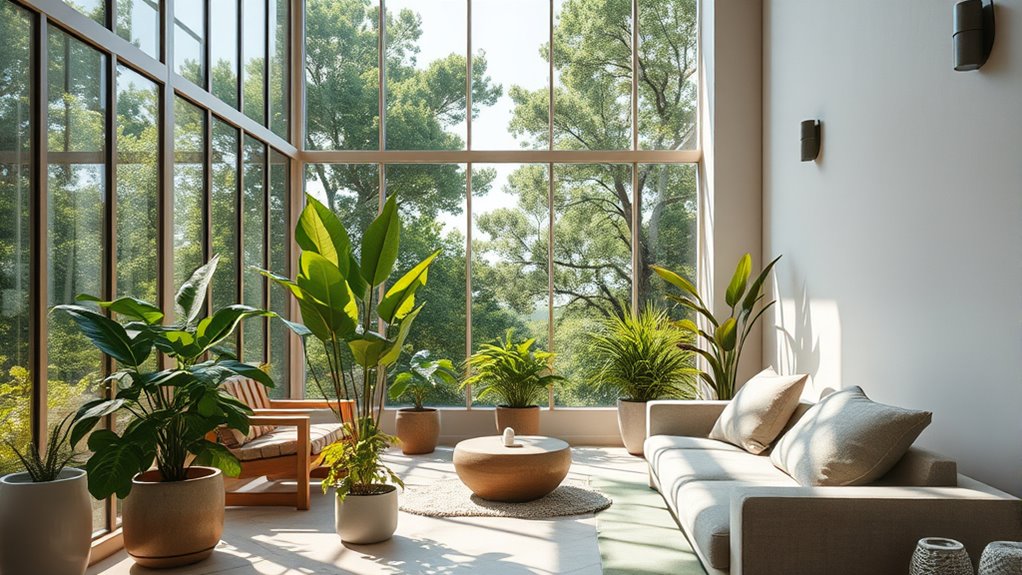
Natural light and scenic views play an essential role in enhancing wellbeing within built environments by connecting occupants to the outdoors. Bright, natural light boosts mood, regulates circadian rhythms, and improves sleep quality. It also reduces the need for artificial lighting, saving energy. When you have access to views of nature or greenery, it encourages relaxation and reduces stress. These visual connections promote feelings of calm and foster a sense of harmony with the environment. Positioning workspaces or living areas near windows maximizes daylight exposure and offers visual access to natural scenes. Incorporating large, unobstructed windows and skylights invites sunlight indoors. Additionally, understanding the importance of offensive security measures helps in designing spaces that are resilient against potential threats. By prioritizing natural light and views, you create spaces that support mental clarity, emotional resilience, and overall health.

VILLEY Portable Camping Side Table, Ultralight Aluminum Folding Beach Table with Carry Bag for Outdoor Cooking, Picnic, Camp, Boat, Travel
Ultra-light for Easy Portability: Our folding camp table's top and frame are all made of aluminum, so it's...
As an affiliate, we earn on qualifying purchases.
Incorporating Natural Materials and Organic Forms
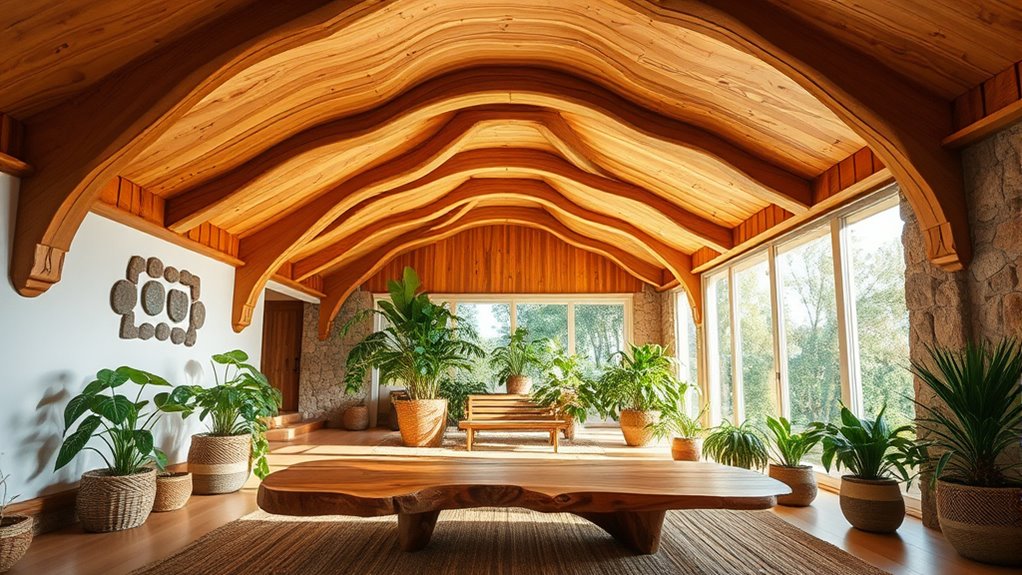
Incorporating natural materials and organic forms into designs creates an immediate connection to the natural world, fostering a sense of harmony and authenticity. You can choose materials like wood, stone, cork, or bamboo to add warmth and texture, making spaces feel more inviting and grounded. Organic shapes—curves, flowing lines, and botanical motifs—mirror nature’s irregularities, breaking away from rigid, geometric structures. These forms evoke a sense of movement and essentiality, enhancing your environment’s visual appeal. Using natural textures and patterns also stimulates your senses, promoting relaxation and comfort. When you integrate these elements thoughtfully, your space becomes a reflection of nature’s resilience and beauty, strengthening your emotional bond with the environment and supporting overall wellbeing. Incorporating natural textures and patterns can also improve the ambiance by creating a soothing atmosphere that encourages mindfulness and tranquility.
Water Features and Verdant Plant Integration
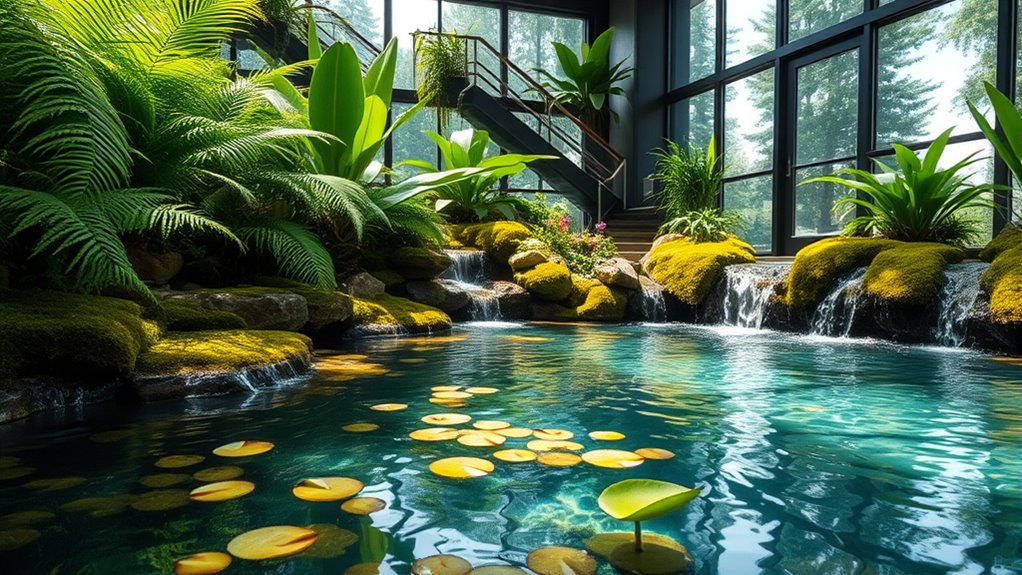
Water features with soothing sounds create a calming atmosphere that enhances your connection to nature. Lush plant placement around these elements fosters a sense of natural harmony and promotes well-being. Integrating natural ecosystems into your space encourages sustainability and deepens your bond with the environment. Incorporating aesthetic wall organization can further enhance the visual appeal and functionality of your biophilic design.
Soothing Water Sounds
Soothing water sounds play an essential role in creating calming environments that foster relaxation and well-being. When you incorporate water features like fountains, waterfalls, or gentle streams, the natural soundscape helps drown out noise and reduce stress. The rhythmic flow of water activates your senses and promotes a sense of tranquility. These sounds can lower blood pressure, slow your breathing, and improve focus. As water moves softly, it creates a dynamic auditory experience that enhances your connection to nature indoors. When combined with verdant plants, the water’s gentle murmur complements the greenery’s calming presence. This synergy encourages mindfulness and emotional balance, making your space feel more inviting, peaceful, and restorative. Additionally, incorporating sound therapy techniques using water sounds can further enhance the therapeutic benefits of your biophilic design.
Lush Plant Placement
Placing lush plants thoughtfully within a space enhances biophilic design by creating vibrant, natural focal points that connect occupants to nature. You can achieve this by positioning large, leafy plants in prominent areas, such as near seating or entryways, to draw attention and foster a sense of vitality. Incorporate a variety of textures and shades to mimic natural diversity, which stimulates visual interest and emotional comfort. Grouping plants in clusters or planters enhances their impact and creates a lush, immersive atmosphere. Consider the scale and placement to ensure they don’t obstruct pathways or natural light. Well-placed greenery not only beautifies the environment but also improves air quality and promotes relaxation, strengthening your space’s connection to the natural world. Experimenting with plant placement strategies can further optimize the visual and health benefits of your indoor garden.
Natural Ecosystem Integration
Integrating water features and lush plants into built environments creates dynamic ecosystems that enhance biophilic connections. You can incorporate features like ponds, fountains, or streams to evoke natural water cycles, fostering calming sounds and visual appeal. Verdant plants, including trees, shrubs, and ground covers, help create microhabitats that support biodiversity and improve air quality. These elements promote natural processes, such as water filtration and temperature regulation, while strengthening your space’s ecological resilience. Use this table as a visual guide:
| Water Features | Verdant Plant Integration |
|---|---|
| Fountains and streams | Living green walls |
| Ponds and waterfalls | Indoor garden beds |
| Rain gardens | Native plant selections |
| Water cycle mimicry | Vertical planting systems |
Additionally, incorporating plant diversity can enhance ecological stability and aesthetic appeal within your indoor environment.
Designing Spaces for Sensory Engagement With Nature
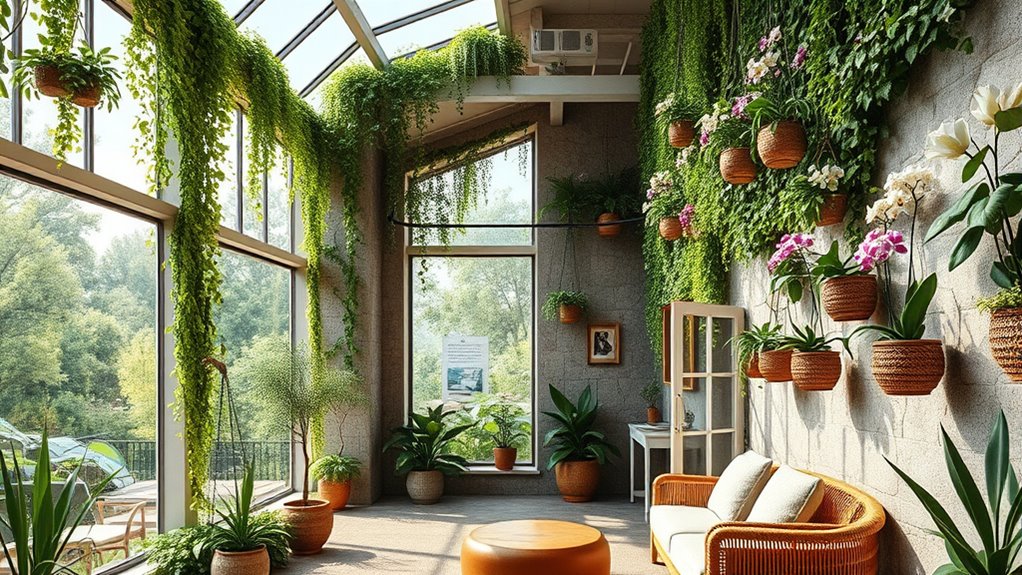
How can spaces be designed to actively engage your senses with natural elements? You can incorporate diverse textures, like rough stone or smooth wood, to stimulate touch. Use water features—fountains or small streams—to create soothing sounds that heighten auditory experience. Maximize natural light with large windows or skylights, allowing sunlight to shift throughout the day, connecting you visually with nature’s rhythms. Include plants and natural materials to provide visual variety and scent cues, such as fragrant herbs or blooming flowers. Design organic shapes and patterns that mimic natural forms, encouraging your eyes to follow curves and irregularities. By thoughtfully integrating these elements, you turn everyday environments into immersive sensory experiences, fostering a deeper, more immediate connection with nature’s essence.
The Psychological and Physiological Benefits of Nature-Based Environments
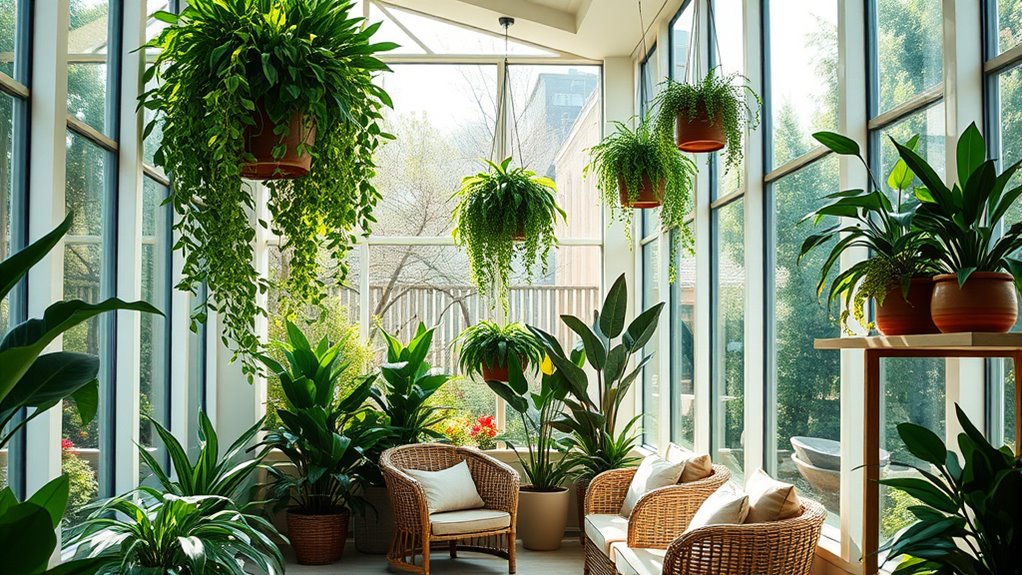
Spending time in natural environments offers profound psychological and physiological benefits that enhance overall well-being. When you immerse yourself in nature, your stress levels decrease, your heart rate slows, and you feel more relaxed. Nature also boosts your cognitive functions, improving focus, creativity, and problem-solving skills. These environments help lift your mood and reduce anxiety, fostering emotional resilience. Connecting with natural elements can instill a sense of calm and balance, making you feel more grounded. Furthermore, natural settings promote physical health by encouraging movement and outdoor activity. Incorporating these benefits into your daily life or workspace can lead to lasting improvements in mental clarity and physical vitality.
- Reduces stress and anxiety, promoting relaxation
- Enhances cognitive performance and creativity
- Supports emotional well-being and resilience
Strategies for Urban and Indoor Biophilic Applications
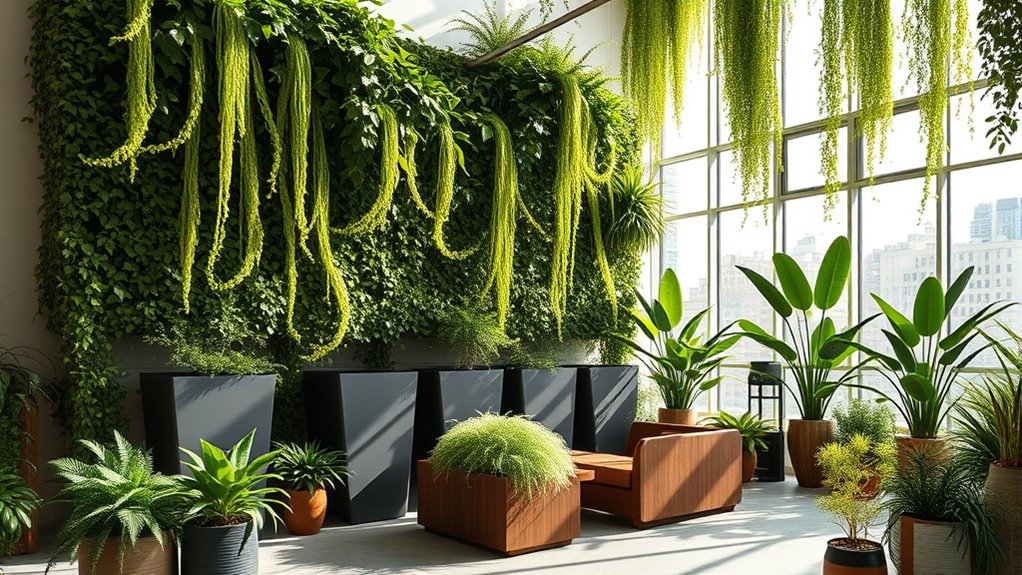
Urban and indoor environments can effectively incorporate biophilic principles by thoughtfully designing spaces that bring natural elements indoors and connect occupants with nature. You can achieve this through strategic placement of plants, water features, and natural lighting. Using layered approaches ensures that natural patterns, materials, and views are integrated seamlessly. Consider the following strategies:
| Strategy | Implementation | Benefits |
|---|---|---|
| Green walls and vertical gardens | Use modular plant systems | Improve air quality, aesthetics |
| Natural light maximization | Install skylights and large windows | Enhance circadian rhythms, mood |
| Water features | Add fountains or ponds | Reduce stress, create calming ambiance |
| Views of nature | Position spaces overlooking greenery | Foster relaxation and connection |
Additionally, incorporating natural materials such as wood, stone, and bamboo can further enhance the biophilic experience by creating a more authentic connection to the outdoors.
Challenges in Implementing Biophilic Principles
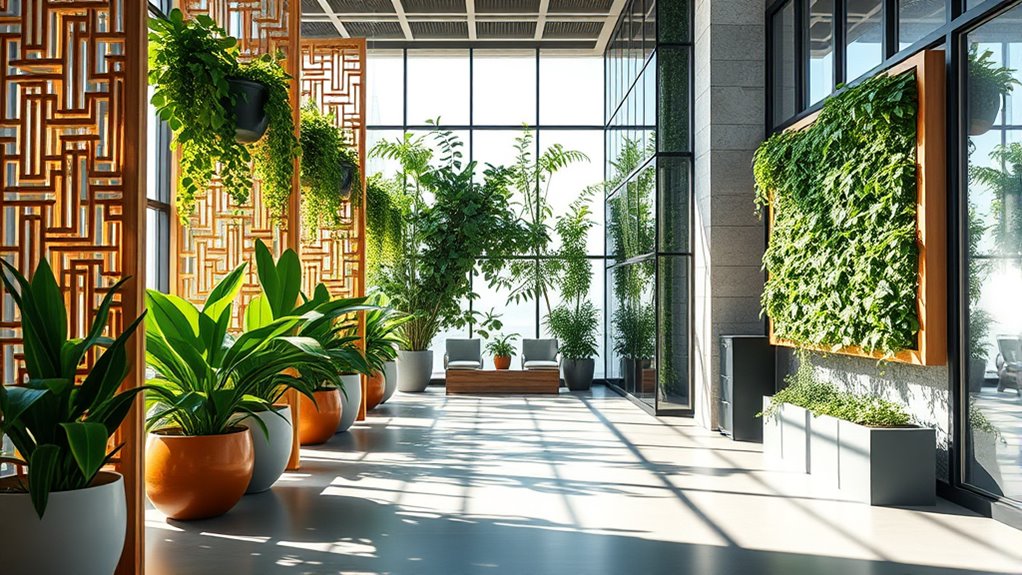
Implementing biophilic principles in built environments often faces practical hurdles, despite the clear benefits of integrating natural elements. One major challenge is understanding which natural features genuinely evoke biophilic responses, as the biological mechanisms are still not fully clear. Additionally, balancing aesthetics with functionality can be tough, especially when trying to meet health and sustainability goals simultaneously. Costs and technical constraints may also limit the adoption of natural materials, water features, or daylight maximization. Cultural and regional differences further complicate design choices, as what resonates in one area might not in another. To succeed, you must navigate these complexities while maintaining a focus on human needs and environmental resilience. Ulta Beauty Store Hours
Future Directions for Sustainable and Resilient Biophilic Spaces
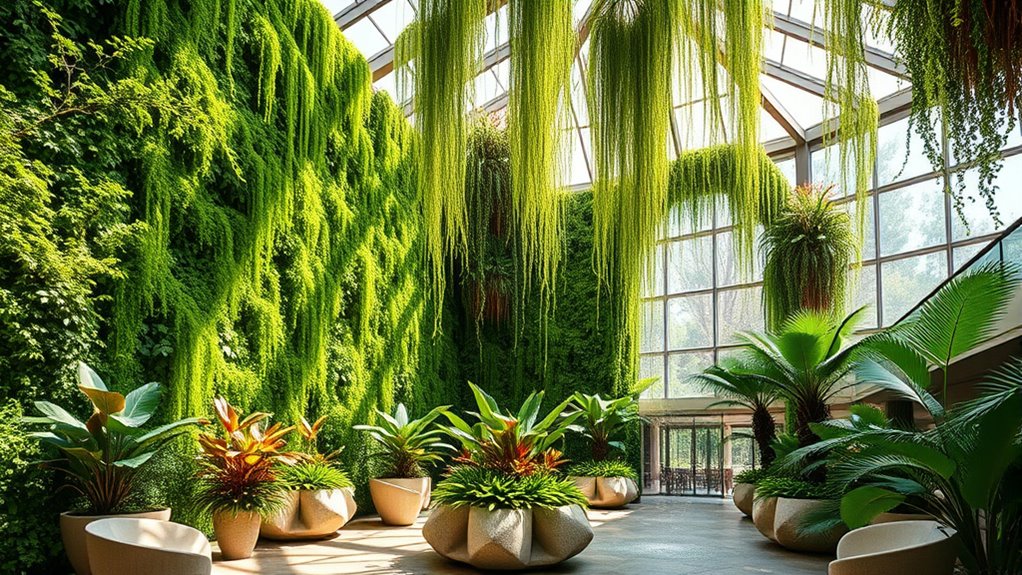
How can future biophilic spaces advance sustainability and resilience to meet growing environmental and societal challenges? You can integrate adaptive, eco-friendly materials that support regeneration rather than depletion. Emphasizing modular designs allows for flexible use and easy updates, extending space longevity. Incorporating renewable energy sources, like solar or wind, reduces reliance on fossil fuels. Smart systems can optimize natural light, ventilation, and water use, minimizing environmental impact. Prioritizing local, climate-responsive plantings and natural elements enhances resilience against climate change. You’ll also foster stronger community engagement by designing spaces that promote social cohesion and environmental stewardship. Ultimately, future biophilic spaces should be regenerative, self-sustaining, and adaptable, ensuring they serve both human wellbeing and ecological health amid ongoing global challenges.
Frequently Asked Questions
How Does Biophilic Design Influence Long-Term Mental Health?
Biophilic design positively impacts your long-term mental health by reducing stress, anxiety, and fatigue. When you’re surrounded by natural elements like light, plants, and organic shapes, your mood improves and cognitive function enhances. These environments foster a sense of connection and belonging, which promotes emotional resilience. Over time, consistent exposure to nature-inspired spaces helps you build healthier habits, boosts your overall wellbeing, and supports mental clarity and stability.
What Are the Best Ways to Measure Biophilic Impact in Spaces?
Think of measuring biophilic impact like tuning a musical instrument; you want to hear the harmony between environment and well-being. To do this, you can use surveys evaluating stress reduction, cognitive performance tests, and physiological measures like heart rate or cortisol levels. Observing behavioral changes, user satisfaction, and environmental data also helps. Combining these methods provides an all-encompassing picture of how well your space fosters connection with nature.
Can Biophilic Design Be Effectively Integrated Into Existing Buildings?
Yes, you can effectively integrate biophilic design into existing buildings by adding natural elements like indoor plants, water features, and natural materials. Maximize natural light through window upgrades or skylights, create views of outdoor nature, and incorporate organic shapes and patterns. You can also introduce green walls or rooftop gardens to connect occupants with nature, enhancing wellbeing without needing a complete structural overhaul.
How Do Cultural Differences Affect Biophilic Design Choices?
Cultural differences shape your biophilic design choices by influencing which natural elements, symbols, and aesthetics resonate with people. You adapt designs to reflect local traditions, beliefs, and environmental contexts, making spaces more meaningful. For example, you might incorporate specific plants, colors, or patterns that hold cultural significance. By respecting these differences, you create environments that foster comfort, emotional connection, and a stronger sense of place for diverse users.
What Technologies Support Dynamic and Adaptive Natural Environments Indoors?
You’ll find that smart climate control systems, like adaptive HVAC, support dynamic indoor environments by adjusting temperature, humidity, and airflow in real-time. Automated lighting systems mimic natural daylight cycles, boosting wellbeing and circadian health. Sensor networks monitor air quality and plant health, ensuring ideal conditions. These technologies enable spaces to respond seamlessly to occupant needs, creating lively, resilient natural environments indoors that promote comfort, productivity, and connection to nature.
Conclusion
Imagine stepping into a space where sunlight filters through lush leaves, their gentle rustle calming your mind. By embracing biophilic design, you bring nature’s serenity indoors, transforming everyday environments into calming retreats. You’ll feel the warmth of natural materials, the soothing flow of water, and vibrant greenery surrounding you. This connection to nature not only refreshes your senses but also nurtures your well-being. Start creating spaces that breathe life, and let nature’s beauty become part of your daily rhythm.