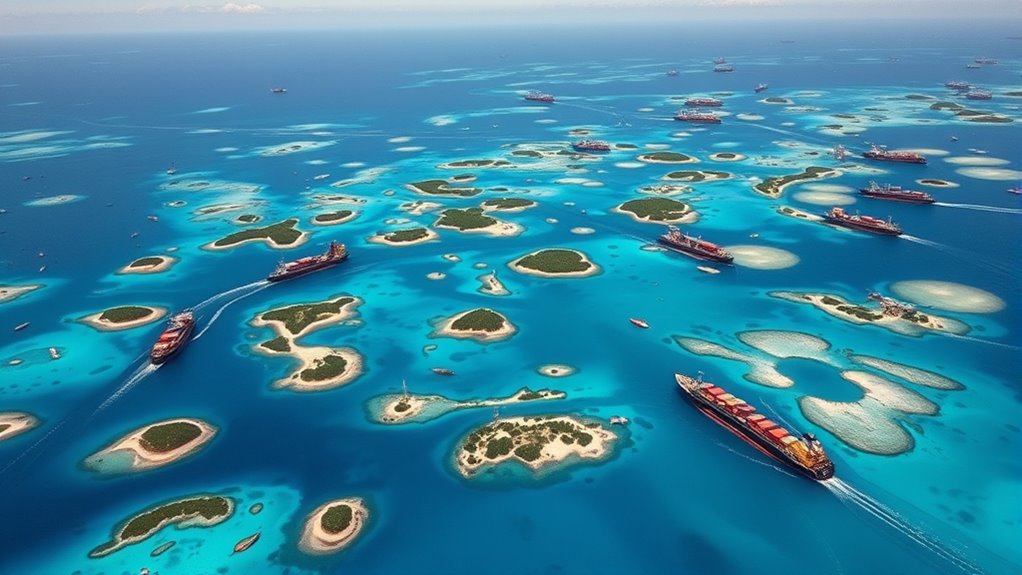

The South China Sea’s tensions stem from overlapping territorial claims, military build-ups, and rich resources, impacting regional stability and global trade routes. Major powers like China, Vietnam, and the U.S. compete for control, building islands and military installations. These disputes threaten free navigation and the safety of crucial shipping lanes. Staying informed helps you understand how regional conflicts influence international commerce—and there’s much more to uncover about this complex geopolitics.
Key Takeaways
- Territorial disputes and militarization threaten the free navigation of vital shipping routes in the South China Sea.
- Major powers like the U.S. conduct freedom-of-navigation operations to challenge excessive claims and ensure open seas.
- Infrastructure expansion and artificial island building increase collision risks and maritime safety hazards.
- Control over the region’s strategic waterways impacts global trade, supply chains, and energy security.
- Diplomatic efforts aim to balance sovereignty claims with regional stability, reducing the risk of maritime conflicts.

Garmin GPSMAP 79sc, Marine GPS Handheld Preloaded with BlueChart g3 Coastal Charts, Rugged Design and Floats in Water
Rugged, floating, water-resistant (IPX6 — unit level only) handheld GPS with a high-resolution color display and scratch-resistant, fogproof…
As an affiliate, we earn on qualifying purchases.
As an affiliate, we earn on qualifying purchases.
The Complex Web of Territorial Claims and Disputes
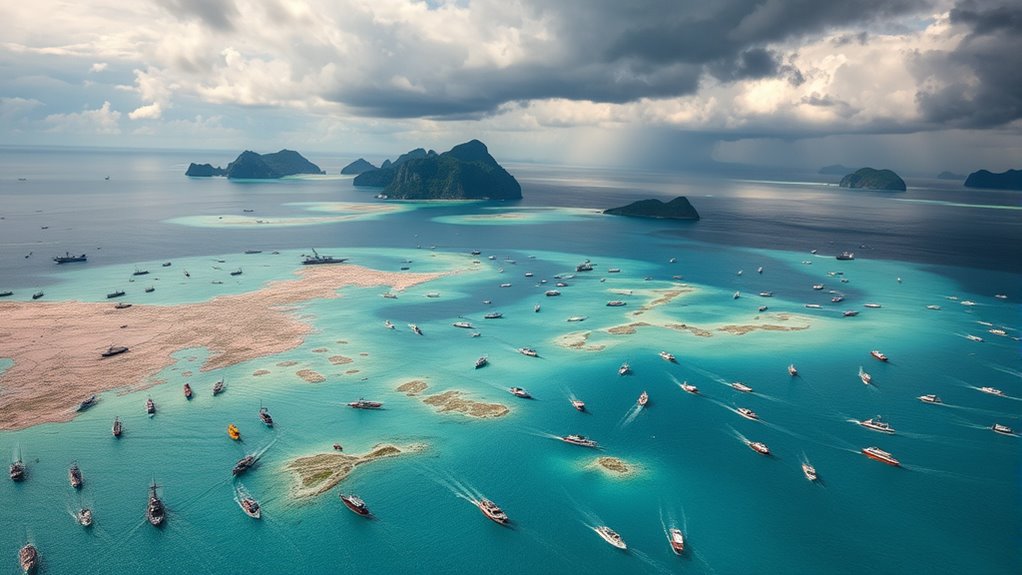
The South China Sea’s territorial disputes stem from overlapping claims among seven countries—Brunei, China, Indonesia, Malaysia, the Philippines, Taiwan, and Vietnam—that all contest various islands and maritime areas. These claims focus on key features like the Spratly and Paracel Islands, as well as boundaries in the Gulf of Tonkin and Scarborough Shoal. China occupies the Paracel Islands, which Vietnam and Taiwan also claim, while Vietnam holds the most features in the Spratlys. Taiwan controls Taiping Island, the largest in the area. By 2015, China had built eight outposts, Malaysia five, the Philippines eight, Taiwan one, and Vietnam forty-eight in the Spratlys. These conflicting claims date back to late 19th and early 20th centuries, escalating militarization since the 1970s. Territorial disputes over these features have led to heightened tensions and military confrontations in the region.

Maritime Autonomous Vehicles: Methods and measurements (Radar, Sonar and Navigation)
As an affiliate, we earn on qualifying purchases.
As an affiliate, we earn on qualifying purchases.
Strategic Significance and Regional Power Dynamics

Due to the region’s complex territorial disputes, the South China Sea has become a focal point for major geopolitical interests and regional power struggles. You need to understand how the sea’s strategic location amplifies its importance for regional influence. Its control affects trade routes, energy security, and military positioning. Major players like China, the U.S., and Southeast Asian nations vie for dominance, shaping regional stability. The area’s significance influences diplomatic negotiations, alliances, and military posturing. These dynamics create a delicate balance, where economic interests and sovereignty claims intersect, often escalating tensions. Additionally, the safety features of modern equipment used in the region ensure secure operations amid these tense circumstances.

Uniden Atlantis 275 Handheld Two-Way VHF Marine Radio, Floating IPX8 Submersible Waterproof, Large Dual-Color Screen, 6-Watt, All USA/International/Canadian Marine Channels, NOAA Weather Alerts
The Atlantis 275 comes with 6 Watts of Big-Ocean Power in a compact Submersible Floating Handheld VHF Marine…
As an affiliate, we earn on qualifying purchases.
As an affiliate, we earn on qualifying purchases.
Military Buildup and Infrastructure Expansion
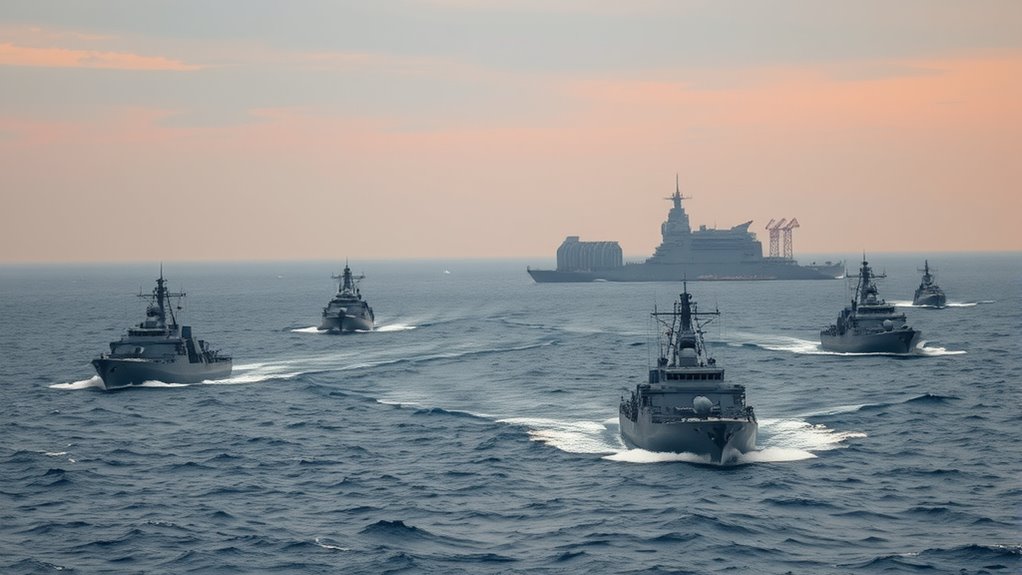
You see how China has been fortifying islands in the South China Sea by building ports, military installations, and airstrips. These efforts include deploying fighter jets, cruise missiles, and radar systems to strengthen their presence. Such enhancements escalate regional tensions and challenge the military balance among claimant states. Additionally, these infrastructural developments are often supported by advanced sound design techniques to monitor and simulate tactical environments.
Island Fortification Strategies
How are claimant states strengthening their positions in the South China Sea? They’re heavily fortifying islands with military infrastructure and advanced facilities. China leads this effort, creating artificial islands and expanding existing ones, especially in the Spratly and Paracel Islands. These sites now host ports, airstrips, radar systems, and missile batteries, effectively transforming them into military outposts. Other claimants, like Vietnam and the Philippines, upgrade their military bases and build smaller outposts for surveillance and defense. This increased militarization aims to deter rivals, solidify territorial claims, and project power in the region. Regular monitoring of military activities is essential to understand evolving regional dynamics.
Naval and Air Power Expansion
Why are claimant states rapidly expanding their naval and air capabilities in the South China Sea? They want to assert control over strategic islands, protect essential shipping lanes, and deter rivals. China leads this buildup by creating new islands, building military bases, and deploying fighter jets, cruise missiles, and radar systems on reclaimed land. The Philippines and Vietnam respond by strengthening their defenses and establishing more military facilities. Countries like Malaysia and Indonesia are upgrading their navies to safeguard their maritime interests. This militarization raises tensions, increases the risk of miscalculation, and complicates regional stability. Air power expansion, including patrols and surveillance flights, complements naval efforts, allowing claimants to monitor movements and project strength. Together, these developments intensify the race for dominance in this geopolitically critical region. Additionally, military infrastructure expansion plays a crucial role in enabling sustained operations and asserting regional influence.

DTLgear Safety Equipment Kit with Whistle, Flashlight, Line, Float and Bailer
As an affiliate, we earn on qualifying purchases.
As an affiliate, we earn on qualifying purchases.
Economic Stakes and Natural Resources in the Region

The South China Sea holds immense economic importance due to its rich natural resources and essential fisheries, making control over these assets highly contested among claimants. You should understand that fisheries sustain millions and are a vital food source, while the seabed’s oil and natural gas reserves attract intense competition. Although the region has significant energy resources, China has alternative sources, reducing dependence on this area. The ongoing disputes and militarized fishing fleets threaten marine ecosystems and disrupt sustainable fishing practices. You’ll find that resource exploitation often takes precedence over environmental protection, fueling tensions among claimant states. Additionally, the use of specialized equipment like advanced sonar and drilling technology plays a role in resource extraction efforts. Overall, economic stakes in the South China Sea drive territorial claims, influence regional power dynamics, and complicate efforts for cooperation amid the race for natural wealth.
Diplomatic Efforts and Regional Stability Initiatives

You can see that regional countries are trying to manage the disputes through various strategies, including bilateral talks and multilateral forums. These efforts aim to reduce tensions and promote stability, even as underlying conflicts persist. By engaging in diplomacy, the region hopes to balance assertiveness with cooperation for long-term peace. Monitoring regional stability initiatives is crucial for understanding the evolving dynamics of the South China Sea.
Dispute Management Strategies
Amid rising tensions in the South China Sea, regional and international actors have increasingly pursued diplomatic efforts to manage disputes and promote stability. These efforts focus on dialogue, confidence-building measures, and regional cooperation. Countries like China, Vietnam, and Malaysia engage in bilateral talks to avoid escalation. The ASEAN-led code of conduct aims to establish rules for behavior and reduce conflicts among claimants. Additionally, multilateral forums facilitate negotiations and promote transparency. These initiatives seek to prevent militarization from spiraling further and maintain open communication channels. By prioritizing diplomacy, parties aim to balance sovereignty claims with regional stability, fostering an environment where economic and security interests can coexist peacefully.
- Bilateral talks and agreements
- ASEAN’s code of conduct
- Confidence-building measures
Regional Diplomatic Engagement
Regional diplomatic efforts have become central to managing the South China Sea disputes and maintaining stability. Countries like China, Vietnam, Malaysia, and the Philippines pursue negotiations, often through multilateral platforms such as ASEAN and bilateral talks. These initiatives aim to reduce tensions, promote confidence-building, and develop joint resource frameworks. Despite ongoing disagreements, some claimants have agreed to “shelve disputes” temporarily, emphasizing dialogue over conflict. However, U.S. involvement and strategic interests complicate diplomacy. The table below highlights key regional engagement efforts:
| Initiative | Participants | Goals |
|---|---|---|
| ASEAN Regional Forum | ASEAN, China, U.S., others | Promote dialogue, build trust |
| Code of Conduct Negotiations | ASEAN, China | Establish rules, reduce confrontations |
| Bilateral Agreements | China-Vietnam, Philippines-U.S. | Manage specific disputes, foster stability |
| Confidence-Building Measures | Regional navies, coast guards | Prevent misunderstandings, avoid escalation |
Effective regional diplomacy also relies on resources and tools that support ongoing dialogue and negotiation efforts.
The Critical Role of Shipping Lanes and Maritime Security
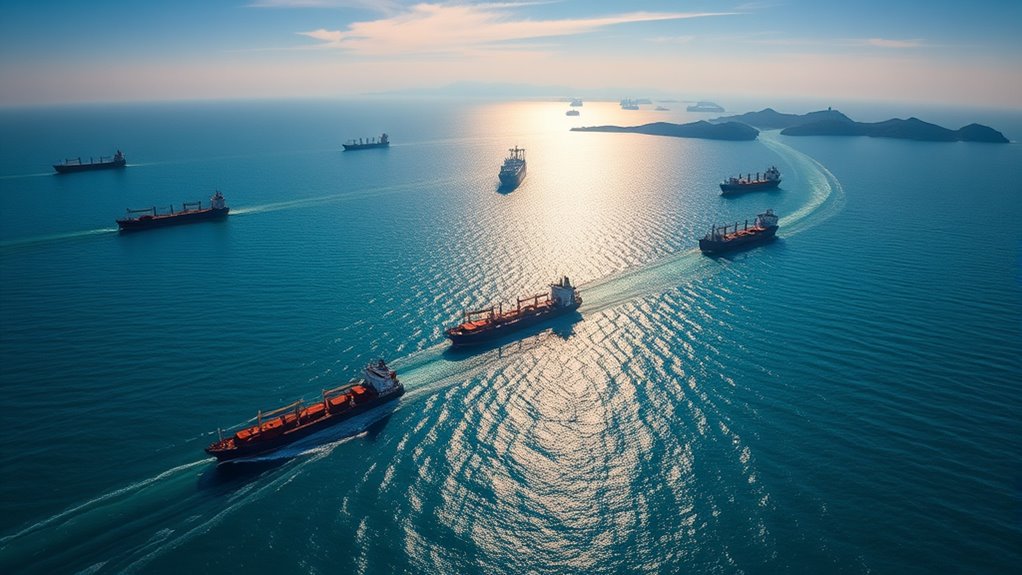
The South China Sea serves as a crucial artery for global trade, with roughly one-third of all maritime commerce passing through its waters each year. Your shipping routes depend on the region’s stability and open navigation. However, territorial disputes and militarization threaten these essential sea lanes.
The South China Sea handles one-third of global maritime trade, making stability vital for safe shipping routes.
- Chinese claims and militarization risk disrupting shipping and increasing collision hazards.
- U.S. freedom-of-navigation operations challenge excessive claims and uphold free passage.
- Regional tensions complicate maritime law enforcement, risking accidents and delays.
Recent UV radiation emissions from some military activities in the region could also impact environmental safety and maritime operations.
If conflicts escalate, trade routes could face blockages or disruptions, affecting global supply chains. Maritime security becomes indispensable for ensuring safe passage, preventing accidents, and maintaining economic stability. You must stay aware of these risks to navigate this geopolitically sensitive region effectively.
Frequently Asked Questions
How Do Regional Claim Disputes Influence Global Maritime Law and Sovereignty?
You see that regional claim disputes challenge global maritime law by testing sovereignty principles and UNCLOS agreements. When countries assert overlapping claims, it creates ambiguity over sovereignty and navigational rights, risking militarized conflicts and undermining international law’s authority. These disputes force the global community to navigate complex legal and political issues, emphasizing the need for diplomatic resolutions to make certain of free, safe, and lawful maritime navigation worldwide.
What Are the Environmental Impacts of Militarization and Resource Exploitation?
Imagine a vibrant coral reef slowly suffocating under a shadow of concrete and oil spills—that’s what militarization and resource exploitation do to the South China Sea. You cause environmental degradation by damaging marine ecosystems, destroying fisheries, and polluting waters with chemicals and waste. This systematic harm threatens biodiversity and local livelihoods, turning a thriving maritime paradise into a fragile, depleted landscape, risking long-term ecological collapse that affects everyone who depends on it.
How Might Future Conflicts Impact International Shipping and Trade Security?
Future conflicts could severely disrupt international shipping and trade security by increasing the risk of naval confrontations and accidents in the South China Sea. You might see more blockades or military skirmishes that threaten crucial sea lanes, causing delays and higher insurance costs. As tensions escalate, you’ll need to stay aware of maritime security issues, as these conflicts could threaten global trade flows and economic stability across multiple regions.
What Role Do External Powers Like the U.S. and Japan Play in Regional Stability?
You might think external powers like the U.S. and Japan escalate tensions, but they play a vital role in maintaining regional stability. By conducting freedom-of-navigation operations and providing military support to Southeast Asian claimants, they challenge China’s assertiveness and uphold open sea lanes. Their involvement discourages unilateral actions, promotes diplomatic solutions, and helps balance power, ensuring that regional conflicts don’t threaten global trade and maritime security.
Could Diplomatic Solutions Fully Resolve Territorial and Resource Disputes?
Diplomatic solutions could help ease tensions, but they might not fully resolve territorial and resource disputes. You’ll find that conflicting claims, strategic interests, and national pride make compromises difficult. While negotiations can reduce misunderstandings and build trust, underlying issues like sovereignty and access to resources remain complex. You should stay aware that ongoing diplomacy often needs to be complemented with confidence-building measures and, sometimes, multilateral agreements to achieve lasting peace.
Conclusion
So, you see, steering the South China Sea is like walking a tightrope with a load of fireworks. Everyone’s claiming a piece of the pie, building military towers, and racing for resources—all while pretending to prioritize peace. If you think geopolitics is dull, just remember: it’s basically a high-stakes game of maritime musical chairs. Stay tuned, because in this game, the only thing certain is the chaos, and maybe a ship or two getting caught in the crossfire.