Sportswashing involves using big sporting events to hide human rights abuses and political repression. Countries and organizations host these events to improve their image, often distracting from violations like migrant exploitation, ethnic suppression, and censorship. Sponsorships and ownership ties can also mask wrongdoing. As a viewer, you may not realize how these spectacles serve political agendas, but understanding the strategies behind them helps you see beyond the surface. If you keep exploring, you’ll discover how transparency can challenge this practice.
Key Takeaways
- Major sports events like the Olympics and World Cups are used to divert attention from human rights abuses through reputation laundering.
- Sportswashing involves hosting events, sponsorships, and infrastructure projects that mask social and political violations.
- Human rights violations linked to sportswashing include exploitation of workers, ethnic repression, and suppression of dissent.
- Media coverage varies, affecting public awareness and perception of sportswashing practices and associated abuses.
- Ethical concerns arise as sports organizations and athletes may inadvertently support regimes with questionable human rights records.

Fight for Those Without Your Privilege Human Rights Equality T-Shirt
This apparel boldly features the text "Fight For Those Without Your Privilege". It shows strong support for civil…
As an affiliate, we earn on qualifying purchases.
As an affiliate, we earn on qualifying purchases.
Defining Sportswashing and Its Origins

Sportswashing is a tactic where sports events, teams, or sponsorships are used to improve or hide the reputation of a country, corporation, or group with a problematic record. It aims to divert attention from unethical actions by leveraging the global appeal of sports. The term first emerged around 2015, linked to Azerbaijan’s hosting of the European Games, where the government sought to mask human rights abuses. Sportswashing functions as a form of reputation laundering, making moral violations seem less serious by focusing on sporting success or prestige. Similar to whitewashing or greenwashing, it disguises wrongdoing under a positive veneer. These tactics exploit the universal love for sport to distract and manipulate public perception, helping regimes or organizations maintain influence despite their controversial or harmful actions. The use of automation technologies in organizing and promoting international sporting events can sometimes inadvertently facilitate these reputation management strategies.

Sports Marketing: A Strategic Perspective
As an affiliate, we earn on qualifying purchases.
As an affiliate, we earn on qualifying purchases.
Major Sporting Events Under Scrutiny

Major sporting events often come under intense scrutiny because they serve as platforms for governments and organizations to project a positive image, sometimes masking underlying abuses. When you watch the Olympics, World Cups, or major races, you might not realize how these events can overshadow human rights issues. Countries hosting these events often prioritize image management over addressing social inequalities or political repression. Critics highlight how infrastructure projects, sponsorship deals, and international attention distract from systemic problems like migrant labor exploitation, censorship, and repression. These events are used to legitimize regimes with questionable records, making it harder to hold them accountable. As a viewer, you should be aware that behind the spectacle, there may be efforts to obscure uncomfortable truths and protect the reputation of those in power. Additionally, making money online is often promoted as a way for individuals to leverage these global events for personal gain, further complicating the narrative around their true impact.

A Place on the Team: The Triumph and Tragedy of Title IX (Princeton Paperbacks)
As an affiliate, we earn on qualifying purchases.
As an affiliate, we earn on qualifying purchases.
Strategies Used to Mask Human Rights Violations

You can see how hosting major sports events becomes a key strategy to distract from human rights issues, drawing global attention away from abuses. Sponsorship deals and branding efforts by state-linked entities help create a positive image, often masking underlying violations. By controlling narratives through media and public relations, they shape perceptions and hide the truth behind their actions. The use of public relations strategies further manipulates public opinion to maintain a favorable image.
Sports Event Hosting
How do nations and organizations use hosting sporting events to conceal human rights violations? They leverage the global attention these events generate to divert focus from domestic issues. By showcasing impressive infrastructure, they create an image of progress and stability, masking underlying social and political problems. Hosting large-scale events also attracts tourism and investment, which can overshadow reports of repression or abuses. Governments often secure international legitimacy through the spectacle, downplaying allegations of human rights violations. Media coverage emphasizes the event’s grandeur, minimizing coverage of controversies. Additionally, they promote narratives of national pride and development, shifting public discourse away from human rights concerns. In this way, hosting sports events becomes a strategic tool to mask and normalize systemic abuses while projecting a positive international image. Furthermore, the attention drawn to these events often distracts from the importance of fostering genuine social and political reforms.
Sponsorship and Branding
Sponsorship and branding serve as powerful tools for nations and organizations to conceal human rights violations. By associating with popular sports, they divert attention from abuses and create positive associations. They often sponsor teams, events, or athletes to legitimize their image and reach global audiences. This strategy helps mask underlying issues, making human rights abuses less visible. Additionally, these tactics often leverage public perception to further obscure the realities of violations.

Campaigning for Justice: Human Rights Advocacy in Practice (Stanford Studies in Human Rights)
Used Book in Good Condition
As an affiliate, we earn on qualifying purchases.
As an affiliate, we earn on qualifying purchases.
The Role of Sponsors and Ownership in Sportswashing
Sponsors and ownership play a central role in sportswashing by leveraging their financial influence to shape the image of sports events and teams. They often invest heavily in high-profile competitions or acquire teams to project a positive public image, regardless of underlying issues. By associating with popular sports, they divert attention from controversial practices or regimes. Ownership structures, especially when linked to governments or state-controlled entities, can embed political agendas into sports organizations. Sponsorship deals often include branding that emphasizes success and unity while hiding human rights abuses or corruption. This strategic positioning helps sponsors and owners gain international recognition and legitimacy. Their involvement can also influence governing bodies, enabling them to prioritize reputation management over ethical considerations, consequently perpetuating sportswashing practices. Furthermore, reliance on merchant services can facilitate the seamless processing of large sums of money, which may be used to obscure illicit financial flows related to these activities.
Human Rights Abuses Linked to High-Profile Sports Events
High-profile sports events often serve as platforms for human rights abuses, with host countries exploiting the global spotlight to mask underlying social and political issues. You might not realize that these events can hide serious violations, such as:
Major sports events often conceal human rights abuses behind a glamorous façade.
- Exploitation of migrant workers, like those building infrastructure for the World Cup in Qatar, facing poor conditions and unpaid wages.
- Ethnic suppression, exemplified by China’s treatment of Uyghurs during the Beijing Olympics.
- Suppression of dissent, where authorities crack down on protesters and restrict press freedom around big events.
- Censorship and repression, normalizing authoritarian regimes by diverting attention from human rights violations.
– The use of modern infrastructure in hosting these events can sometimes exacerbate social inequalities and displacement issues, further compounding human rights concerns.
These abuses often remain underreported, enabling regimes to project a positive image while continuing harmful practices behind the scenes.
Media’s Role in Highlighting or Hiding Sportswashing Practices

How does the media influence our perception of sportswashing? It shapes what we see as acceptable or problematic by choosing which stories to highlight. Media outlets can expose abuses, rally public opinion, and pressure authorities to act. Conversely, they may downplay or ignore controversial practices to protect sponsors or national interests. This selective coverage can either reveal or conceal sportswashing tactics, affecting public awareness. Here’s how different media approaches function:
| Approach | Effect on Public Awareness | Potential Biases |
|---|---|---|
| Investigative Reports | Increase transparency, pressure regimes | May be limited by access or politics |
| Corporate Sponsorship Coverage | Normalize or obscure issues | Might favor sponsors’ interests |
| Mainstream News | Shape dominant narratives | Risk sensationalism or suppression |
Additionally, the media’s role in shaping narratives can influence policy responses and public activism, highlighting the power of information dissemination in addressing human rights concerns.
Public Awareness and Perception of Sportswashing
Have you ever wondered if you truly know when a sporting event is being used to hide unethical practices? Public awareness of sportswashing remains limited, but perception is slowly shifting. Here’s what you should know:
- Many people are unfamiliar with the term “sportswashing,” making it harder to recognize its influence.
- Media coverage varies, with some outlets highlighting controversies, while others focus on sporting achievements.
- Regional differences affect awareness; in some areas, sportswashing scandals are widely discussed, while in others, they stay under the radar.
- Public opinion is mixed—some oppose supporting events linked to human rights abuses, while others prioritize entertainment over ethics.
- The rise of digital platforms and social media has increased access to information, helping to raise awareness about sportswashing and related issues.
Awareness grows as more reports and debates surface, but overcoming apathy and misinformation remains a challenge.
Ethical Implications for Sports Organizations and Athletes
As someone involved in sports, you need to consider your role in promoting ethical standards and accountability. Athletes and organizations hold influence, and their endorsement decisions can either support or enable sportswashing practices. It’s your responsibility to weigh the broader implications of your actions and advocate for integrity in sport. Recognizing the impact of public perception and how it is shaped by high-profile events is also crucial in fostering transparency and ethical conduct.
Athlete Endorsement Responsibilities
Athlete endorsement responsibilities carry significant ethical implications for both sports organizations and the athletes themselves, especially in the context of sportswashing. You need to be aware that your influence can either support or undermine human rights efforts. Here are four critical responsibilities:
- Research: Understand the background of sponsors and events to avoid endorsing those linked to abuses.
- Transparency: Be clear about your affiliations and voice concerns when sponsorships conflict with human rights.
- Advocacy: Use your platform to raise awareness about human rights issues connected to events or sponsors.
- Responsibility: Consider the broader impact of your endorsement, prioritizing ethics over lucrative deals or popularity.
Your choices can help challenge sportswashing and promote ethical integrity in sports.
Sports Organization Accountability
Are sports organizations fulfilling their ethical responsibilities when they engage with sponsors or host events linked to human rights abuses? You have a duty to scrutinize the origins of partnerships and event hosting. When organizations accept sponsorships from regimes accused of repression or exploitation, they risk legitimizing unethical practices. Hosting or promoting events in countries with documented abuses can appear complicit, especially if transparency and accountability are lacking. You should demand ethical standards and human rights considerations become central to decision-making processes. Ignoring these issues damages the integrity of sports and undermines public trust. Ultimately, sports organizations have a moral obligation to prioritize human rights, challenge corrupt regimes, and ensure their actions promote fairness, justice, and respect beyond just winning medals or gaining fame.
Impact of Sportswashing on Global Sports Integrity
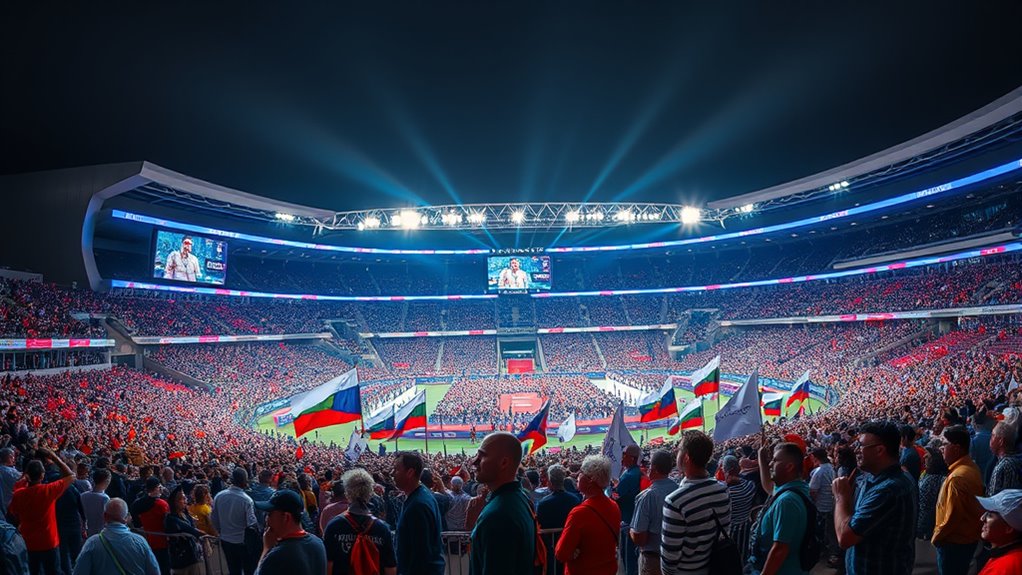
Sportswashing considerably damages the integrity of global sports by allowing political and economic agendas to overshadow athletic excellence and fair competition. It shifts focus from skill and dedication to image management, undermining trust in sports institutions. Here’s how it impacts you:
- Erodes fairness – When regimes buy influence, fair play takes a backseat, diminishing competitive integrity.
- Dilutes credibility – Sponsorships linked to abuses taint the reputation of teams and events, making you question their legitimacy.
- Weakens standards – Governments use sports as propaganda tools, reducing the moral authority of sports organizations.
- Undermines trust – When sports serve political ends, fans lose confidence in the fairness of competitions they cherish.
In the process, sports lose their core values, and your faith in fair play suffers.
Moving Toward Transparency and Accountability in Sports

To restore trust and uphold the integrity of global sports, efforts are increasingly focused on promoting transparency and accountability within the industry. You can support these initiatives by demanding clear disclosures from event organizers and sponsors about their human rights records and funding sources. Advocacy groups are pushing for stronger regulations that require sports bodies to align with ethical standards and conduct regular audits. Media coverage plays a crucial role in exposing misconduct and holding stakeholders responsible. Athletes and fans also have a voice in advocating for reforms, emphasizing the importance of ethical practices. By prioritizing transparency, the sports community can combat sportswashing, ensure fair competition, and protect human rights, fostering a more trustworthy and responsible sporting environment worldwide.
Frequently Asked Questions
How Do Sportswashing Practices Influence International Diplomacy and Global Relations?
You might not realize it, but sportswashing influences international diplomacy by allowing regimes to boost their image and gain soft power through global sporting events. This can create diplomatic tensions, as some countries see it as legitimizing oppressive governments. It also complicates efforts to hold regimes accountable, leading to strained relations and reduced trust between nations. Ultimately, sportswashing can both foster and hinder diplomatic efforts, depending on how it’s perceived worldwide.
What Legal Measures Exist to Prevent or Address Sportswashing in Major Events?
You might think there’s a magic legal shield against sportswashing, but sadly, no. International laws are pretty vague, leaving it up to host countries and sports bodies to police themselves. Some countries have adopted transparency rules or human rights commitments, but enforcement is spotty. Ultimately, fighting sportswashing requires stronger global cooperation, clearer legal standards, and holding sponsors and organizers accountable—if only someone could legislate morality!
How Do Athletes and Sports Organizations Navigate Ethical Dilemmas Related to Sportswashing?
You can navigate ethical dilemmas by speaking out against sportswashing practices and refusing to participate in events linked to human rights abuses. Support organizations that promote ethical standards in sports and advocate for transparency. Use your platform to raise awareness and pressure governing bodies to prioritize human rights over profit or image. Staying informed and aligning your actions with your values helps combat sportswashing’s influence and promotes integrity in sports.
What Are the Long-Term Impacts of Sportswashing on Local Communities and Economies?
You might notice that sportswashing can hurt local communities and economies long-term. It often leads to inflated costs for hosting events, leaving residents with debt or underfunded public services. Human rights abuses linked to sportswashing can create social divisions and harm community trust. Over time, the focus on reputation over genuine development discourages sustainable growth, making local areas vulnerable to economic instability and social unrest once the spotlight fades.
How Can Fans and Consumers Recognize and Oppose Sportswashing in Sports Events?
You can spot sportswashing like a lighthouse piercing through fog—look beyond the glitz to see the darker currents. Research sponsors and event hosts to uncover any human rights issues or dubious ties. Question the narrative presented and support athletes and organizations that promote transparency and ethical practices. By staying informed and vocal, you help expose hidden agendas and push for accountability, ensuring sports remain a space for integrity, not image laundering.
Conclusion
If you think sportswashing is just a minor issue, think again—it’s a monstrous shadow looming over sports, threatening to turn your favorite games into mere tools for hiding human rights horrors. By turning a blind eye, you risk endorsing atrocities and fueling injustice worldwide. Only through relentless transparency and accountability can we stop this giant from corrupting the beautiful spirit of sports forever. Don’t let silence be your victory—demand change now!