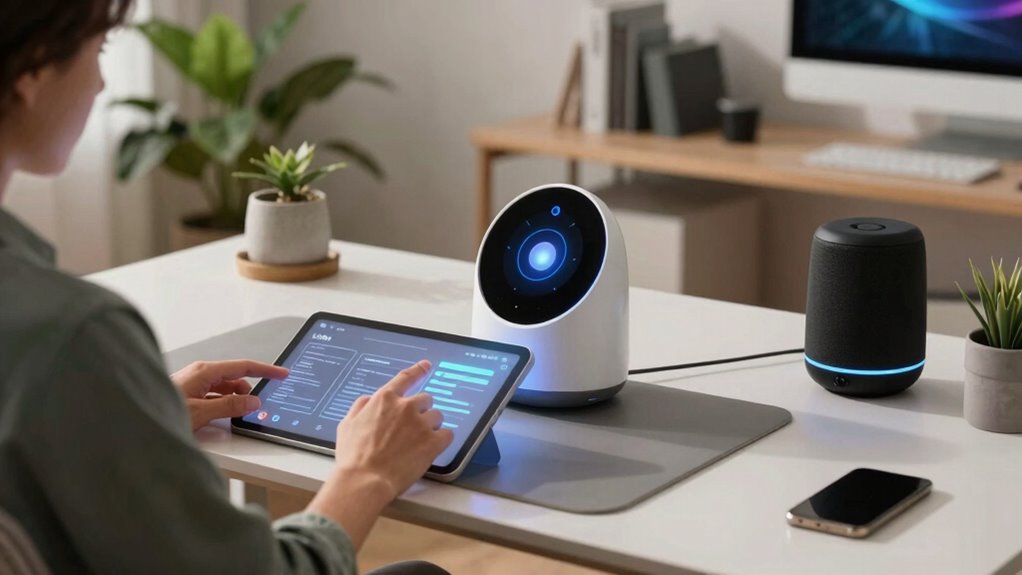

AI assistants are changing your everyday workflows by automating routine tasks like managing schedules, drafting emails, and analyzing data. They help you prioritize urgent tasks, suggest ideal meeting times, and recommend resources to boost your productivity. By personalizing their support to suit your habits, they free up more time for creative and complex work. As their role grows, understanding the ethical and privacy considerations becomes essential—stay with us to discover how to use this technology responsibly.
Key Takeaways
- AI assistants streamline routine tasks like scheduling, email drafting, and data analysis, freeing time for complex activities.
- They enhance team collaboration by automating updates and coordinating tasks seamlessly.
- Personalization strategies optimize workflows and suggest resources tailored to individual habits and preferences.
- Ethical considerations such as data privacy and transparency influence AI adoption and trustworthiness in workplaces.
- Over-reliance on AI may impact critical thinking skills, emphasizing the need for balanced, responsible use.

AI assistants are transforming how we work by streamlining tasks and increasing productivity. They help you manage your schedule, draft emails, and analyze data with remarkable speed, freeing up your time for more complex or creative endeavors. As these tools become more sophisticated, they adapt to your habits and preferences through personalization strategies, making your interactions more intuitive and efficient. By learning your routines, AI assistants can suggest the best times to schedule meetings, prioritize tasks based on urgency, and even recommend resources tailored to your specific needs. This customization enhances your workflow, giving you a more seamless experience that feels less like managing a digital tool and more like collaborating with a smart, attentive partner. Additionally, ongoing updates and improvements ensure that AI assistants stay relevant and capable of handling emerging challenges in your workflow.
However, as you increasingly rely on AI assistants, you must also consider ethical considerations. Privacy becomes a central concern because these tools often collect and analyze sensitive data to deliver personalized experiences. You need to be aware of how your information is stored, who has access to it, and whether it’s being used ethically. Transparency from AI providers about their data practices is *vital*, so you can make informed decisions about your digital footprint. Additionally, the potential for bias in AI algorithms can impact the fairness of your workplace interactions, especially if decisions are automated, such as performance evaluations or resource allocations. Understanding and addressing these ethical considerations helps you foster a responsible and trustworthy AI implementation into your daily workflow.
The personalization strategies embedded in AI assistants are designed to make your work easier, but they also raise questions about dependency and autonomy. You might find yourself relying heavily on these tools to make decisions or filter information, which could diminish your critical thinking skills over time. It’s important to strike a balance—use AI to enhance your capabilities without allowing it to replace your judgment. Developing awareness about these boundaries ensures that AI remains a helpful tool rather than a crutch. Recognizing the importance of ethical AI practices can help guide responsible usage and implementation. Moreover, understanding the data practices of AI providers can help you better safeguard your information and maintain control over your digital footprint. Staying informed about AI transparency can further empower you to use these tools ethically and responsibly.
In your workplace, AI assistants are also influencing team dynamics. They facilitate better communication and collaboration by automatically sharing relevant updates and coordinating tasks across groups. Yet, this shift raises ethical questions about transparency—are everyone aware of how AI is influencing decisions and interactions? As you adopt AI solutions, staying mindful of these ethical considerations and continuously refining your personalization strategies can help you harness AI’s benefits while maintaining integrity and fairness. Ultimately, AI assistants are reshaping workflows in powerful ways, but your role is to navigate these changes thoughtfully, *making certain* that technology serves your goals ethically and effectively. Recognizing the importance of trustworthy AI can help ensure these systems support a fair and balanced work environment.
AI assistant for scheduling and email drafting
As an affiliate, we earn on qualifying purchases.
As an affiliate, we earn on qualifying purchases.
Frequently Asked Questions
How Do AI Assistants Handle Sensitive or Confidential Information?
AI assistants handle sensitive or confidential information by implementing strict privacy protocols and data encryption. You can trust that your data stays secure because they use advanced encryption methods during storage and transmission. Additionally, AI assistants follow privacy protocols designed to limit access and guarantee compliance with data protection laws. These measures protect your confidential information, giving you peace of mind while using AI-powered tools in your daily workflows.
Can AI Assistants Adapt to Unique Individual Work Styles?
AI assistants can adapt to your unique work style, but they face personalization challenges and customization limitations. You might find that the AI learns your preferences over time, but it may struggle with complex or highly individual workflows. To maximize their usefulness, you’ll need to provide consistent feedback and sometimes manually tweak settings. While they’re improving, AI assistants still have room to better match your specific needs.
What Industries Are Most Benefiting From AI Assistant Integration?
You’ll find industries like healthcare, finance, and customer service benefiting most from AI assistant integration. They leverage industry-specific automation to streamline complex tasks, improve accuracy, and enhance personalized productivity. AI assistants help you manage schedules, analyze data, and provide tailored support, making workflows more efficient. This targeted approach allows these industries to optimize operations and deliver better results, demonstrating how AI transforms specialized sectors by adapting to their unique needs.
How Do AI Assistants Impact Employee Job Satisfaction?
AI assistants boost your job satisfaction by improving employee morale and workload management. They handle repetitive tasks, freeing you to focus on more meaningful work, which makes your day less stressful and more engaging. As a result, you feel more valued and motivated. With AI support, you experience a smoother workflow and better work-life balance, leading to increased job satisfaction and a more positive attitude toward your role.
Are There Any Legal Concerns With AI Assistant Usage at Work?
Yes, there are legal concerns with AI assistant usage at work. You need to guarantee legal compliance, especially regarding data privacy laws and employee monitoring. Additionally, be cautious about intellectual property rights—using AI-generated content might raise ownership issues. Regularly review your company’s policies and consult legal experts to avoid potential lawsuits or violations, ensuring your AI integration aligns with current regulations and protects sensitive information.

AI for Life: 100+ Ways to Use Artificial Intelligence to Make Your Life Easier, More Productive…and More Fun!
As an affiliate, we earn on qualifying purchases.
As an affiliate, we earn on qualifying purchases.
Conclusion
As you embrace AI assistants, you’re stepping into a future where your workflow is more seamless and efficient. They handle tasks swiftly, freeing you to focus on what truly matters—your creativity and strategic thinking. Just like the invention of the printing press, AI is transforming how we work and communicate, making the impossible possible. So, don’t fear the robot revolution; instead, be ready to ride the wave into a smarter, more productive era.

AI Data Analysis for Non-Coders: Use Claude Code to Clean Spreadsheets, Build Dashboards, and Automate Reports — The Vibe Coder's Handbook (Book 4)
As an affiliate, we earn on qualifying purchases.
As an affiliate, we earn on qualifying purchases.

AI Tools for Everyday Tasks: The Complete Beginner’s Guide To Working Smarter with AI
As an affiliate, we earn on qualifying purchases.
As an affiliate, we earn on qualifying purchases.