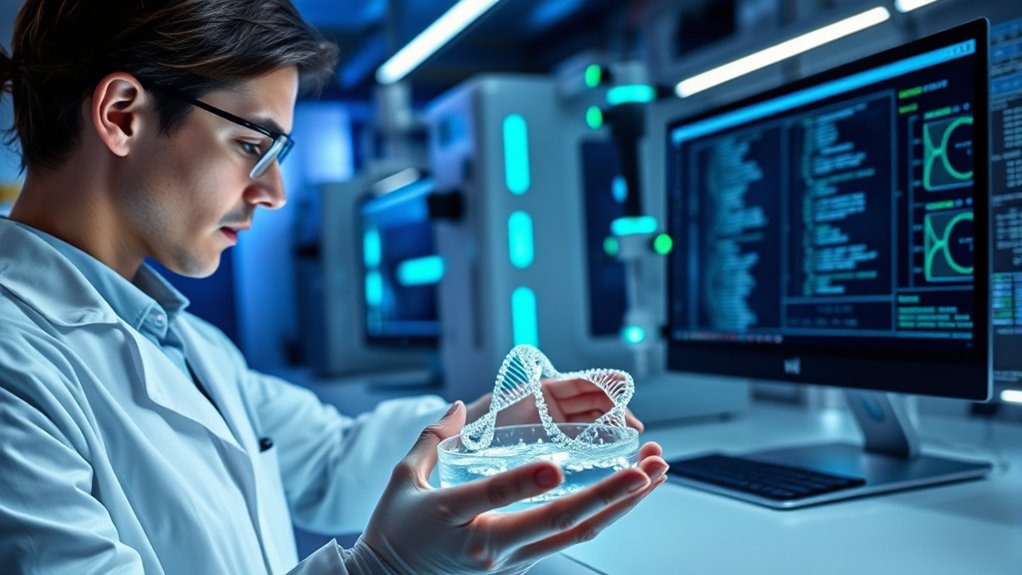

Biotech enables you to store digital data directly in genomes by encoding information into nucleotide sequences like A, C, G, and T. Using advanced synthesis and sequencing techniques, you can write and retrieve data from living cells or synthetic DNA. This method offers incredible storage density, long-term stability, and sustainability. If you keep exploring, you’ll discover how this innovative approach combines biology and technology to revolutionize data archiving.

Get travel and outdoor gear delivered free with Prime
- Fast, free delivery on millions of items
- Prime Video, Amazon Music and more included
- Member-only deals all year
Key Takeaways
- Data can be embedded into living genomes using genetic modifications or synthetic biology tools like CRISPR.
- In vivo storage leverages organisms to naturally encode, store, and potentially retrieve digital information within DNA sequences.
- Ensuring DNA stability within genomes requires protective strategies against environmental degradation, such as encapsulation and chemical stabilization.
- Optogenetics enables autonomous, high-density, light-controlled data recording directly into cellular DNA.
- Challenges include complex sequencing for data readout and maintaining long-term genome integrity for reliable storage.
Products Worth Considering

Travelpro Platinum Elite 50-Inch Rolling Garment Bag, Black

Travelpro Maxlite 5 Softside Underseat Carry-On, Black, 15-Inch

DJI Osmo Mobile 8 Standard Combo Phone Gimbal Stabilizer
As an affiliate, we earn on qualifying purchases.
The Fundamentals of DNA as a Data Storage Medium

DNA serves as an innovative medium for data storage because it encodes digital information through nucleotide sequences composed of A, C, G, and T. You translate binary data into these sequences, creating unique patterns that represent your information. One of DNA’s biggest advantages is its incredible density—just one gram can hold petabytes of data, saving vast amounts of space. It’s also remarkably durable; under the right conditions, DNA can preserve data for thousands of years. The molecular structure, a double helix discovered in 1953, makes DNA highly stable and compact. This stability, combined with its capacity for dense encoding, positions DNA as a promising solution for archiving huge datasets like scientific records or media files, offering long-term preservation with minimal physical footprint. Additionally, the natural biological composition of DNA contributes to its longevity and resilience as a data medium.
How Genetic Encoding Transforms Digital Information

Have you ever wondered how digital data can be transformed into a molecular language? It starts with translating binary code—zeros and ones—into sequences of nucleotides: A, C, G, and T. You assign specific nucleotide combinations to binary patterns, ensuring the sequences are unique and error-resistant. This process involves mapping data bits to these four bases, creating a string of molecules that represent your information. By carefully designing these sequences, you prevent problematic repeats or secondary structures that could cause errors. Once encoded, the digital information becomes a set of DNA strands, ready for synthesis. This transformation allows digital data to be stored compactly and durably within the molecular structure of DNA, leveraging its high density and stability for long-term preservation. Error correction mechanisms are often integrated into the encoding process to further enhance data integrity over time.
Techniques for Writing and Reading Data in DNA

To write and read data in DNA, you need reliable synthesis and sequencing technologies that can accurately encode and decode nucleotide sequences. Advances in these methods improve speed, reduce errors, and lower costs, making DNA storage more practical. Error correction strategies are essential to guarantee data integrity throughout the process. Incorporating ethical hacking principles can help identify vulnerabilities in DNA data storage systems, ensuring their security against potential threats.
DNA Synthesis Methods
Synthesizing and sequencing DNA to encode and decode digital information involves advanced biotechnological techniques that are rapidly evolving. You’ll find three key methods shaping this field:
- Chemical Synthesis: You create DNA strands by adding nucleotides one-by-one using phosphoramidite chemistry, enabling custom sequences for data encoding.
- Enzymatic Synthesis: Using enzymes like terminal deoxynucleotidyl transferase, you can assemble DNA more efficiently, reducing costs and increasing speed.
- Sequencing Technologies: You decode stored data with methods like nanopore and sequencing-by-synthesis, translating nucleotide sequences back into digital information.
These techniques are vital for writing data into DNA and reading it accurately, paving the way for scalable, cost-effective DNA data storage solutions.
Sequencing Technologies Advances
Advancements in sequencing technologies are transforming how we decode data stored in DNA, making the process faster, more accurate, and cost-effective. Modern sequencers like nanopore and Illumina platforms enable rapid reading of complex nucleotide sequences with high fidelity. Nanopore sequencing, which involves passing DNA strands through tiny pores, offers real-time data and long-read capabilities, reducing decoding time. Meanwhile, improvements in synthesis and sequencing chemistries have lowered error rates and costs, making DNA data retrieval increasingly practical. These innovations streamline the readout process, allowing larger datasets to be decoded efficiently. As sequencing becomes more accessible and precise, it supports the expanding use of DNA as a reliable, high-density storage medium, paving the way for scalable, long-term data archiving solutions. High fidelity sequencing ensures that the stored data remains accurate over time, further enhancing DNA’s potential as a durable storage medium.
Error Correction Strategies
How do researchers guarantee the accuracy of data stored in DNA, given the inherent error-prone processes of synthesis and sequencing? They use robust error correction strategies that detect and fix mistakes during writing and reading. These methods include:
- Error-correcting codes like Reed-Solomon and LDPC, which add redundancy to identify and correct errors.
- Redundant encoding, where data is stored across multiple DNA strands, allowing consensus-based correction.
- Quality filtering during sequencing, discarding low-confidence reads to improve accuracy.
- Additionally, the use of error mitigation techniques during synthesis and sequencing helps minimize the introduction of errors and enhances overall data integrity.
Harnessing Living Cells for In Vivo Data Storage
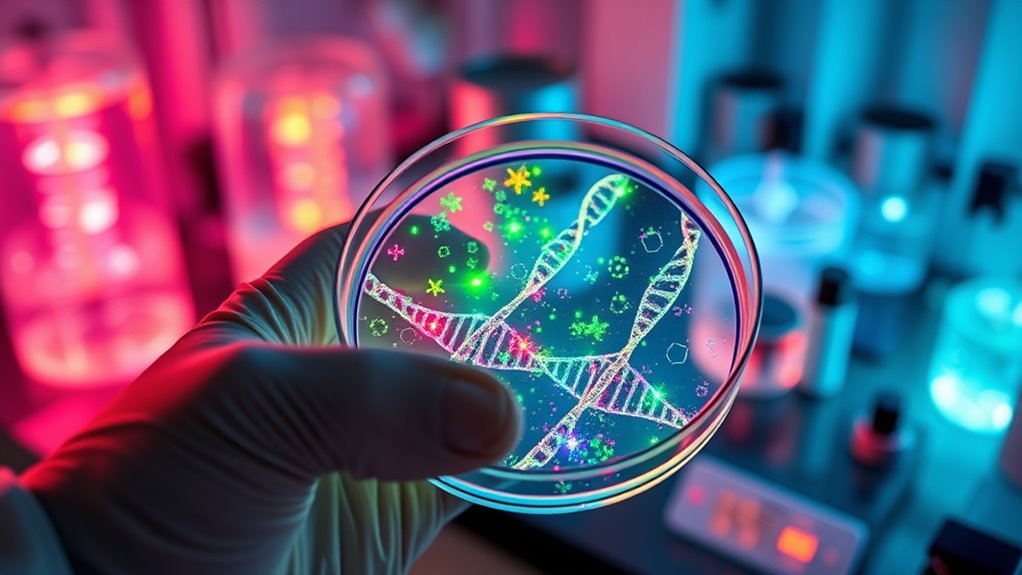
Harnessing living cells for in vivo data storage offers a promising approach to embed information directly into biological systems. You can leverage engineered cells to record data as specific genetic modifications or insertions within their DNA. Using synthetic biology tools like CRISPR, you can program cells to integrate artificial sequences that encode information, effectively turning the organism into a biological hard drive. Optogenetic control allows you to encode data via light signals, enabling high-density, real-time recording. This method provides the advantage of continuous, autonomous data storage within living systems, which can be useful for tracking environmental changes or cellular states. Additionally, vetted storage solutions ensure reliability and safety in data encoding within biological contexts. However, readout involves complex sequencing and analysis, making retrieval more challenging than in vitro methods. Despite these hurdles, harnessing living cells opens new avenues for durable, self-repairing data archives embedded within biological organisms.
Overcoming Challenges in Biotechnological Data Preservation
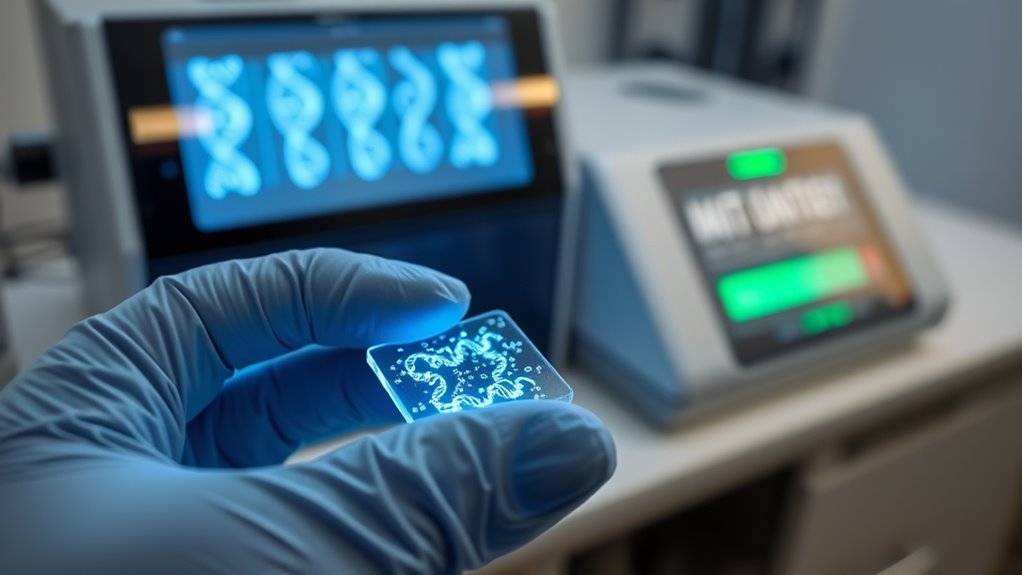
To preserve data effectively, you need to improve DNA synthesis accuracy and guarantee long-term stability against environmental factors. Faster, more reliable reading technologies are essential to make DNA storage practical for widespread use. Addressing these challenges will open DNA’s full potential as a durable, high-density data medium.
Enhancing DNA Synthesis Accuracy
Enhancing DNA synthesis accuracy is crucial for reliable data storage, as errors during synthesis can compromise data integrity and retrieval. Mistakes like insertions, deletions, or substitutions can corrupt encoded information, making error correction essential. To improve accuracy, focus on these key strategies: 1. Refining enzymatic synthesis methods to reduce misincorporations and increase fidelity. 2. Implementing advanced error-correcting codes, which detect and fix mistakes during sequencing. 3. Optimizing synthesis conditions—such as temperature, reagents, and reaction times—to minimize errors and improve consistency. Additionally, applying Honda Tuning techniques to fine-tune biochemical processes can further enhance synthesis precision.
Protecting DNA Stability Long-Term
Maintaining the long-term stability of DNA for data storage remains a key challenge in biotechnological applications. Environmental factors like UV light, moisture, and oxygen can cause DNA degradation, risking data loss. To protect against these threats, you should encapsulate DNA in protective materials such as silica or polymers, which shield it from environmental damage. Controlling storage conditions—keeping DNA in dry, cool, and oxygen-free environments—further extends its lifespan. Additionally, using chemical modifications or stabilizing agents can slow down degradation processes. Regular monitoring and proper handling are vital to ensure data integrity over decades or even centuries. Awareness of recognizing and identifying angel numbers can help you stay attentive to signs of environmental threats or changes that might impact storage conditions. Implementing these strategies allows you to preserve DNA’s stability, making it a reliable medium for long-term data storage.
Accelerating Reading Technologies
Advancements in sequencing technologies are central to overcoming the current limitations of DNA data retrieval, as faster and more accurate reading methods are essential for scalable, practical storage solutions. To accelerate reading, focus on:
- Developing high-throughput sequencers that decode DNA rapidly, reducing turnaround times.
- Improving error correction algorithms to guarantee data integrity during decoding.
- Integrating nanopore and optical sequencing methods for real-time, portable reading capabilities.
- Leveraging AI-powered processing to enhance the speed and accuracy of DNA sequence analysis.
These innovations will make DNA data retrieval more efficient, cost-effective, and accessible. As sequencing speeds increase and errors decrease, you’ll be able to access vast amounts of stored data quickly. This progress is vital for transforming DNA from a scientific curiosity into a mainstream data storage medium, supporting future large-scale applications.
The Environmental and Long-Term Benefits of DNA Storage
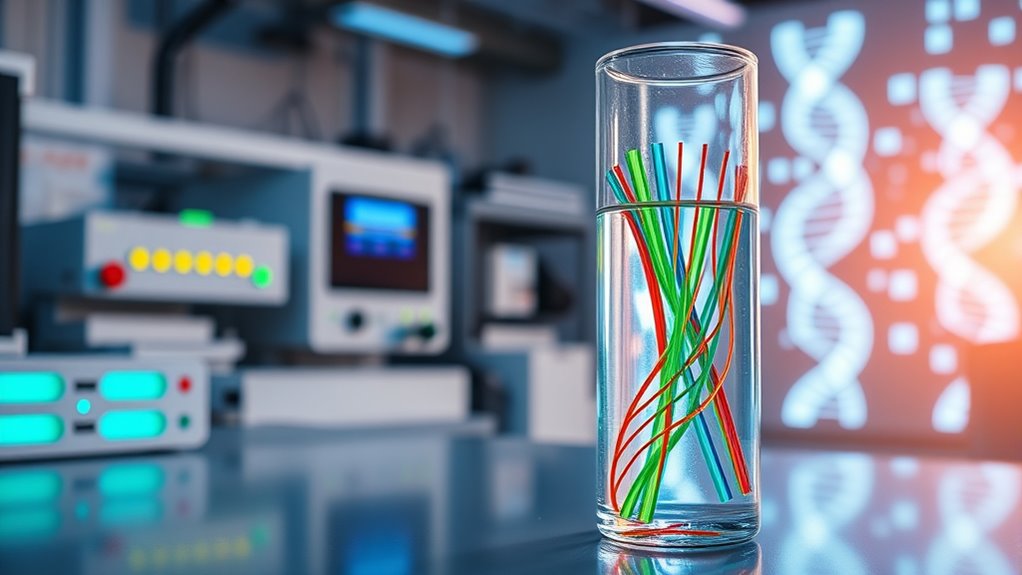
Because DNA storage requires minimal physical space and energy compared to traditional data centers, it offers a highly sustainable solution for long-term data preservation. Its stability allows data to last thousands of years when stored properly, reducing the need for energy-intensive cooling and maintenance. This low footprint minimizes environmental impact, conserving resources and decreasing e-waste. Additionally, DNA’s dense encoding means fewer physical materials are needed, lowering manufacturing and disposal footprints. To illustrate, consider the following:
| Benefit | Explanation |
|---|---|
| Space efficiency | Stores petabytes in a tiny volume |
| Energy consumption | Requires minimal power for storage and retrieval |
| Long-term stability | Preserves data for millennia without degradation |
| Reduced e-waste | Less hardware and fewer updates needed |
| Sustainable materials | Uses biological molecules instead of plastics or metals |
This approach aligns with eco-friendly goals, supporting a greener digital future. It is important to note that DNA stability and its biological nature contribute significantly to its suitability for sustainable data storage.
Future Perspectives: Merging Biotechnology With Digital Archives

The integration of biotechnology with digital archiving is poised to revolutionize how you store and access data. This merging promises faster, cheaper, and more durable storage solutions. Here are three exciting developments to watch:
- Hybrid Storage Systems: Combining DNA’s density with silicon’s speed, you’ll get systems that are both high-capacity and quick to access.
- Synthetic Biology: Engineered organisms could encode and retrieve data naturally, enabling seamless integration of biological and digital information.
- Automated Pipelines: Advances in biotech will lead to fully automated data encoding, storage, and decoding, reducing costs and human error.
This fusion will reshape data management, making archives more sustainable, scalable, and resilient for future generations.
Frequently Asked Questions
How Secure Is DNA Data Storage Against Hacking or Unauthorized Access?
DNA data storage offers high security because accessing or hacking it isn’t straightforward. You need specialized knowledge, tools, and physical access to the DNA samples, making unauthorized retrieval difficult. Plus, you can encrypt the data before encoding it into DNA, adding an extra layer of protection. However, if someone gains physical access and has the right expertise, they could potentially decode the information, so secure storage environments are essential.
What Are the Ethical Considerations of Encoding Data Within Living Organisms?
You should consider that encoding data within living organisms raises ethical issues like potential biosecurity risks and impacts on biodiversity. With DNA’s capacity to store vast information—up to 1 exabyte per cubic millimeter—you could inadvertently introduce sensitive data into ecosystems. This could lead to unforeseen consequences, such as gene transfer to non-target species or bioethical dilemmas about manipulating life forms. Responsible oversight and clear regulations are essential to address these concerns.
Can DNA Data Storage Be Integrated With Existing Digital Infrastructure?
You can integrate DNA data storage with existing digital infrastructure by developing hybrid systems that combine molecular and electronic components. This approach allows you to encode digital data into DNA, store it efficiently, and then convert it back into electronic signals when needed. Advances in sequencing and synthesis tech make this feasible, enabling you to create scalable, durable storage solutions that complement traditional data centers, reducing space and energy use while ensuring long-term data preservation.
How Scalable Are Current DNA Synthesis and Sequencing Technologies?
Imagine you’re using current DNA synthesis and sequencing tech to store vast data, like a national archive. Right now, these technologies are somewhat limited in scalability due to high costs, slow speeds, and error rates. While they’re improving rapidly, generating megabytes to gigabytes of data remains challenging. Future breakthroughs could enable exabyte-scale storage, but for now, scaling remains a significant hurdle for widespread commercial use.
What Are the Cost Comparisons Between DNA Storage and Traditional Media?
You’ll find that DNA storage is currently more expensive than traditional media like hard drives and magnetic tapes, mainly due to costly synthesis and sequencing processes. However, as biotech advances reduce these costs, DNA could become more competitive, especially considering its incredibly high storage density and long-term stability. In the future, the price gap may narrow, making DNA a viable option for archival data storage.
Conclusion
Imagine a future where your memories are stored in the very fabric of life, as if DNA itself becomes a library of all we’ve known. By harnessing biotech and DNA data storage, you’re not just preserving information—you’re weaving it into the timeless tapestry of nature. As technology and biology intertwine, the question isn’t just what we can store, but what we’re willing to leave behind for generations to come.