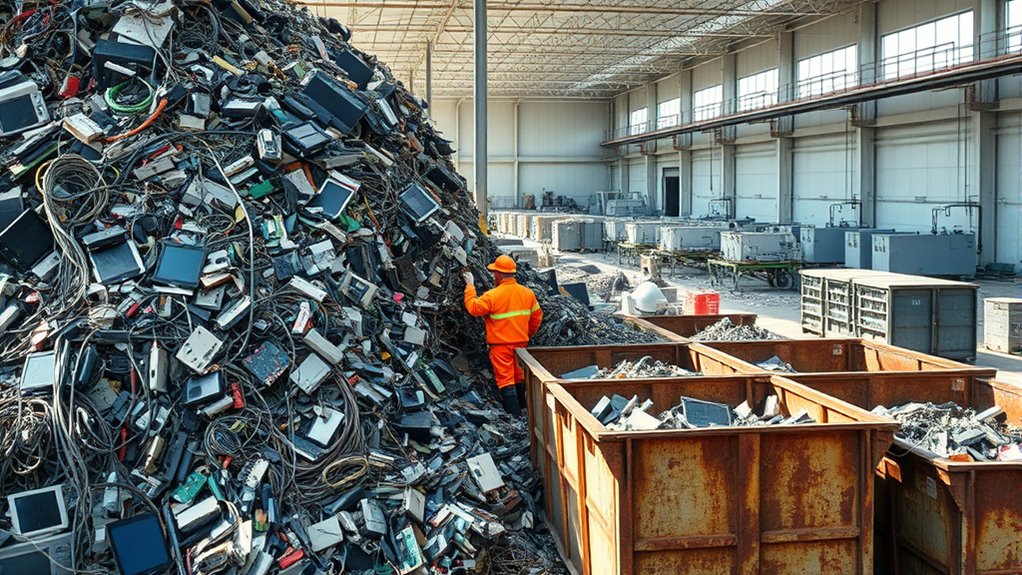

To recycle electronics responsibly, it’s important to dispose of e-waste at certified collection centers or take-back programs, and avoid informal or open-air recycling methods. Proper recycling prevents toxic substances from contaminating your environment and ensures valuable materials like gold and copper are recovered safely. Supporting policies like producer responsibility and raising awareness also help. If you want to find out how innovative tech and smarter policies can make e-waste management more sustainable, keep exploring.
Key Takeaways
- Promote proper disposal through certified collection centers and e-waste recycling programs to prevent environmental contamination.
- Support policies like extended producer responsibility (EPR) and bans on hazardous materials to ensure responsible manufacturing and recycling.
- Increase public awareness and education on the dangers of informal e-waste disposal and benefits of responsible recycling.
- Implement advanced recycling technologies such as smart sorting and hydrometallurgical processes to recover valuable materials efficiently.
- Encourage consumers to repair, donate, or recycle electronics responsibly, reducing waste and conserving resources.
The Growing Challenge of E-Waste Worldwide

Have you ever wondered why e-waste is becoming one of the fastest-growing waste streams globally? The answer lies in our rapid technological advancements and shorter product lifespans. In 2022, the world generated a staggering 62 million tonnes of e-waste, and this amount is expected to grow by 32% to reach 82 million tonnes by 2030. Each person produces about 7.8 kg annually, showing how widespread this issue is. The pace of e-waste growth is roughly 2.6 million tonnes each year. Contributing factors include constantly evolving electronics and consumer habits that favor upgrading devices. Without effective management, this surge will lead to more environmental pollution, resource loss, and health risks, making e-waste a pressing global challenge. Implementing proper disposal strategies can help mitigate some of these impacts and promote sustainable practices.
Impact of Improper Disposal on Health and Environment
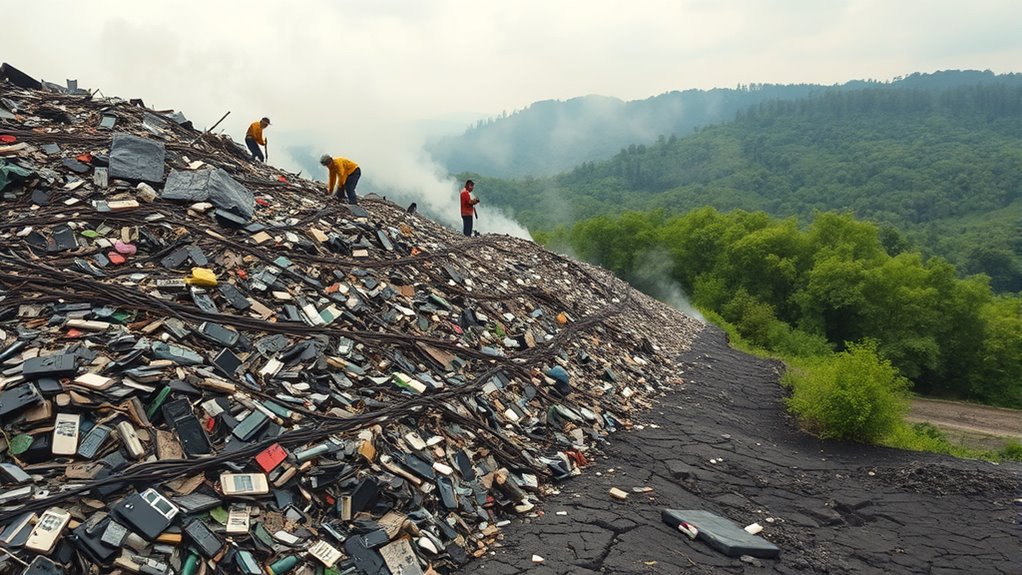
Did you know that improper disposal of e-waste poses serious risks to both health and the environment? When e-waste is dumped or processed informally, hazardous substances like lead, mercury, and arsenic seep into soil and water, contaminating ecosystems. These toxins can enter your food chain, causing long-term health problems such as nerve damage, brain disorders, and cancers. Children and pregnant women are especially vulnerable to these dangers. Workers handling e-waste without proper safety measures risk inhaling toxic fumes or skin exposure, which can lead to severe health issues. Additionally, pollutants from e-waste can harm nearby communities, causing respiratory problems and other illnesses. Proper handling and disposal methods are crucial to prevent such environmental and health hazards, emphasizing the importance of ethical e-waste management. Overall, improper disposal not only destroys ecosystems but also jeopardizes human well-being, highlighting the urgent need for responsible e-waste management.
Current Global Recycling Practices and Limitations
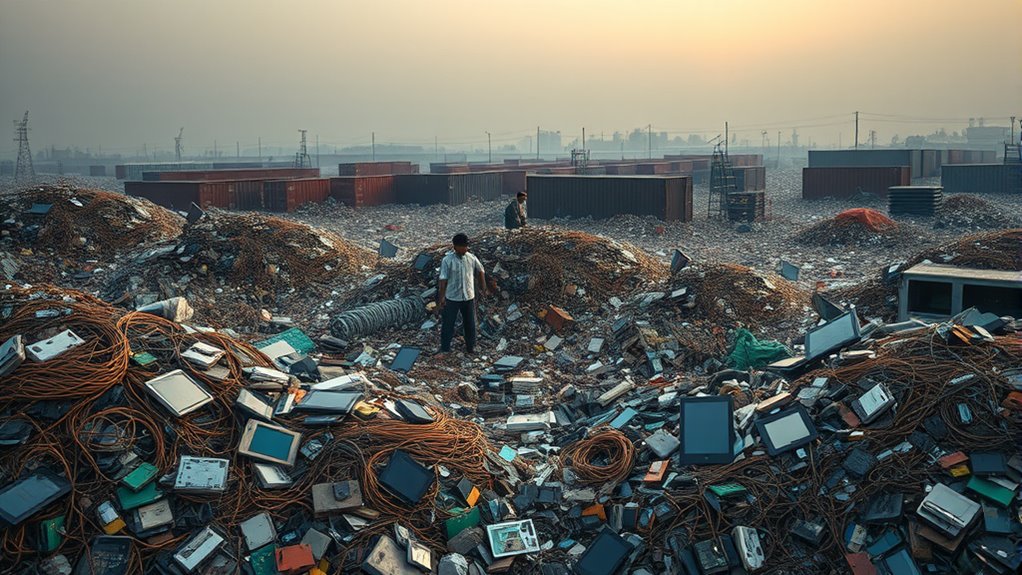
You should know that only about 22% of global e-waste gets properly recycled, and this rate is expected to drop further. Most recycling is informal, often unsafe, and leads to environmental harm. Recovering valuable resources remains a challenge, leaving billions of dollars’ worth of materials unreclaimed worldwide. Incorporating essential oils in environmental cleanup efforts has shown potential to mitigate some pollution effects and promote safer recycling practices.
Low Recycling Rates
Despite the urgent need to address e-waste, global recycling rates remain alarmingly low, with only about 22.3% of discarded electronic devices properly collected and processed in 2022. This means most e-waste is left unmanaged, often ending up in landfills or informal recycling sites. Limited collection infrastructure, lack of consumer awareness, and inadequate policies hinder higher recycling rates. Many countries struggle with establishing efficient systems to gather and process e-waste, causing valuable resources to go unrecovered. Additionally, the reliance on informal recycling sectors leads to unsafe practices, further reducing the overall efficiency of recycling efforts. Without significant improvements in collection and processing, the global e-waste recycling rate is projected to decline further, exacerbating environmental pollution and resource loss. Enhancing collection methods and adopting advanced recycling technologies are essential steps toward increasing recovery rates and minimizing environmental impacts.
Informal Recycling Dominance
Most of the world’s e-waste ends up in informal recycling sectors, where practices are often unsafe and unregulated. You might not realize that in these environments, workers manually dismantle devices without protective gear, exposing themselves and communities to toxic chemicals like lead, mercury, and arsenic. These informal methods lack proper safety standards, leading to environmental contamination and health risks. Because of limited oversight, valuable materials like gold, copper, and rare earth elements are frequently discarded or improperly recovered, wasting resources. This dominance of informal recycling persists partly because of inadequate infrastructure, high costs, and weak enforcement of regulations. Additionally, the absence of regulatory frameworks means these unsafe practices continue unchecked, causing long-term environmental damage and health hazards for vulnerable populations.
Resource Recovery Challenges
Global e-waste recycling faces significant resource recovery challenges because only a small fraction of valuable materials are effectively extracted. Despite the high concentration of precious metals like gold, silver, and rare earth elements in e-waste, current recycling methods recover just about 1% of rare earths and roughly 22% of overall materials. You may not realize that billions of dollars worth of metals remain unrecovered globally, mainly due to inefficient, informal, or unsafe processes. Many valuable resources are lost because of improper collection, inadequate technology, or economic disincentives. This limits the potential to reuse critical materials and reduces environmental benefits. Additionally, the trustworthiness of brands involved in e-waste recycling can influence the effectiveness of resource recovery efforts. Without improved recycling infrastructure and stricter regulations, most valuable resources will continue to go to waste, worsening supply shortages and environmental pollution.
The Role of Informal Recycling Sectors

You should be aware that informal recycling sectors handle most e-waste globally, often using unsafe methods. These practices pose serious health risks to workers and nearby communities due to toxic exposures. Addressing these dangers is essential to improving both environmental and human health outcomes. Additionally, implementing responsible recycling initiatives can help mitigate these risks and promote safer disposal practices.
Informal Sector Risks
Although informal recycling sectors play a significant role in managing e-waste, they pose substantial health and environmental risks. You might see workers dismantling electronics without proper safety gear, exposing themselves to hazardous substances like lead, mercury, and arsenic. These toxins contaminate soil, water, and air, harming ecosystems and nearby communities. Children and women are especially vulnerable to health problems such as nerve damage, respiratory issues, and cancers from prolonged exposure. Improper handling and open burning release toxic fumes, worsening pollution. Because these activities often occur outside regulated facilities, waste isn’t properly sorted or processed, leading to resource loss. This unregulated approach not only endangers human health but also hampers efforts to recover valuable materials, making e-waste management less sustainable and more hazardous. Additionally, the lack of proper recycling infrastructure limits the efficiency of resource recovery and increases environmental degradation.
Unsafe Recycling Practices
Why do informal recycling practices pose such significant risks? Because they often involve unsafe methods that release toxic substances directly into the environment and pose health hazards. Workers, including children, handle e-waste without proper protective gear, exposing themselves to lead, mercury, cadmium, and other hazardous materials. Burning plastics releases dioxins and furans, which are highly toxic. Open-air dismantling destroys valuable components but also contaminates soil and water sources. These practices lack regulation, so hazardous waste isn’t properly managed or disposed of, leading to widespread pollution. The informal sector prioritizes quick profits over safety, ignoring environmental and health consequences. This reckless approach not only endangers workers but also spreads pollutants into surrounding communities, creating long-lasting environmental and public health issues.
Impact on Communities
Informal recycling sectors profoundly impact local communities, often causing widespread environmental and health problems. When you participate in or support these sectors, you’re exposing yourself and others to toxic substances like lead, mercury, and arsenic. These hazardous chemicals leach into soil, water, and air, contaminating nearby homes, farms, and water sources. Children and pregnant women face heightened health risks, including developmental issues and chronic illnesses. Informal workers, often lacking protective gear, suffer from severe health problems such as respiratory issues, nerve damage, and cancer. The pollution doesn’t stay confined; it spreads to surrounding neighborhoods and ecosystems, harming wildlife and threatening food safety. Your community’s well-being depends on recognizing these dangers and supporting efforts to *shift* toward responsible, formal e-waste recycling practices. Additionally, portable recycling containers can help facilitate proper disposal and reduce hazardous waste exposure in vulnerable areas.
Strategies for Improving E-Waste Collection and Recycling
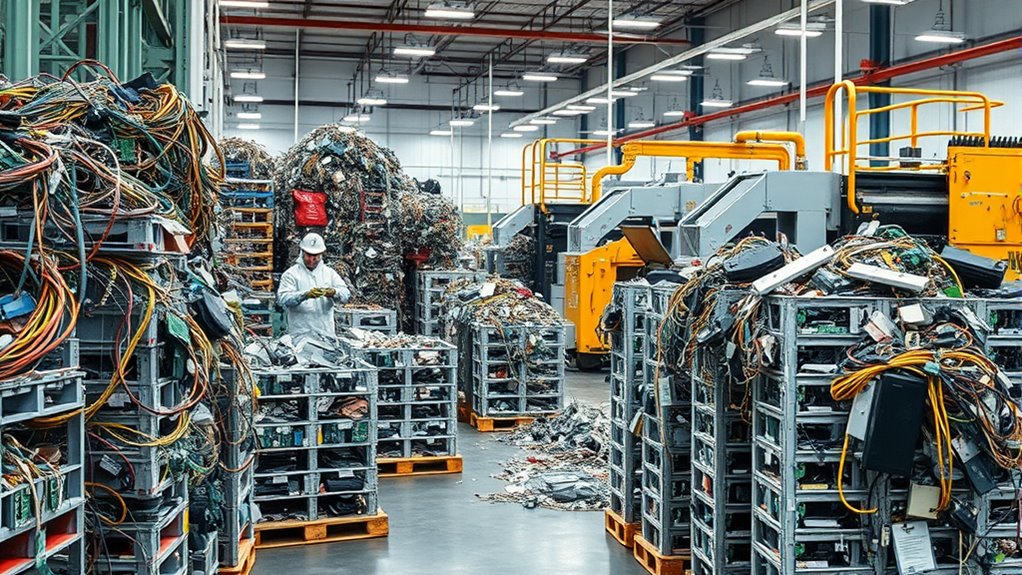
Improving e-waste collection and recycling requires a combination of policy measures, technological innovations, and public engagement. First, you should support policies that incentivize proper disposal, such as extended producer responsibility programs and mandatory recycling targets. Encouraging convenient collection points and deposit schemes makes recycling easier for consumers. Technological advances, like smart sorting and efficient processing methods, can increase recovery rates and reduce environmental harm. Public awareness campaigns are crucial; educating people about e-waste’s dangers and proper disposal methods motivates responsible behavior. Collaboration between governments, businesses, and communities is essential to develop accessible infrastructure and streamline collection systems. Additionally, understanding the importance of necessary cookies can help improve website functionalities that support e-waste awareness initiatives. By combining these strategies, you can help boost recycling rates, recover valuable materials, and minimize environmental and health risks associated with improper e-waste disposal.
Innovative Technologies in E-Waste Processing

Innovative technologies are transforming how e-waste is processed, offering new ways to recover valuable materials efficiently and sustainably. You can now leverage advanced shredding methods combined with robotic sorting systems that identify metals, plastics, and hazardous components with precision. Pyrometallurgical processes use controlled high-temperature treatments to extract precious metals like gold and silver, reducing waste and pollution. Hydrometallurgical techniques employ chemical leaching to recover rare earth elements and critical metals more safely. Additionally, AI-powered sorting improves accuracy and speed, minimizing human exposure to toxins. These innovations help maximize resource recovery, reduce environmental harm, and make recycling more economically viable. As a result, you can contribute to closing the loop on e-waste, ensuring valuable materials are reused instead of discarded.
Policies and Regulations Shaping E-Waste Management

Policies and regulations play a crucial role in shaping how e-waste is managed worldwide. They set standards for collection, recycling, and disposal, influencing industry practices and consumer behavior. Here’s what these policies typically include:
- Extended Producer Responsibility (EPR): Manufacturers are accountable for the entire lifecycle of their products, encouraging eco-design and recycling.
- Bans on Hazardous Materials: Restrictions on harmful substances prevent environmental contamination and health risks.
- Recycling Targets: Governments set minimum recovery and recycling rates to improve resource recovery.
- Cross-Border E-Waste Trade Regulations: International agreements control illegal dumping and promote responsible disposal.
These policies drive systemic change, ensuring safer practices and reducing e-waste’s environmental footprint. Your awareness and support can help enforce responsible policies worldwide.
How Consumers Can Contribute to Responsible Recycling
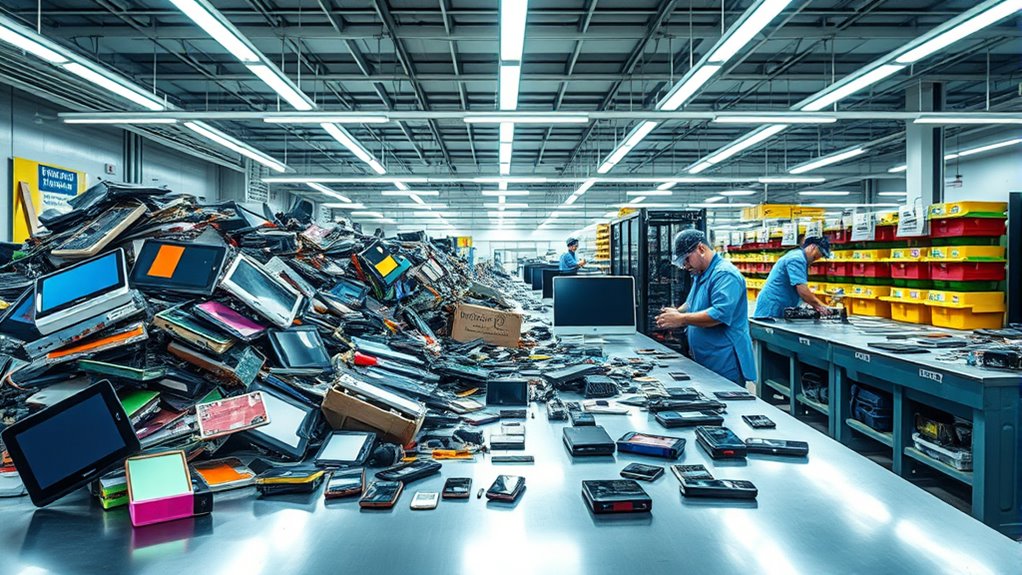
Consumers play a vital role in ensuring e-waste is managed responsibly, complementing the efforts of regulations and industry practices. Your choices directly impact recycling rates and environmental health. You can start by properly disposing of electronics through certified collection centers or manufacturer take-back programs. Avoid informal dumping or illegal disposal, which harms ecosystems and health. Additionally, consider repairing or donating devices instead of discarding them. Educate yourself about e-waste impacts and advocate for responsible policies. To emphasize this, here’s a quick overview:
| Action | Benefit | How to Do It |
|---|---|---|
| Use certified recyclers | Protects environment & health | Find local certified e-waste centers |
| Donate or repurpose | Extends device lifespan | Donate to charities or repurpose |
| Reduce consumption | Less e-waste generated | Limit unnecessary device upgrades |
Future Trends and Opportunities in E-Waste Sustainability
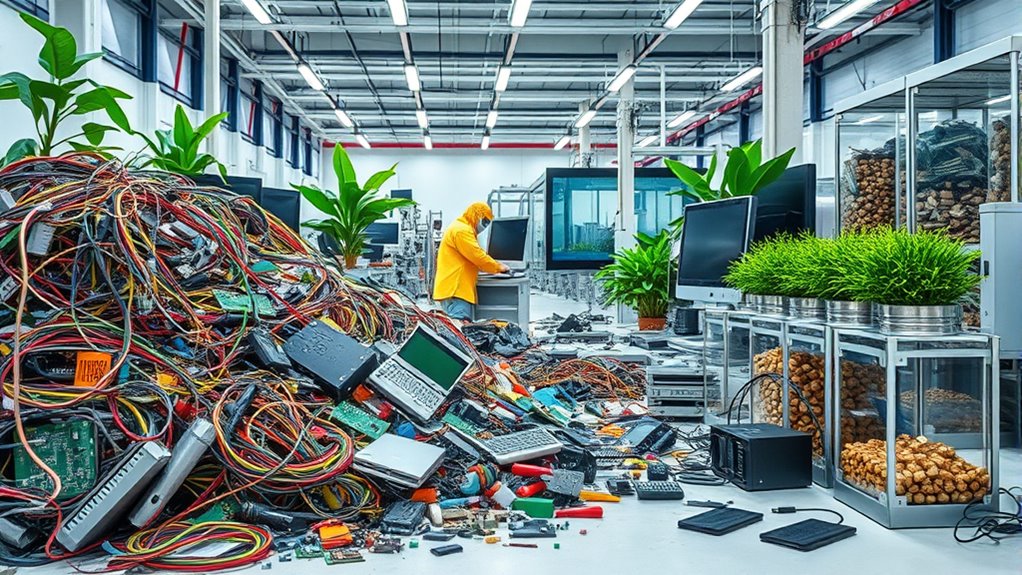
As technology advances rapidly, opportunities to improve e-waste sustainability are emerging across industries, governments, and communities. You can play a role in shaping this future by supporting innovations like:
- Developing eco-designs that extend device lifespans and ease recycling.
- Implementing smart collection systems that boost proper disposal rates.
- Promoting circular economy models that reuse and repurpose materials.
- Investing in advanced recycling technologies capable of recovering more valuable resources.
These trends aim to reduce waste, lower environmental impact, and recover critical materials more efficiently. Governments are enacting stricter policies, and industries are adopting sustainable practices. Your awareness and participation help accelerate these opportunities, ensuring electronics are managed responsibly and sustainably for generations to come.
Frequently Asked Questions
How Can Individuals Identify Responsible E-Waste Recycling Facilities?
You can identify responsible e-waste recycling facilities by checking if they have proper certifications like R2 or e-Stewards, which guarantee environmentally sound practices. Look for facilities that provide transparent records of their recycling processes and avoid informal recyclers. Ask if they follow local regulations, prioritize data security, and properly handle hazardous materials. Doing a quick online search or consulting trusted environmental organizations can also help verify their credibility.
What Are the Best Practices for Reducing E-Waste Generation at Home?
Think of your home as a garden that needs careful tending. To reduce e-waste, you prune by repairing instead of replacing devices, and plant seeds of mindful consumption by choosing durable, eco-friendly products. Avoid clutter by donating or recycling old electronics properly. Keep your garden healthy by staying aware of product lifespans and supporting sustainable brands, ensuring your tech garden flourishes without excess waste.
How Does E-Waste Recycling Impact Local Communities Economically?
Recycling e-waste benefits local communities economically by creating jobs in collection, sorting, and recycling industries. It also recovers valuable materials, reducing reliance on importing raw resources and boosting local economies. Proper e-waste management minimizes environmental cleanup costs and health-related expenses from pollution. When communities support recycling efforts, they can generate revenue, attract green businesses, and improve public health, making their environment safer and more sustainable.
What Role Do Manufacturers Play in Promoting Sustainable E-Waste Management?
Don’t manufacturers have a responsibility to promote sustainable e-waste management? They can design products that are easier to recycle, use fewer toxic materials, and incorporate take-back programs. By adopting eco-friendly practices, they influence industry standards and consumer behavior. Your role as a consumer is also vital—support brands committed to sustainability. Together, manufacturers and users can reduce e-waste, conserve resources, and protect the environment for future generations.
How Can International Cooperation Improve Global E-Waste Recycling Standards?
You can help improve global e-waste recycling standards by supporting international cooperation efforts. Push for stronger cross-border regulations, shared data on waste flows, and unified recycling protocols. Advocate for global policies that encourage responsible disposal and recycling practices, and stay informed about international initiatives. Your involvement can drive companies and governments to prioritize safer, more efficient recycling methods, ultimately reducing environmental harm and recovering valuable resources worldwide.
Conclusion
Remember, waste not, want not. By staying informed and making responsible choices, you can help reduce e-waste’s impact on our planet. Support proper recycling, advocate for better policies, and consider your electronics’ lifespan. Every small action counts in creating a sustainable future. Together, we can turn the tide on e-waste and protect the environment for generations to come. Your choices today shape a cleaner, healthier tomorrow.