

Integrating IoT devices into your smart home makes daily living more convenient, secure, and energy-efficient. You can control lighting, thermostats, and security systems remotely through smartphones, while automation learns your preferences for personalized comfort. To get the most out of your smart devices, it’s important to address security and privacy concerns and guarantee your network is scalable. If you want to explore how to optimize your smart home setup further, there’s plenty more to discover.
Key Takeaways
- IoT integration enables centralized control of smart devices via smartphones, enhancing convenience and automation in daily living.
- Interoperability standards and secure data management ensure seamless communication among diverse smart home devices.
- AI and edge computing facilitate personalized automation and real-time decision-making for energy efficiency and user comfort.
- Robust security measures protect smart home ecosystems from cyber threats and safeguard user privacy.
- Upgrading infrastructure like high-speed internet and mesh networks supports scalable, reliable IoT device connectivity.
The Growing Market and Popular Devices in Smart Homes
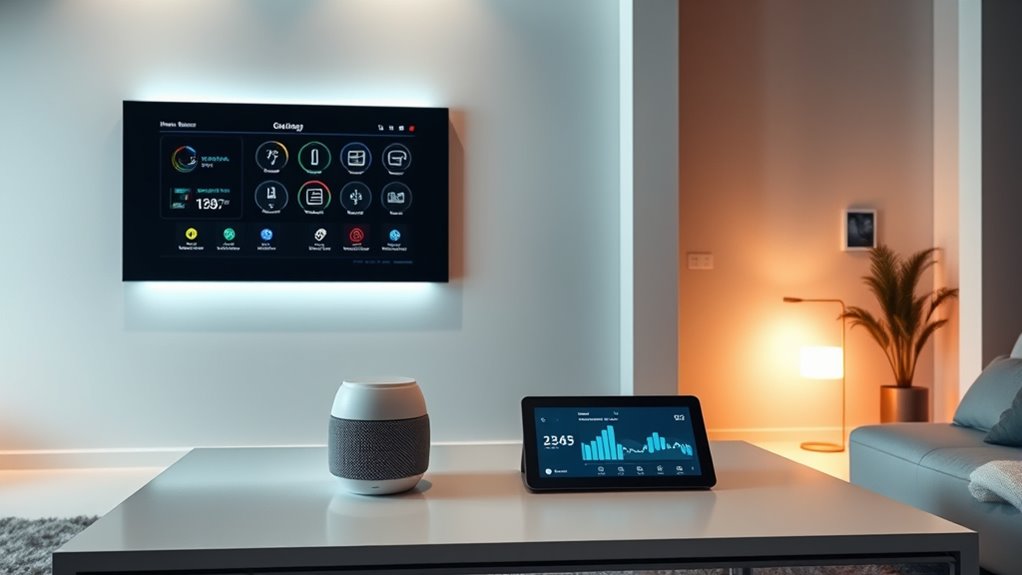
The smart home market is experiencing rapid growth, driven by increasing consumer adoption and technological advancements. You’ll see this reflected in the rising revenue, expected to hit $174 billion by 2025, and the surge in connected devices, projected to reach nearly 30 billion by 2030. Over half of U.S. households are forecasted to own smart devices by 2025, with millions already using smart lights, thermostats, and security systems. Many consumers find these devices improve convenience and energy efficiency. Smartphones serve as central hubs, seamlessly integrating with other IoT products. As more devices enter homes—ranging from smart speakers to connected appliances—the market continues expanding, offering new opportunities for automation and smarter living. Keep an eye on popular devices shaping this growing landscape. Additionally, the growth in connected devices highlights the increasing importance of interoperability and secure data management in smart home ecosystems.
Addressing Security Challenges and Data Privacy Concerns

You need to focus on strengthening your device security to prevent unauthorized access and cyberattacks. Protecting your data privacy is vital as more devices collect and share personal information. By taking proactive steps, you can reduce risks and keep your smart home safer. Incorporating AI security solutions can further enhance your defense against evolving cyber threats.
Strengthening Device Security
As the number of smart home devices continues to grow rapidly, securing these interconnected systems becomes more critical than ever. You need to adopt proactive measures to protect your devices from breaches and unauthorized access. Here are three key strategies:
- Regular Firmware Updates: Keep your devices’ software current to patch vulnerabilities and improve security features.
- Strong, Unique Passwords: Use complex passwords for each device and change default credentials immediately.
- Network Segmentation: Isolate IoT devices on separate networks to limit potential damage if a device is compromised. Additionally, understanding the contrast ratio in projectors helps in selecting devices that render images with deep blacks and bright whites, enhancing the overall viewing experience.
Protecting Data Privacy
Are you aware of how your smart home devices might compromise your data privacy? With over 57% of U.S. households owning IoT devices, the risk of data breaches increases, especially as homes with 30+ devices face a 29% chance of multiple breaches annually. Hackers target these devices through countless weekly attempts, risking your personal information. To protect your privacy, understand device vulnerabilities and implement strong security measures. Use the table below to compare key device features and their security levels:
| Device Type | Security Level | Privacy Risks |
|---|---|---|
| Smart speakers | Lower | Voice data leaks |
| Smart thermostats | Moderate | Location data exposure |
| Security doorbells | Higher | Video and audio breaches |
Stay vigilant, update firmware regularly, and use robust passwords to safeguard your data. Additionally, security features like encryption and multi-factor authentication can greatly enhance your device protection.
The Role of Industrial and Healthcare IoT in Smart Living
How do industrial and healthcare IoT innovations influence smart living? They improve efficiency, safety, and health management in your daily life. Industrial IoT (IIoT) enhances smart homes by enabling automation in energy use, security systems, and maintenance. Healthcare IoT (IoMT) provides real-time health monitoring, remote diagnostics, and personalized care. These technologies allow seamless integration between your home environment and essential services.
Furthermore, emotional support plays a crucial role in adapting to these technological changes, ensuring that users feel confident and secure with new systems. Here are three key impacts: 1. Automation & Efficiency: IIoT optimizes energy and resource use, reducing costs. 2. Health & Safety: IoMT offers continuous health tracking and emergency alerts. 3. Operational Insights: Data from industrial and healthcare devices improve decision-making and predictive maintenance.
Together, they create safer, more responsive, and healthier living spaces.
Overcoming Technical and Economic Barriers to IoT Adoption
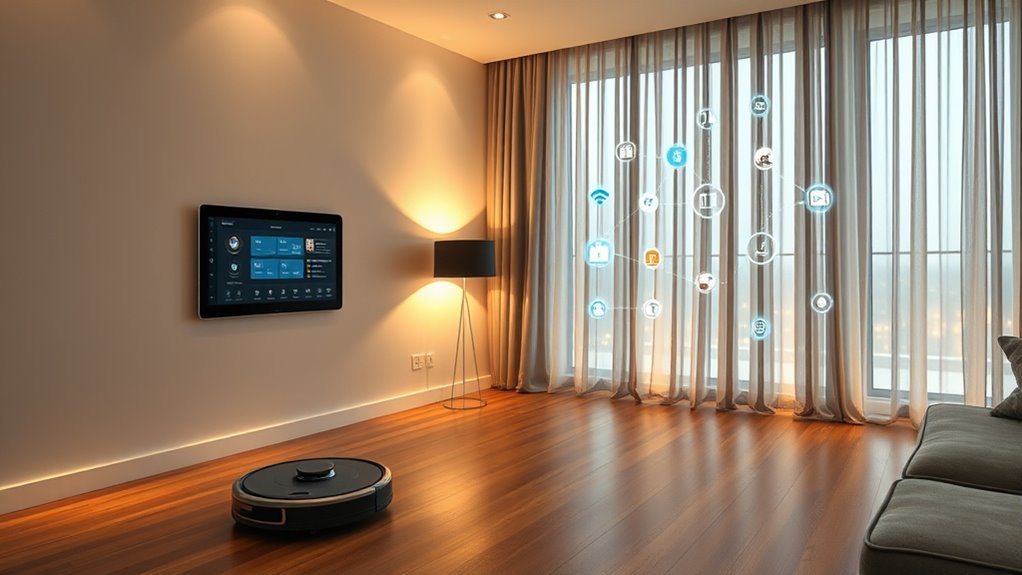
Overcoming the technical and economic barriers to IoT adoption requires strategic efforts from both industry stakeholders and policymakers. You need to address supply chain constraints, such as chipset shortages, which delay device production and deployment. Investing in local manufacturing and supporting research can help reduce lead times. Additionally, upgrading infrastructure—like high-speed internet and secure networks—is vital for reliable IoT performance. Policymakers can facilitate adoption by funding innovation, establishing standards, and incentivizing cybersecurity measures. Economic uncertainty also hampers enterprise investment; clear policies and financial incentives can boost confidence. As you navigate these challenges, prioritize scalable solutions and robust security frameworks. Incorporating sound recording techniques and ensuring high-quality equipment are essential for developing dependable IoT devices. Overcoming these barriers is essential for widespread IoT integration, ensuring smart homes become accessible, reliable, and safe for all users.
Enhancing Daily Life Through Smart Automation and Connectivity

Smart automation and connectivity are transforming daily life by making household management more convenient, efficient, and responsive to your needs. You can effortlessly control and customize your environment, saving time and energy. Automated lighting adjusts based on your schedule, while smart thermostats optimize temperature for comfort and savings. Connectivity allows you to monitor and manage devices remotely, giving you peace of mind. Here are three ways this enhances your life: 1. Simplified routines: Automate daily tasks like watering your garden or locking doors with a tap or voice command. 2. Energy efficiency: Smart devices optimize power use, reducing bills and environmental impact. 3. Personalized comfort: Devices learn your preferences, creating a tailored home experience that adapts over time. Additionally, essential oils can be incorporated into your smart home environment to promote relaxation and well-being through diffusers or other compatible devices.
The Future of IoT: Trends, Innovations, and Opportunities
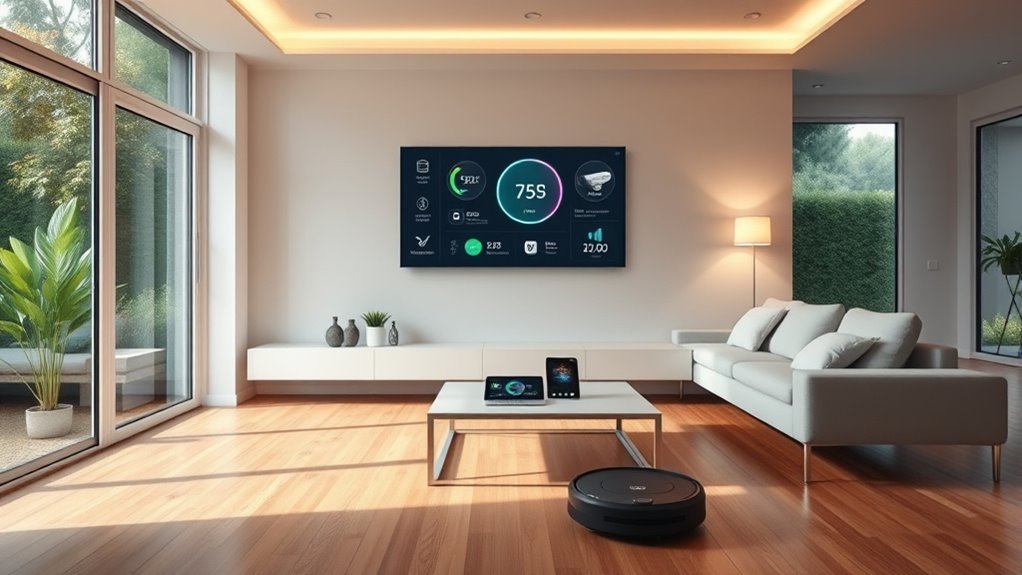
The future of IoT is poised for rapid growth driven by ongoing technological advancements and increasing adoption across industries. You’ll see smarter, more integrated devices transforming homes, healthcare, and transportation. Innovations like AI-powered automation, edge computing, and enhanced security protocols will liberate new opportunities. As IoT devices proliferate—expected to reach nearly 30 billion by 2030—you’ll benefit from improved efficiency, convenience, and data insights. However, challenges remain, including security risks and supply chain constraints. Here’s a glimpse of upcoming trends:
| Trend | Innovation | Opportunity |
|---|---|---|
| AI Integration | Smarter automation | Personalized living |
| Edge Computing | Faster data processing | Real-time decision-making |
| Security Enhancements | Advanced encryption | Safer IoT ecosystems |
| 5G Adoption | Higher connectivity speeds | Seamless device interaction |
| Sustainability Focus | Energy-efficient devices | Eco-friendly smart homes |
Furthermore, the integration of tuning Hyundai models into smart home systems could enhance vehicle management and security, reflecting the broader trend of interconnected devices.
Strategies for Building Secure and Scalable Smart Home Ecosystems
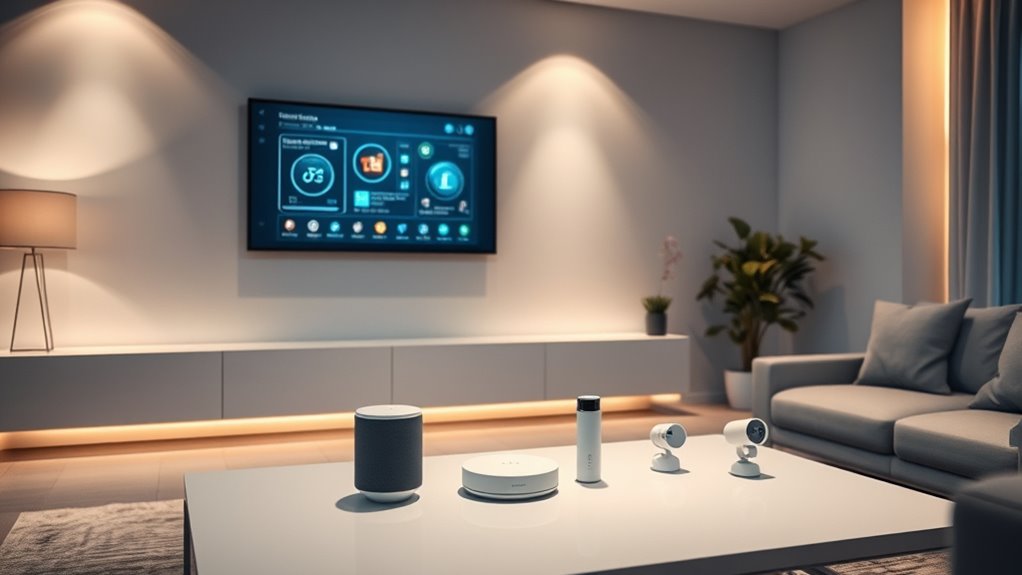
To build a secure and scalable smart home ecosystem, you need to implement strong security measures that protect your devices and data from cyber threats. Prioritizing network scalability guarantees your system can grow smoothly as you add more devices without compromising performance. Additionally, optimizing device management helps maintain system reliability, security, and ease of use as your smart home expands. Incorporating smart home consultant services can also provide tailored strategies to address specific security and scalability challenges effectively.
Implement Robust Security Measures
Building a secure and scalable smart home ecosystem requires implementing effective security measures from the ground up. You should prioritize strong authentication, regular firmware updates, and network segmentation.
- Use complex, unique passwords for each device and enable two-factor authentication wherever possible.
- Keep all devices’ firmware and software up to date to patch vulnerabilities quickly.
- Segment your network by creating separate Wi-Fi channels for your IoT devices and personal devices, reducing the risk of cross-contamination.
- Incorporate encryption solutions to protect data transmitted between devices and your home network, preventing eavesdropping and data breaches.
These steps help protect your devices from hacking attempts, prevent unauthorized access, and minimize data breaches. Security isn’t a one-time setup but an ongoing process that adapts as new threats emerge. Staying vigilant and proactive is essential to safeguarding your smart home ecosystem.
Prioritize Network Scalability
As your smart home grows with more devices, ensuring your network can handle this expansion becomes essential. To prioritize scalability, choose a robust Wi-Fi standard like Wi-Fi 6 or 6E, which support multiple devices simultaneously. Implement a mesh network to extend coverage and reduce congestion, ensuring seamless connectivity. Regularly update firmware and firmware to patch vulnerabilities and improve performance. Segment your network by creating separate zones for critical devices, such as security systems, and less-sensitive gadgets, like smart lights. Use a centralized management platform for monitoring device health. Here’s a quick overview:
| Strategy | Benefit |
|---|---|
| Mesh network setup | Improved coverage and reliability |
| Network segmentation | Enhanced security and performance |
| Wi-Fi 6/6E support | Handles increasing device load |
| Regular firmware updates | Maintains security and stability |
| Centralized management | Simplifies device oversight |
Prioritizing these strategies helps build a secure, scalable smart home ecosystem.
Optimize Device Management
Effective device management is essential for maintaining a secure and scalable smart home ecosystem. To achieve this, you need strategic approaches that streamline operations and protect your network. First, consistently update firmware and software to patch vulnerabilities and improve performance. Second, implement centralized control platforms to manage all devices from one interface, reducing complexity. Third, establish strong security practices, such as unique passwords, multi-factor authentication, and network segmentation, to prevent breaches. These steps help guarantee your devices function smoothly, stay secure, and scale easily as you add new gadgets. By actively managing your smart home devices with these strategies, you create a resilient ecosystem that enhances convenience and safeguards your data.
Frequently Asked Questions
How Can I Improve My Smart Home Network Security Effectively?
To improve your smart home network security, start by changing default passwords on all devices and using strong, unique ones. Keep your firmware and software updated regularly to patch vulnerabilities. Enable two-factor authentication where possible, and disconnect unused devices from your network. Use a separate Wi-Fi network for your IoT devices to isolate potential breaches. Ultimately, monitor your network activity for unusual behavior to catch threats early.
What Are the Best Practices for Protecting My Iot Devices From Hacking?
Think of your IoT devices as digital guardians, standing watch over your home. To protect them from hacking, change default passwords to strong, unique ones and enable two-factor authentication. Keep firmware updated regularly, like renewing armor. Segment your network, creating a secure fortress for your devices. Use firewalls and disable unnecessary features. These practices fortify your smart home’s defenses, ensuring your connected world remains private and safe from cyber threats.
How Does Edge Computing Enhance Data Privacy in Smart Homes?
Edge computing enhances your data privacy by processing information locally on your smart home devices rather than sending it to remote servers. This minimizes data exposure, reduces the risk of hacking, and guarantees sensitive information stays within your home network. By keeping data close to its source, you gain better control over who accesses your data, boosting your security and privacy while maintaining the convenience of IoT devices.
What Are the Latest Innovations in Iot Device Interoperability?
You might think IoT devices speak different languages, but recent innovations have cracked the code with universal standards like Matter. This means your smart lights, thermostats, and locks now seamlessly communicate, making your smart home more cohesive and user-friendly. No more juggling multiple apps or compatibility headaches. Ironically, the very chaos of incompatible devices is giving way to a harmonious, interoperable ecosystem, simplifying your life one protocol at a time.
How Can Consumers Mitigate Costs When Expanding Their Smart Home Systems?
You can cut costs by choosing universal, compatible devices that work with your existing system, avoiding unnecessary upgrades. Look for multi-functional gadgets that serve multiple purposes, and prioritize essential devices over trendy ones. Take advantage of bundled deals, discounts, and manufacturer promotions. Regularly update firmware to prevent costly security issues, and consider DIY installation to save on professional fees. Planning your smart home expansion carefully helps you maximize value and minimize expenses.
Conclusion
As you embrace smart home technology, remember it’s like planting seeds for a brighter future—nurturing convenience, security, and innovation. While challenges exist, your proactive approach to security and connectivity will help your smart home flourish. By staying informed and adaptable, you’re shaping an ecosystem that’s as resilient as a fortress yet as seamless as a breeze. Embrace the journey, and watch your intelligent living space grow into a sanctuary of possibilities.