
Voice assistants and conversational AI are rapidly evolving, driven by advances in AI, NLP, and generative models. They now offer more natural, personalized interactions, understanding complex commands and context better than ever. Industries like healthcare, retail, and smart homes are adopting these technologies for improved efficiency and user experience. With market growth and innovations across platforms, staying informed reveals how these trends are shaping the future of intuitive digital assistance.
Open a free Amazon Business account
Business pricing, bulk buying and tax-exempt orders.
As an affiliate, we earn on qualifying purchases.
Key Takeaways
- Advances in NLP and generative AI enable more natural, context-aware, and personalized voice interactions.
- Increased integration of voice assistants across industries like healthcare, retail, and smart homes enhances functionality.
- Leading companies focus on ecosystem expansion, AI-driven personalization, and improved conversational understanding.
- Enhanced speech recognition and contextual awareness reduce errors, enabling more fluid and complex conversations.
- Privacy safeguards and security measures are prioritized to build user trust amidst growing adoption.
Top picks for "voice assistant conversational"
As an affiliate, we earn on qualifying purchases.
Market Growth and Adoption Patterns
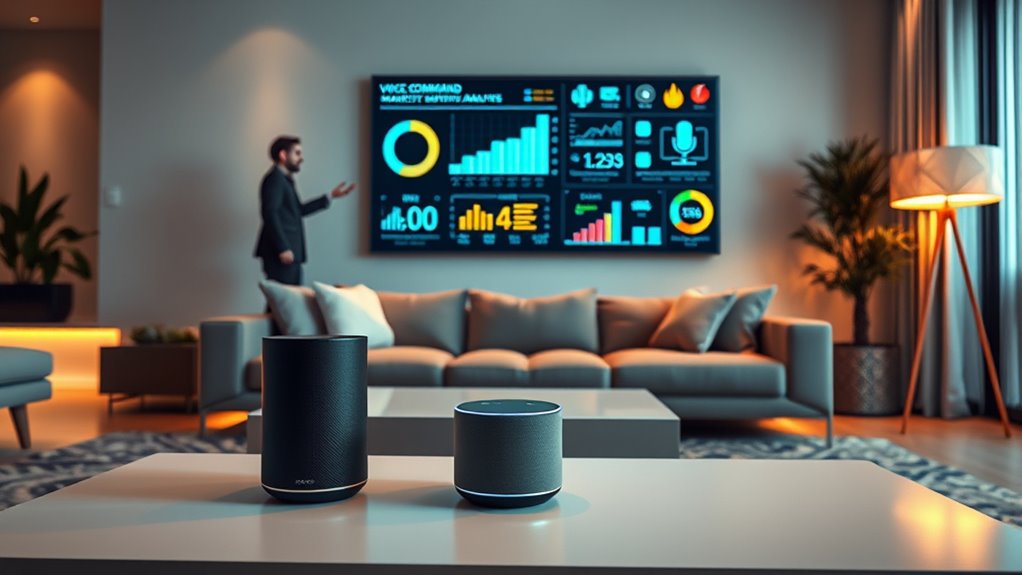
The voice assistant market is experiencing rapid growth driven by increasing user adoption and technological advancements. As you integrate voice technology into your daily routines, you’ll notice more devices becoming voice-compatible, from smartphones to smart speakers. The global market, valued at $7.35 billion in 2024, is projected to hit $33.74 billion by 2030, growing at a CAGR of 26.5%. In North America, over 42% of the population uses voice assistants, with numbers climbing steadily. The expanding familiarity across demographics means more people are relying on voice for searches, commands, and even customer service. As adoption deepens, you’ll find voice assistants becoming more embedded in everyday life, transforming how you access information and interact with technology. The integration of conversational AI further enhances the capabilities and user experience of voice assistants, making interactions more natural and intuitive.
Technological Advancements in Voice Interactions
Advances in AI, natural language processing (NLP), and generative AI are transforming how voice assistants understand and respond to users. You now experience more natural, fluid conversations that adapt to context and nuance, making interactions feel less robotic. These technologies enable voice assistants to handle complex queries, interpret intent, and generate more personalized responses. Machine learning models continuously improve accuracy, reducing misunderstandings and errors. Speech recognition has become faster and more reliable, even in noisy environments. Additionally, AI-driven contextual awareness allows assistants to remember previous interactions, making conversations more coherent over time. The integration of Tuning techniques from sectors like Mazda Tuning demonstrates how specialized adjustments can enhance overall system performance. These innovations push voice technology beyond simple commands, creating more intuitive, engaging experiences that meet your evolving needs across various sectors.
Personalization and User Experience Enhancements
You can enhance your voice assistant experience by implementing tailored interaction strategies that adapt to your preferences. Behavior-based personalization makes responses more relevant by learning your habits over time, creating a smoother interaction. With context-aware responses, your voice assistant understands the situation better, providing more accurate and natural replies. Incorporating user engagement techniques can further improve the effectiveness of your voice assistant by actively involving you in the interaction process.
Tailored Interaction Strategies
Personalization has become a key driver in enhancing user experience with voice assistants, allowing these devices to deliver more relevant and engaging interactions. You now receive responses tailored to your preferences, routines, and context, making conversations feel more natural. Developers use data about your habits, location, and past interactions to customize prompts and recommendations. For example, if you frequently ask about weather in your area, your assistant proactively provides updates without prompting. This approach reduces frustration and increases trust, encouraging continued use. By focusing on individual needs, companies create more intuitive experiences that feel less generic. Tailored interactions also help streamline tasks, making your voice assistant a seamless extension of your daily life and improving overall satisfaction. Additionally, understanding risk management techniques can help optimize the safety and reliability of your interactions with these devices.
Behavior-Based Personalization
By analyzing user behavior patterns, voice assistants can deliver highly targeted and relevant interactions that adapt to individual preferences. This means tracking your habits, routines, and frequently used commands to personalize responses effectively. For example, if you regularly ask for weather updates in the morning, your assistant will proactively provide this info without prompting. It learns your preferred music genres or shopping brands, tailoring recommendations accordingly. Behavior-based personalization also helps streamline your experience, reducing the need for repeated inputs and making interactions smoother. As a result, your voice assistant becomes more intuitive, anticipating your needs and offering customized solutions that enhance convenience and satisfaction. This ongoing adaptation fosters a more engaging, efficient user experience grounded in your unique habits. Additionally, incorporating state-specific benefits can further refine personalized responses, ensuring they align with regional resources and incentives.
Context-Aware Responses
Building on behavior-based personalization, voice assistants are now advancing toward context-aware responses that markedly improve user experience. These responses consider your current situation, location, and recent interactions, making conversations more natural and relevant. By understanding context, your assistant can anticipate needs, suggest tailored actions, and reduce repetitive commands. This creates a smoother, more intuitive interaction, fostering trust and satisfaction. Here’s a snapshot of how context-aware responses enhance your experience:
| Context Factor | Example Use Case | Benefit |
|---|---|---|
| Location | Recommending nearby restaurants | Personalized suggestions |
| Time of Day | Adjusting reminders or alarms | Relevant, timely prompts |
| Device State | Optimizing notifications | Less interruption |
| Recent Activity | Suggesting related content | Seamless continuity |
| User Preferences | Customizing responses | Improved personalization |
This technology transforms simple commands into meaningful, tailored interactions. Understanding user context allows for even more precise and relevant responses, creating a more engaging and effective user experience.
Industry Adoption and Application Sectors

Industry adoption of voice assistants spans a wide range of sectors, transforming how organizations operate and engage with users. In healthcare, you can use voice tech for medication reminders, health monitoring, and elderly support, making care more accessible. The telecommunications industry leverages virtual assistants to automate customer service, reducing wait times and improving satisfaction. Enterprises increasingly adopt voice AI for administrative tasks, streamlining workflows and boosting productivity. Retailers and e-commerce platforms enhance shopping experiences with voice search and personalized recommendations, influencing buying behavior. Smart homes and IoT ecosystems benefit from voice commands to control devices, increasing convenience and automation. Additionally, the integration of portable power solutions like power banks and portable AC units supports the deployment of voice assistants in remote or outdoor environments, expanding their usability beyond traditional settings. Overall, voice assistants are becoming integral in sectors that prioritize enhanced user interaction, operational efficiency, and innovative service delivery.
Competitive Landscape and Leading Players
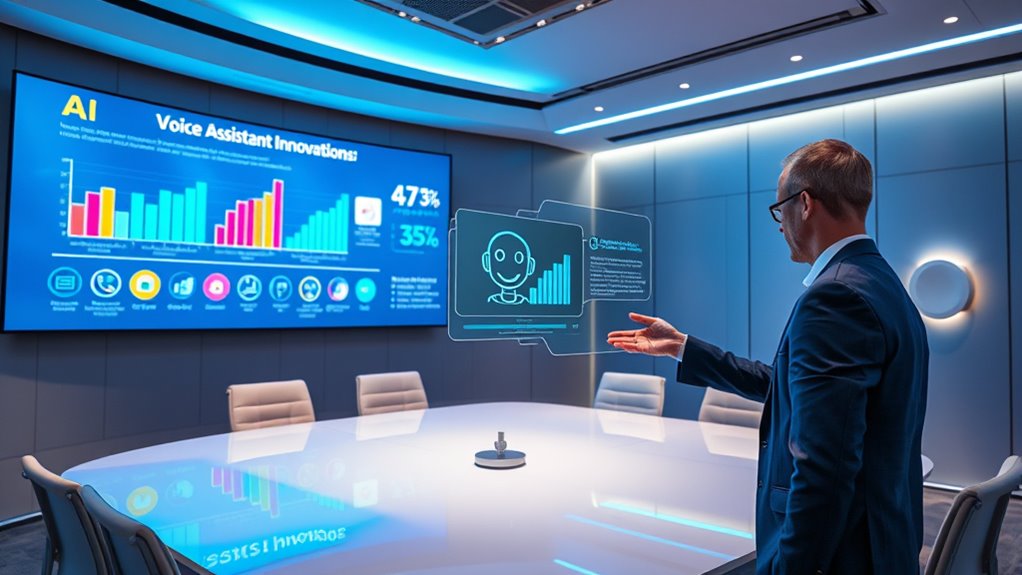
You should recognize that market share dynamics among key players like Apple, Google, and Amazon shape the competitive landscape, with each company focusing on innovation and differentiation. These players constantly invest in AI advancements and product development to maintain or grow their positions. Understanding how they leverage technology and respond to regulatory challenges is essential to grasping the market’s future direction. Additionally, monitoring emerging Pimple Patch technologies can provide insights into how skincare innovations might influence AI-driven consumer preferences.
Market Share Dynamics
The competitive landscape of voice assistants is dominated by a few major players, with Apple, Google, and Amazon leading the market share. You’ll find Siri, Google Assistant, and Alexa each commanding significant portions, shaping consumer choices and experiences. These companies focus on expanding ecosystems, improving AI capabilities, and integrating seamlessly into daily routines. As a result, market share shifts are driven by innovation, user trust, and device compatibility. Additionally, their strategic investments in AI security help safeguard user data and maintain consumer confidence.
Innovation and Differentiation
Leading players like Apple, Amazon, and Google are actively driving innovation to differentiate their voice assistants in a competitive landscape. They focus on enhancing natural language understanding, making interactions more conversational and context-aware. Companies invest heavily in AI, NLP, and generative AI to improve accuracy, personalization, and user engagement. Amazon’s Alexa, perceived as the most intelligent by many, emphasizes smart home integration and third-party skills, while Google Assistant excels in information retrieval and search capabilities. Apple’s Siri emphasizes privacy and seamless device integration. These players continuously update their ecosystems, adding new features and expanding platform compatibility to stay ahead. Differentiation also comes through unique user experiences, customization options, and privacy safeguards, helping them stand out amid rapid technological advances and increasing user expectations. Additionally, their investments in AI entertainment are shaping innovative features that appeal to a broader audience.
Future Outlook and Emerging Opportunities
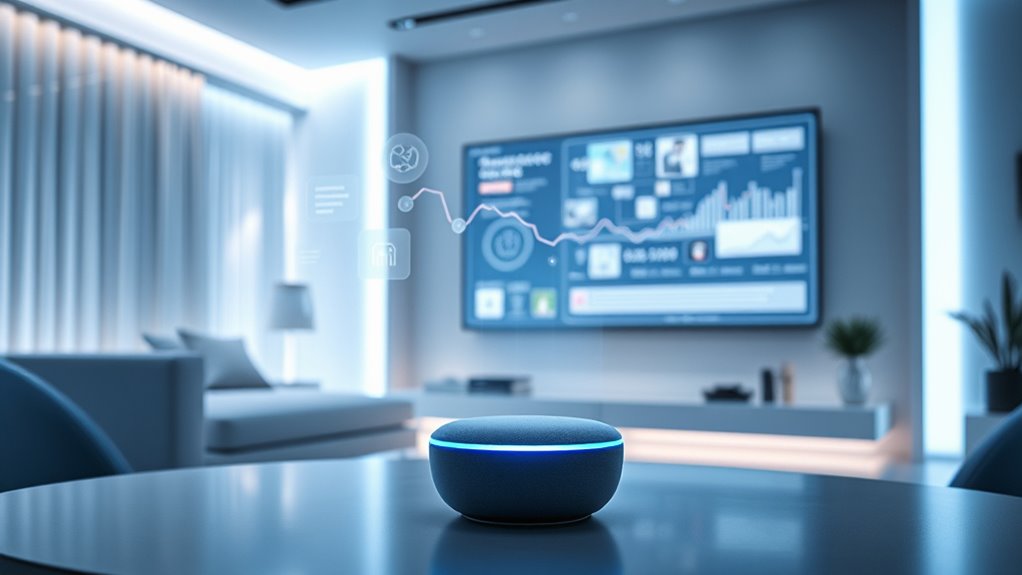
As voice assistants continue to evolve, emerging technologies like generative AI and advanced natural language processing are set to transform user interactions into more seamless and personalized experiences. You’ll see smarter, more intuitive assistants that understand context, nuance, and individual preferences better than ever. This shift opens up opportunities across industries, from healthcare to retail, enabling tailored conversations and proactive support. You’ll also witness voice technology expanding into new platforms, creating more touchpoints for user engagement.
- Increased personalization through real-time data analysis
- Expansion into enterprise sectors for automation and efficiency
- Integration with IoT devices for smarter homes and cities
- Enhanced privacy measures to build user trust
Frequently Asked Questions
How Do Voice Assistants Handle Multiple Languages Simultaneously?
Voice assistants handle multiple languages simultaneously by using advanced natural language processing and machine learning algorithms. They detect the language you’re speaking and switch seamlessly between languages during a conversation. Many now support code-switching, allowing you to blend languages naturally. These systems analyze context and recognize accents or dialects, ensuring accurate responses. As a result, you get a smooth, intuitive experience regardless of the languages you use, making communication more natural and inclusive.
What Privacy Measures Are in Place for Voice Assistant Data Collection?
You might think privacy measures are simple, but they’re actually a fortress guarding your data with layers of encryption, anonymization, and strict access controls. Voice assistants use advanced algorithms to anonymize your voice recordings, guarantee encrypted data transmission, and comply with privacy regulations like GDPR and CCPA. Regular updates and user controls give you even more power over your data, making sure your voice interactions stay private, safe, and under your control.
Can Voice Assistants Detect Emotional States or Moods?
Yes, voice assistants can detect emotional states or moods through analysis of voice tone, pitch, and speech patterns. They use AI and machine learning algorithms to recognize cues indicating happiness, frustration, or sadness. By evaluating these vocal cues, they can adapt responses to better suit your emotional state, providing more personalized and empathetic interactions. However, the accuracy varies, and privacy concerns are important when emotional detection features are implemented.
How Accessible Are Voice Assistants for Users With Disabilities?
You’ll find voice assistants increasingly accessible for users with disabilities. They offer features like speech recognition, voice commands, and customizable interfaces that support users with visual, motor, or cognitive impairments. Many devices include screen readers, adjustable speech rates, and compatibility with assistive technologies. As technology advances, expect even more inclusive features, making voice assistants a valuable tool for improving independence and accessibility for all users.
What Are the Challenges in Integrating Voice AI With Legacy Systems?
You face challenges when integrating voice AI with legacy systems because of compatibility issues and outdated technology. You might need to update or replace existing infrastructure, which can be costly and time-consuming. Ensuring seamless data exchange and maintaining security are also hurdles. Additionally, you must manage the complexity of customizing AI to work smoothly with older systems without disrupting current operations. Overcoming these obstacles is key to successful integration.
Conclusion
As you explore the world of voice assistants and conversational AI, you’ll see how rapidly this tech is transforming everyday life—more groundbreaking than you could imagine. With innovations accelerating at lightning speed, staying ahead means embracing these trends now. The future holds endless opportunities to make interactions seamless, personalized, and smarter than ever. Get ready, because this revolution is just beginning, and you’re at the forefront of a technological wave that’ll reshape everything!
Fall Picks
fall essentials
As an affiliate, we earn on qualifying purchases.