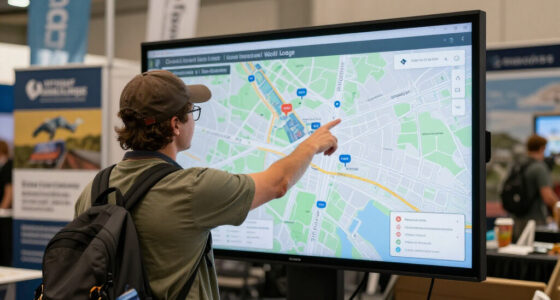
📊 Full opportunity report: Walk, Listen, And Let The Route Set The Story on IdeaNavigator AI — validation score, market gap, and execution plan.

Get travel and outdoor gear delivered free with Prime
- Fast, free delivery on millions of items
- Prime Video, Amazon Music and more included
- Member-only deals all year
TL;DR

IdeaNavigator AI has outlined a proposed audio walking app that would generate narration tied to a user’s live route, including neighborhood history and architecture. The proposal recommends testing the idea in two cities, but provides no evidence that an app has launched or that any trial has begun.
IdeaNavigator AI has outlined a proposed audio walking app that would create narration around a person’s live route, responding to streets, corners and landmarks rather than playing a fixed recording. The proposal recommends a two-city test to assess repeat use and narration accuracy; it does not report that a product has launched or that testing is underway.
The concept is aimed at people who want their regular neighborhood walks or trips to be narrated. A user would start a walk, and the app would draw on location information to offer material about local history, buildings and lesser-known details. Proposed themed modes include history, architecture and nature, alongside the option to save favorite routes.
The proposal describes the underlying opportunity as a gap between general audio content and conventional guided tours. Podcasts typically do not respond to a listener’s location, while many tour apps focus on established landmark districts. The pitch is that streets outside those tourist areas could also support place-specific listening, though the material does not establish how large that unmet demand is.
For a minimum viable product, IdeaNavigator AI recommends generating narration on demand from open information such as historical, architectural and place records. It suggests a consumer subscription as a possible revenue model, with a separate licensing tier for tourism boards. These are proposed product and business choices, not confirmed features, prices, partnerships or commercial results.
A product concept · IdeaNavigator AI
Walk, Listen, And Let The Route Set The Story
An audio walking app could shape narration around a person’s live route, bringing neighborhood history, architecture and local details into an ordinary walk. It remains a proposal: no launch or trial is confirmed.
A walk that responds to place
The idea is to connect a listener’s location with on-demand narration, so stories follow streets and turns instead of a fixed recording.
Follow the live route
As the person moves, location information could cue material about nearby places and landmarks.
History, buildings, nature
Possible themed modes include local history, architecture and nature, with favorite routes saved for later.
Beyond tourist districts
The pitch is that familiar neighborhoods and ordinary streets could support listening beyond established tour routes.
From route to story
A proposed minimum viable product would generate narration on demand from open historical, architectural and place records.
Begin a walk
The listener starts a route in the app.
Read the surroundings
Location data identifies nearby context.
Generate narration
Open records could inform a place-linked story.
Measure the experience
Track return walks and audit factual accuracy.
What a two-city test could show
The proposed first validation step focuses on repeat use and whether route narration is dependable enough to support a wider trial.
Suggested early signals
These bars mark proposed priorities, not measured results.
Open questions before a wider trial
Reliable place-based audio depends on product choices the proposal leaves unresolved.
Can listeners trust the stories?
Records may be incomplete, outdated or linked to the wrong location. No accuracy standard, review process or correction owner is specified.
How would it work in practice?
The technical system, location handling, route changes, offline access and use of language models are not described.
Would the business model hold up?
A consumer subscription and tourism-board licensing tier are proposed. Prices, partners and commercial results are unreported.
What would walkers need?
Privacy safeguards, accessibility, language support and safety while listening are not addressed in the supplied proposal.
Testing Demand Beyond Tourist Routes
The proposal matters as a product hypothesis about how people might use audio while moving through familiar as well as unfamiliar places. If narration can follow a walker’s route, it could make local discovery less dependent on buying a guide for a designated attraction. That could give residents and visitors a new way to engage with ordinary streets, provided the information is relevant and accurate.
The central question is not only whether software can produce location-linked narration. The suggested trial focuses on whether people return: the stated measure is walks per week at week four. That would offer an early signal of repeat use, but it would not by itself establish long-term retention, willingness to pay or the value of tourism-board licensing. The proposal gives no projected user numbers, pricing, operating costs or evidence of demand.
Accuracy is another practical concern. A system that speaks confidently about a building or historical event could mislead users if its underlying records are incomplete, outdated or attached to the wrong location. The recommended audit of narration on a sample of routes recognizes that risk, but the material does not specify an accuracy standard, review process or who would be responsible for correcting errors.
Products Worth Considering

Bose QuietComfort Ultra Wireless Noise-Cancelling Headphones with Spatial Audio, Black

Bose QuietComfort Wireless Bluetooth Headphones with Active Noise Cancellation, Mic, USB‑C Charging, Deep Bass, 24‑Hour Battery – White Smok

Bose QuietComfort Headphones (2nd Gen), Wireless Noise-Cancelling Over-Ear Headphones, Black
As an affiliate, we earn on qualifying purchases.
From Fixed Tours to Live Routes
The idea is framed around a change in the cost of producing audio. Traditional recorded tours require content to be prepared for particular routes and sites, a model that can make coverage beyond popular destinations expensive. IdeaNavigator AI argues that newer language models can generate location-grounded narration from open data when a person walks, potentially reducing that production burden.
That is the proposal’s rationale, not a demonstrated capability or cost saving for a working service. The material does not name a developer, describe a technical system, cite a completed product or provide tests showing that generated narration can reliably react to a live route. It also does not identify which open-data collections would be used or how licensing and data quality would be handled.
The recommended first step is deliberately narrow: launch in two cities, track weekly walks through week four and audit a sample of the generated route content. No cities, dates, trial operators or results are provided. The recommendation should therefore be read as a validation plan rather than an announcement of a rollout.
No Launch or Trial Confirmed
The available details describe a concept, but do not confirm that a company or team has built the app, selected cities, recruited users or secured tourism-board partners. There are no trial dates, customer figures, subscription prices or reported findings. It is also unclear whether the proposed narration would be generated entirely by a language model, checked by editors, or assembled from prewritten material.
Other open questions include how the app would determine a user’s location, manage route changes, work when connectivity is limited and distinguish reliable historical records from uncertain claims. The proposal does not address privacy safeguards for location data, accessibility features, language support or safety considerations for people listening while walking. Those details would affect both a product’s usefulness and the way its claims should be evaluated.
A Two-City Test Is Proposed
The next step set out in the proposal is a test in two cities, followed by measurement of walks per week at week four and an accuracy audit across a sample of routes. Those measures could help determine whether users return and whether the narration is dependable enough to support a wider trial. The proposal does not say when such a test would start or who would conduct it.
Any future announcement would need to clarify the test locations, participant numbers, content sources and method for reviewing factual claims. Pricing and the tourism-board licensing model would also need to be tested rather than treated as established business outcomes. Until those details or results are reported, the route-responsive walking app remains a proposed opportunity, not a confirmed service.
Source: IdeaNavigator AI
Key Questions
Has the audio walking app launched?
No launch is confirmed. The material describes a product concept and a suggested validation plan, but does not report an available app or active trial.
How would the proposed app work?
A user would start a walk, and the app would generate narration tied to the live route, with possible topics including history, architecture and nature. The specific technical design has not been described.
Where would the app be tested?
The proposal recommends testing in two cities, but it does not name them or give a schedule.
How would success be measured?
The suggested measures are walks per week at week four and an audit of narration accuracy on a sample of routes. No results or detailed testing methods are available.
How might the service make money?
IdeaNavigator AI proposes a consumer subscription and a licensing tier for tourism boards. No prices, customers or agreements are reported.
Source: IdeaNavigator AI