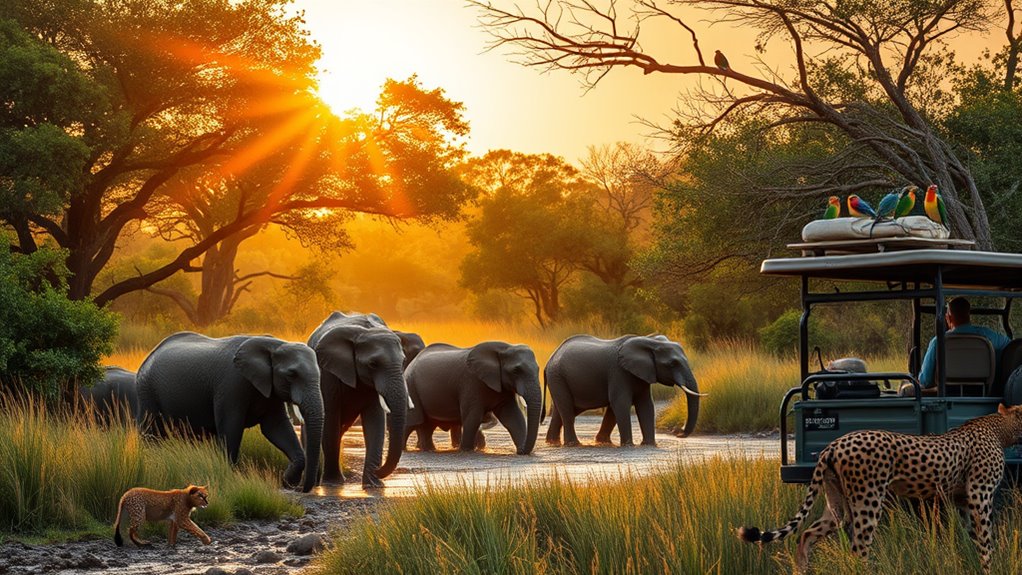
Wildlife safaris offer an incredible chance to explore diverse ecosystems while supporting conservation efforts. By choosing ethical operators that prioritize animal welfare and community involvement, you help protect endangered species and their habitats. These adventures also boost local economies and create jobs. From traditional game drives to remote eco-tours, many options await. To discover how innovative strategies and responsible tourism shape the future of safaris, keep exploring this fascinating subject.
Key Takeaways
- Conservation efforts in protected areas support biodiversity, endangered species, and ecosystem health through research and community involvement.
- Ethical wildlife tourism prioritizes animal welfare, minimizes disturbance, and encourages responsible practices like respecting animal boundaries.
- Wildlife safaris generate significant economic benefits, supporting local communities, conservation funding, and sustainable tourism development.
- Diverse safari types, including eco-tours and adventure experiences, promote immersive learning and engagement with nature and conservation efforts.
- Emerging destinations and innovative strategies enhance conservation impact, promote eco-tourism, and ensure sustainable, responsible safari experiences.
The Role of Protected Areas in Wildlife Conservation

Protected areas play a critical role in wildlife conservation by safeguarding habitats and providing safe havens for diverse species. When you visit these protected zones, you directly support efforts to preserve essential ecosystems that might otherwise face destruction from development or agriculture. Over 430 protected areas worldwide, established by organizations like the Wildlife Conservation Society, serve as indispensable refuges for endangered species, including giraffes. These areas help maintain biodiversity, supporting over 40% of the planet’s species. They also foster research and environmental education, raising awareness about conservation needs. By protecting habitats, these areas ensure animals can thrive naturally, which benefits the entire ecosystem. Additionally, the use of AI tools in monitoring and managing these protected zones enhances conservation effectiveness. Your participation in visiting and supporting protected areas contributes to ongoing conservation initiatives and helps secure a sustainable future for wildlife.
Ethical Dimensions of Wildlife Tourism
When you go on a wildlife safari, prioritizing animal welfare guarantees that your actions don’t harm or exploit the animals. Community involvement can lead to more ethical and sustainable tourism, benefiting both local people and conservation efforts. By making responsible choices, you help promote respectful and eco-friendly wildlife experiences. Incorporating holistic approaches to health and wellness can further support conservation initiatives that respect natural ecosystems.
Animal Welfare Priorities
Ensuring animal welfare is a fundamental ethical priority in wildlife tourism, as it directly impacts the well-being of the animals involved. You should always support operators that prioritize safe, non-intrusive viewing practices, avoiding stress or harm to wildlife. Respect animal boundaries and never attempt to feed, touch, or attract them. Responsible safaris focus on minimizing disturbance and promoting natural behaviors. Here’s a quick guide:
| Priority | Practice |
|---|---|
| Safe Viewing | Maintain distance and use binoculars |
| Minimize Stress | Limit flash photography and loud noises |
| No Feeding | Avoid feeding animals to prevent dependency |
| Respect Habitats | Keep to designated paths and avoid habitat damage |
| Support Ethical Operators | Choose companies committed to animal welfare |
Community Engagement Benefits
Community engagement plays a vital role in shaping ethical wildlife tourism practices. When you involve local communities, you foster trust and shared responsibility for conservation. This collaboration leads to tangible benefits, such as:
- Economic Empowerment: Locals earn income through tourism, reducing reliance on harmful practices like poaching.
- Cultural Preservation: Tourism encourages the celebration and protection of local traditions and knowledge.
- Conservation Support: Communities become active stewards of wildlife, motivating them to protect habitats and species.
Economic Contributions and Opportunities of Safari Adventures

Safari adventures are a powerful driver of economic growth, generating billions of dollars annually through tourism revenue. You directly benefit from this industry by supporting local businesses, lodges, and guides, which rely heavily on safari tourism. These activities create over 9 million jobs worldwide, providing income for communities near protected areas. As a traveler, your participation helps fund conservation projects and habitat preservation efforts. Protected areas generate hundreds of billions each year, with tourism dollars fueling infrastructure improvements and local development. The expanding market, projected to reach USD 316.2 billion by 2033, offers new opportunities for investment and sustainable enterprise. Your safari experience not only delivers adventure but also contributes considerably to the economies of host countries, fostering economic resilience and encouraging ongoing conservation efforts. Additionally, fostering active listening and empathy can enhance your understanding of conservation issues and the importance of protecting these ecosystems for future generations.
Exploring Diverse Types of Wildlife Safaris
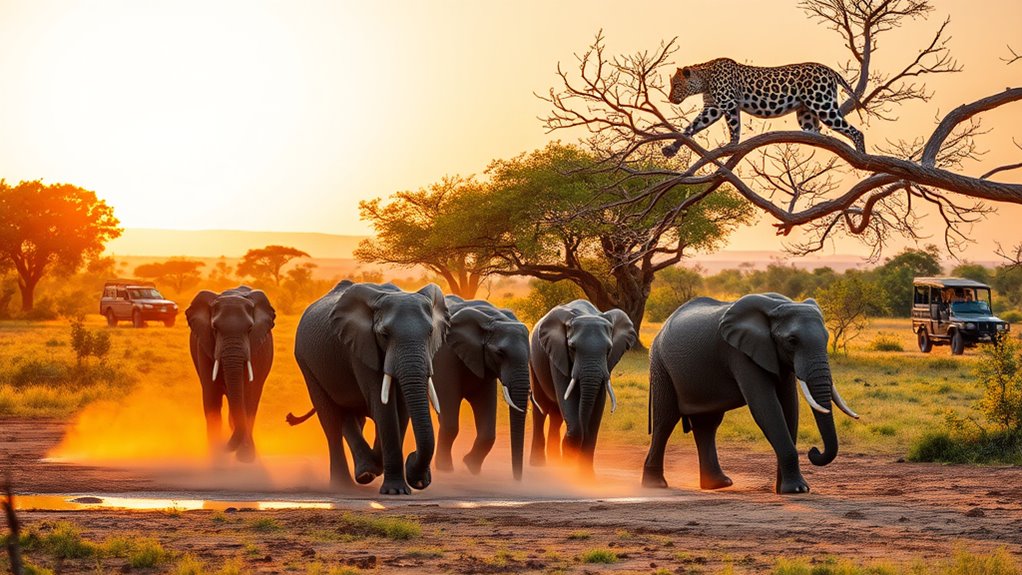
Diverse wildlife safaris cater to a wide range of interests and adventure levels, offering unique experiences beyond traditional game drives. You can choose from various types to suit your preferences.
- African Safaris: Experience the iconic savannahs of Kenya or Tanzania, spotting lions, elephants, and cheetahs on guided game drives.
- Island Safaris: Explore remote islands like Seychelles or Madagascar, where endemic species and pristine beaches create a different kind of adventure.
- Conservation-Focused Tours: Join specialized safaris that emphasize habitat preservation and endangered species, engaging in activities like habitat restoration or community projects.
These options allow you to tailor your safari, blending adventure with ethical and conservation-minded travel.
The Thrill of Adventure: Experiences and Trends
You’re seeking more than just a typical safari experience; you want to feel truly immersed in nature. Unconventional destinations are gaining popularity, offering unique adventures off the beaten path. As trends shift, travelers are craving authentic exploration that pushes boundaries and creates lasting memories. Creating a cozy farmhouse bedroom ambiance or blending rustic elements can inspire a sense of comfort and authenticity during your travels.
Immersive Safari Experiences
As travelers seek more meaningful and memorable adventures, immersive safari experiences are becoming increasingly popular. You want to go beyond typical game drives and truly connect with the wilderness. Imagine:
- Participating in guided nature walks at dawn, listening to bird calls and spotting wildlife up close.
- Staying in eco-lodges that blend seamlessly with the environment, offering authentic local experiences.
- Engaging in conservation activities, like tracking animals or supporting community-led projects.
- Learning about local ecosystems and the importance of wildlife protection measures to better understand the delicate balance of nature.
These experiences deepen your understanding of ecosystems and foster a sense of stewardship. They transform a standard safari into a journey of discovery and connection, allowing you to appreciate wildlife and habitats on a profound level. Immersive safaris offer adventure that’s both thrilling and meaningful.
Unconventional Destination Trends
Unconventional destination trends are reshaping the landscape of wildlife safaris by offering travelers unique and adrenaline-pumping experiences beyond traditional hotspots. You might find yourself exploring remote, off-the-grid locations where crowds are minimal, and the thrill of discovery is heightened. These destinations often feature less-visited parks or private reserves, providing more intimate encounters with wildlife. Adventure seekers are drawn to activities like night safaris, walking tours, or even hot air balloon rides over untouched landscapes. Multi-country itineraries and island safaris are gaining popularity, expanding your options for diverse ecosystems. Such trends allow you to immerse yourself more deeply in nature while supporting conservation efforts in lesser-known areas. As these destinations grow in appeal, they redefine what adventure and exploration mean in the world of wildlife safaris. Incorporating sizing and load-planning tools can help travelers better prepare for these unconventional adventures.
Overcoming Challenges and Harnessing Opportunities in Conservation

Addressing the challenges of wildlife conservation requires innovative strategies and collaborative efforts that turn obstacles into opportunities. You can focus on:
- Community Engagement: Involving local communities in conservation creates shared benefits, reducing poaching and habitat destruction. Incorporating local biodiversity into conservation planning ensures that initiatives are tailored to protect endemic and threatened species effectively.
- Sustainable Infrastructure: Developing eco-friendly facilities and transportation supports tourism while minimizing environmental impact.
- Funding Initiatives: Leveraging tourism revenues and partnerships can generate funds for species protection and habitat restoration.
Frequently Asked Questions
How Do Wildlife Safaris Impact Local Indigenous Communities?
Wildlife safaris can positively impact your local indigenous communities by creating jobs and boosting local economies through tourism revenue. You might find opportunities for cultural exchange, as communities share their traditions and crafts with visitors. However, it’s essential that your safari respects their land and customs, ensuring they benefit fairly from tourism. Responsible safaris support community empowerment and help preserve indigenous cultures while promoting conservation efforts.
What Measures Ensure Animal Welfare During Safaris?
To guarantee animal welfare during safaris, you should follow responsible guidelines, such as maintaining a safe distance, avoiding disruptive behaviors, and respecting wildlife habitats. Use eco-friendly vehicles and support operators committed to ethical practices. Always adhere to park rules and listen to guides’ advice, who are trained to minimize stress and disturbance to animals. Your respectful approach helps protect wildlife while allowing for an authentic and ethical safari experience.
How Can Tourists Identify Genuinely Conservation-Focused Safaris?
You can spot a genuinely conservation-focused safari by looking for certifications from reputable organizations like the World Wildlife Fund or the Rainforest Alliance—they’re like the “green” stamps of approval. Ask about local community involvement and how tourism revenue supports habitat preservation. If the operators prioritize animal welfare, avoid conservation-washing, and promote responsible practices, you’ve found a safari that truly puts conservation first—no fake eco-cred, just real impact.
What Are the Most Effective Ways to Fund Wildlife Conservation?
You can fund wildlife conservation most effectively by supporting reputable organizations that allocate proceeds directly to habitat preservation and anti-poaching efforts. Participating in eco-friendly tourism activities ensures your money benefits local communities and conservation projects. Additionally, donating directly to conservation charities, volunteering your time, and advocating for sustainable policies help create lasting impacts. Your choices as a responsible traveler can substantially contribute to protecting endangered species and their habitats.
How Does Climate Change Affect Safari Destinations and Wildlife?
Climate change impacts safari destinations by altering habitats, causing droughts, and increasing extreme weather events. You might see changes in animal migration patterns, reduced water sources, and degraded ecosystems, making wildlife more vulnerable. These shifts threaten the beauty and biodiversity that draw you to safaris. To help, choose eco-friendly tours, support conservation efforts, and advocate for policies addressing climate change, ensuring these incredible places remain vibrant for future adventures.
Conclusion
Begin a wildlife safari, and you’ll unlock secrets of the animal kingdom that will blow your mind! By supporting conservation efforts, embracing ethical tourism, and diving into the adventure, you become a hero in saving these incredible creatures. Your journey isn’t just a trip—it’s a life-changing mission that could save entire ecosystems from extinction. Get ready, because once you experience the wild, you’ll never see the world the same way again!