
Designing a fitness plan without a gym is simple when you focus on creating a dedicated workout space at home and choosing effective bodyweight exercises like squats, push-ups, and lunges. Use technology such as apps or videos to track your progress and stay motivated. Vary your routines to avoid boredom and set achievable goals to keep on track. Keep going, and you’ll discover more ways to make your home workouts both fun and effective.
Key Takeaways
- Choose bodyweight exercises like push-ups, squats, and planks for effective workouts without equipment.
- Design a balanced routine that includes cardio, strength, and flexibility exercises for comprehensive fitness.
- Set clear goals and track progress using apps, logs, or videos to stay motivated and monitor improvements.
- Create a dedicated, clutter-free space at home to build consistency and reduce distractions.
- Vary exercises regularly and incorporate accountability partners or online communities to maintain motivation.
Benefits of Exercising at Home

Exercising at home offers numerous benefits that can enhance your overall health and well-being. First, it provides unmatched convenience—you can work out anytime without commuting or fitting into gym hours. This ease encourages consistency, helping you stick to your fitness goals. Home workouts also save money since you avoid gym memberships and travel expenses. Privacy is another advantage, allowing you to exercise comfortably and confidently, especially if you’re shy or new to fitness. Additionally, you can tailor your routines to your preferences and schedule, making workouts more enjoyable. With minimal equipment, you can still achieve significant health benefits, such as weight management, cardiovascular health, and improved mood. Overall, exercising at home makes staying active easier, more accessible, and sustainable for long-term wellness. User privacy considerations are also important, as conducting workouts privately helps maintain comfort and confidence.
Setting Up Your Home Workout Space
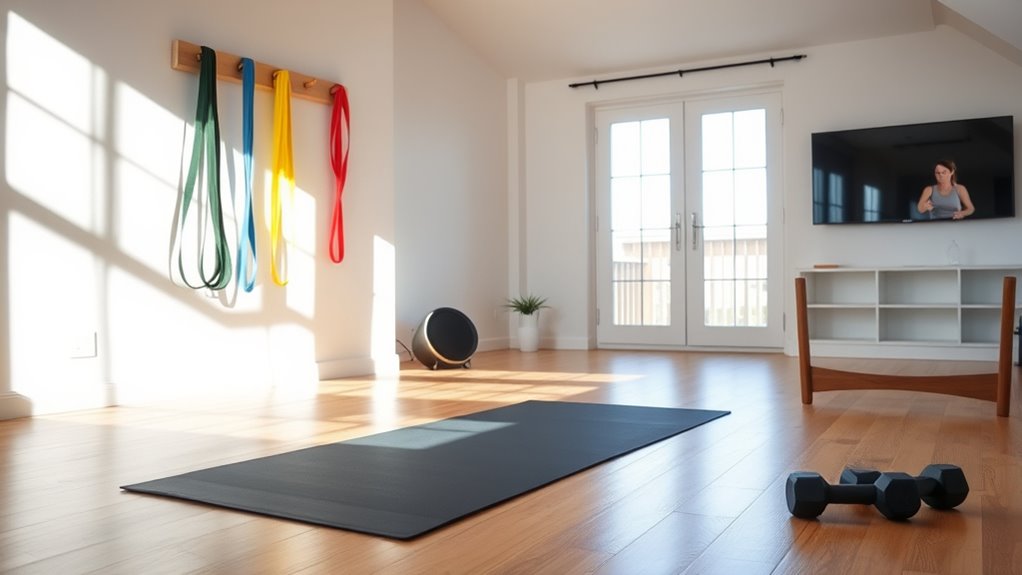
Creating an effective home workout space starts with choosing a dedicated area that is free from distractions and provides enough room for movement. Clear clutter, guarantee good lighting, and select a spot with a stable surface. It doesn’t need to be large—just enough for your exercises and safe movements. Use a mat for comfort and stability during floor work. Add some basic equipment like resistance bands or a jump rope if available. Keep your space organized so you can quickly access your gear and stay motivated. A designated space enhances your fitness environment and encourages consistency.
Choosing Effective Exercises Without Equipment
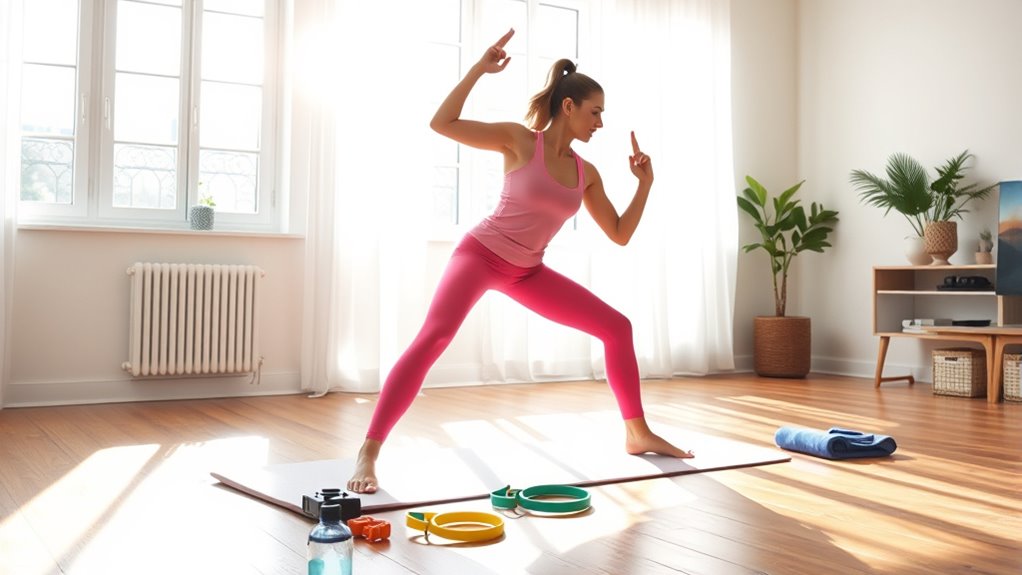
Looking for effective exercises you can do without any equipment? Bodyweight movements are your best bet. Push-ups strengthen your chest, shoulders, and triceps, while squats target your thighs, glutes, and hips. Lunges improve balance and develop leg muscles, and planks build core stability. Incorporate jumping jacks or high knees to boost cardio fitness. Dips can be done using a sturdy chair for triceps and shoulder engagement. For variety, try mountain climbers, burpees, or leg raises to work multiple muscle groups and increase intensity. Focus on proper form to prevent injury and maximize results. You don’t need fancy gear—your body weight is enough. Using pimple patches can be a beneficial addition for targeted skin care post-workout. Mix these exercises into your routine for a balanced, effective workout that boosts strength, endurance, and flexibility—all in your home.
Incorporating Technology to Track Progress
Using technology to track your progress can substantially enhance your home workout routine. It keeps you accountable, helps you see improvements, and motivates you to stay consistent. You can use various tools to monitor different aspects of your fitness journey:
- Activity tracking apps and wearable devices to measure steps, calories burned, and workout duration.
- Video tutorials and online classes to ensure proper form and stay engaged.
- Progress journals or digital logs to record workout details, track milestones, and set future goals.
- Incorporating firewood techniques for safe and efficient storage and handling can also support your overall wellness by encouraging a balanced, active lifestyle.
Staying Motivated and Overcoming Challenges
Staying motivated can be challenging when exercising at home, especially without the external accountability of a gym or trainer. To keep momentum, set clear, realistic goals and track your progress regularly. Create a dedicated workout space to build a routine and minimize distractions. Mix up your exercises to prevent boredom and target different muscle groups, making workouts more engaging. Find accountability partners, whether friends or online communities, to stay connected and motivated. Remember to celebrate small victories to boost confidence. When motivation dips, remind yourself of the health benefits and how good you feel afterward. Overcoming obstacles like fatigue or time constraints requires flexibility—short, focused sessions can still deliver results. Incorporating home workout names and routines can also help diversify your training and maintain enthusiasm. Consistency, patience, and a positive mindset are key to long-term success.
Frequently Asked Questions
How Can I Prevent Injuries During Home Workouts Without Supervision?
You can prevent injuries during home workouts by focusing on proper form, starting with low intensity, and gradually increasing difficulty. Use online tutorials or apps to learn correct techniques, and don’t push yourself too hard too quickly. Always warm up before exercising and cool down afterward. Listen to your body, stop if you feel pain, and consider consulting a fitness professional for guidance when trying new exercises.
What Are the Best Ways to Progress Exercises Safely at Home?
To progress exercises safely at home, you should listen to your body and increase intensity gradually. Add small challenges, like more repetitions or resistance, only when you feel comfortable. Focus on maintaining proper form to avoid strain. Use online tutorials or apps to guide your progression, and don’t rush—patience guarantees steady improvements while minimizing injury risk. Consistent, mindful effort helps you grow stronger safely and enjoyably.
How Do I Tailor Workouts for Specific Health Conditions or Limitations?
You should start by consulting your healthcare provider to understand your limitations. Then, customize exercises to suit your condition, focusing on low-impact movements or seated options if needed. Incorporate gradual progress and listen to your body to avoid overexertion. Use modifications and assistive tools like resistance bands or chairs, and prioritize consistency. Tracking your response helps ensure safety and effectiveness tailored to your health needs.
Can I Build Muscle Effectively Without Traditional Gym Equipment?
Yes, you can build muscle effectively without traditional gym equipment. Focus on bodyweight exercises like push-ups, squats, lunges, and planks to target major muscle groups. Incorporate resistance bands or household items such as water bottles or backpacks filled with weights to add resistance. Progressively increase reps, sets, or resistance over time, and maintain proper form. Consistency and challenging yourself are key to muscle growth at home.
How Do I Balance Workout Intensity With Recovery at Home?
Balancing workout intensity with recovery might seem like juggling fire and ice, but it’s doable! You should push yourself enough to challenge your muscles, but also listen to your body. Rest days are essential—use them to let your muscles repair and grow. Incorporate lighter activities like stretching or walking on recovery days, and vary your workouts to prevent burnout. Prioritize sleep and nutrition to optimize recovery and keep your progress steady.
Conclusion
Working out at home can be just as effective as hitting the gym, saving you time and money. Did you know that 60% of people who exercise at home stay consistent longer than those who go to a gym? By setting up your space, choosing the right exercises, and tracking your progress, you’ll stay motivated and see results. Remember, consistency is key—stick with your plan, and you’ll achieve your fitness goals from the comfort of your home.