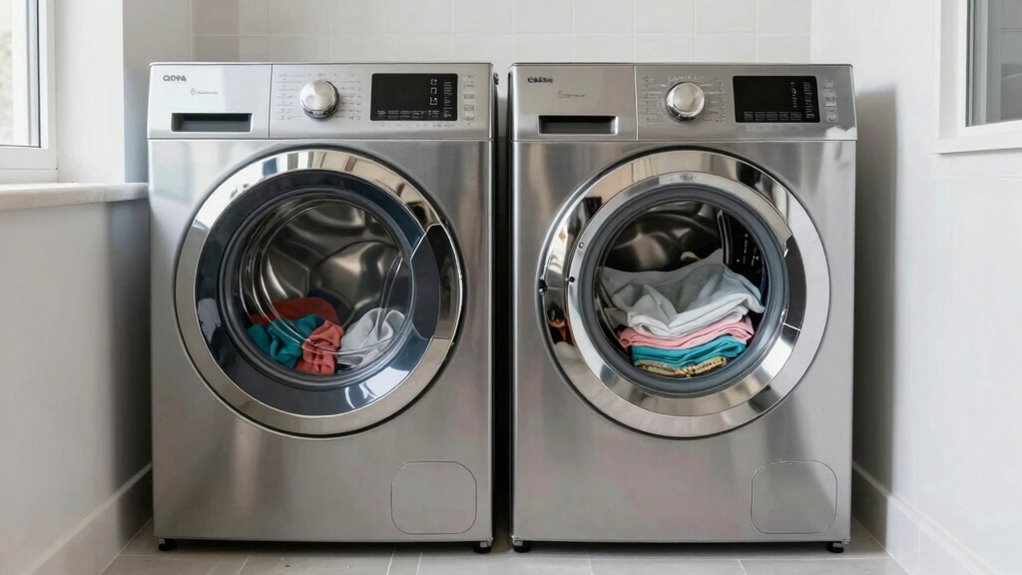

If you’re choosing between front load and top load washers, consider your priorities. Front load machines use less water and energy, are gentler on clothes, and often have larger capacities, but they cost more upfront and need more maintenance. Top load washers are usually cheaper, quicker, and easier to load, making them ideal for busy households. To find the best fit for your needs and lifestyle, explore the key differences further.
Key Takeaways
- Front load washers use less water and energy, making them more eco-friendly and cost-efficient over time.
- Top load washers generally have lower upfront costs and shorter cycle times for quick laundry.
- Front load models handle larger loads better and are gentler on clothes, extending fabric lifespan.
- Top load washers are easier to load and unload, suitable for users prioritizing convenience.
- Maintenance differs, with front loads needing regular door seal cleaning to prevent mold buildup.
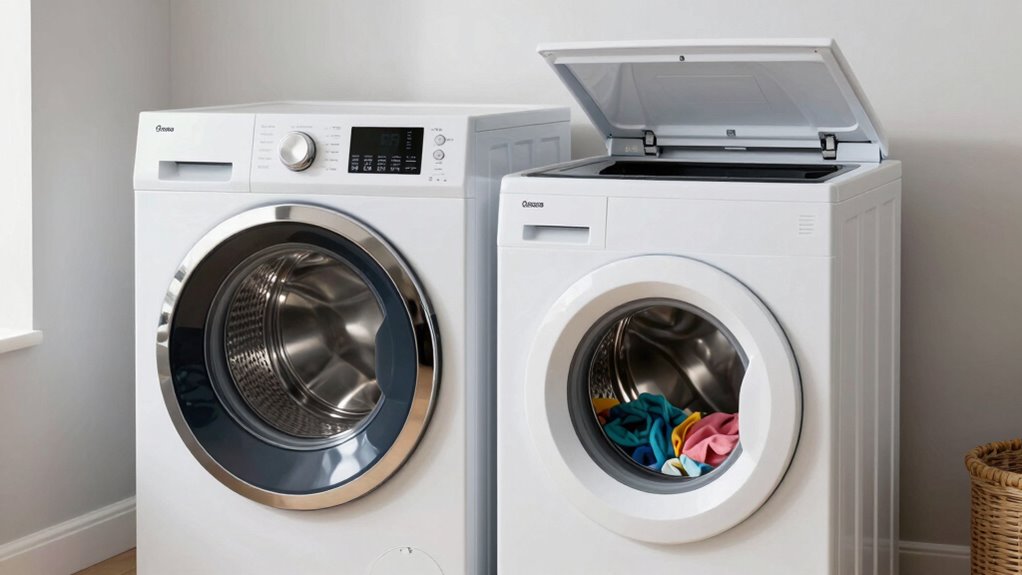
When choosing a new washing machine, it’s important to weigh the differences between front load and top load models to find the best fit for your laundry needs. One of the key factors to consider is energy efficiency. Front load washers typically use less electricity because they operate at lower spin speeds and often have more advanced technology to optimize energy use. They tend to be designed with better insulation and more efficient motors, leading to less power consumption over time. In contrast, top load washers generally consume more energy, especially older models, due to higher spin speeds and less advanced energy-saving features. If reducing your electricity bill is a priority, a front load model might be the smarter choice. Additionally, energy-saving features are more commonly found in modern front load washers, enhancing their efficiency further.
Front load washers typically use less electricity thanks to advanced technology and lower spin speeds.
Water consumption is another critical aspect to compare. Front load washers are known for their water efficiency because they use less water per cycle, often just enough to cover the clothes in the drum, thanks to their tumbling action. This not only conserves water but also reduces the energy needed to heat that water, making them more environmentally friendly. Top load models usually fill the entire tub with water, regardless of load size, which can lead to higher water usage. If you’re mindful of water conservation, especially in areas facing water shortages or higher water costs, a front load washer can be a more sustainable option. An understanding of water conservation is essential for making environmentally responsible choices. Additionally, advancements in technological innovation continue to improve water and energy efficiency in both types of washers.
Beyond efficiency and water use, you should also think about other features like cycle options, load capacity, and ease of use. Front load washers often have larger capacities, allowing you to wash bulky items or larger loads at once. They also tend to be gentler on clothes, which helps prolong the life of your fabrics. They are also typically designed with user-friendly controls, making operation more straightforward for many users. However, they can be more expensive upfront and may require more maintenance, such as cleaning the door seal to prevent mold buildup. Additionally, some models incorporate smart technology that can enhance user experience and efficiency. Top load washers are generally more affordable initially and are easier to load and unload, especially if you prefer standing upright. Their shorter wash cycle times can be convenient if you need quick results.
Ultimately, your choice depends on your priorities—whether you value energy savings and water efficiency or prefer the simplicity and cost-effectiveness of a top load model. Both types have their advantages, but understanding these key differences helps you make an informed decision. Consider your household size, laundry habits, and environmental concerns to choose the washer that best suits your lifestyle.

GE PROFILE 28 Inch Smart Front Load Washer with 4.8 cu. ft. Capacity in White GFW550SSNWW
- Large Capacity: 4.8 cu. ft. for bigger loads
- Odor-Blocking Vent System: Eliminates moisture for freshness
- WiFi & SmartHQ App: Remote control and alerts
As an affiliate, we earn on qualifying purchases.
As an affiliate, we earn on qualifying purchases.
Frequently Asked Questions
Which Type Is More Energy-Efficient Over Its Lifespan?
You’ll find that front load washing machines are more energy-efficient over their lifespan because of lower energy consumption during operation. They typically use less water and electricity, resulting in better cost efficiency over time. Although they might have a higher upfront cost, their long-term savings on utility bills make them a smarter choice if you’re aiming for energy savings and reduced environmental impact.
Are Front Load Washers Better for Heavy-Duty Cleaning?
Think of a front load washer like a skilled chef, capable of handling heavy-duty cleaning with finesse. It uses less detergent and rinses thoroughly, reducing mold chances in seals. I once had stubborn stains vanish after a wash cycle, thanks to its powerful agitation. So, yes, front load washers excel at heavy-duty cleaning, efficiently tackling dirty loads while preventing mold buildup through proper maintenance and less detergent use.
How Do Noise Levels Compare Between the Two?
You’ll find that front load washers generally produce less noise than top load machines, thanks to better noise reduction features. However, vibration issues can sometimes cause more noise in front loaders if not properly balanced. To minimize noise levels, confirm your machine is level and consider models with advanced vibration control. Overall, front loaders tend to be quieter, especially during spin cycles, making them a good choice if noise is a concern.
Can Both Types Handle Large or Bulky Items Effectively?
Both front and top load washers can handle large or bulky items, but front loaders excel in fabric care, gently cleaning bulky items without damage. They typically use less water, making them more efficient for large loads. Top loaders, however, often handle bulky items easily due to their vertical design, but may consume more water and be less gentle on fabrics. Choose based on your fabric needs and water efficiency priorities.
Which Washer Type Has a Longer Overall Lifespan?
A front load washer is like a marathon runner, lasting longer than a top load. It typically has a longer overall lifespan, often exceeding 10 years, due to better build quality. You’ll find that warranty coverage and lower maintenance costs support this durability, making it a smarter investment in the long run. In contrast, top loaders might wear out sooner, requiring more repairs and replacements over time.
Conclusion
When choosing between front load and top load washers, consider your space, budget, and laundry needs. Did you know that front load washers typically use 40% less water and energy than top loaders? This efficiency can lead to significant savings over time. So, weigh the pros and cons carefully—your ideal machine will make laundry day easier, more eco-friendly, and cost-effective in the long run. Whatever you pick, you’ll be well on your way to cleaner clothes with less hassle.