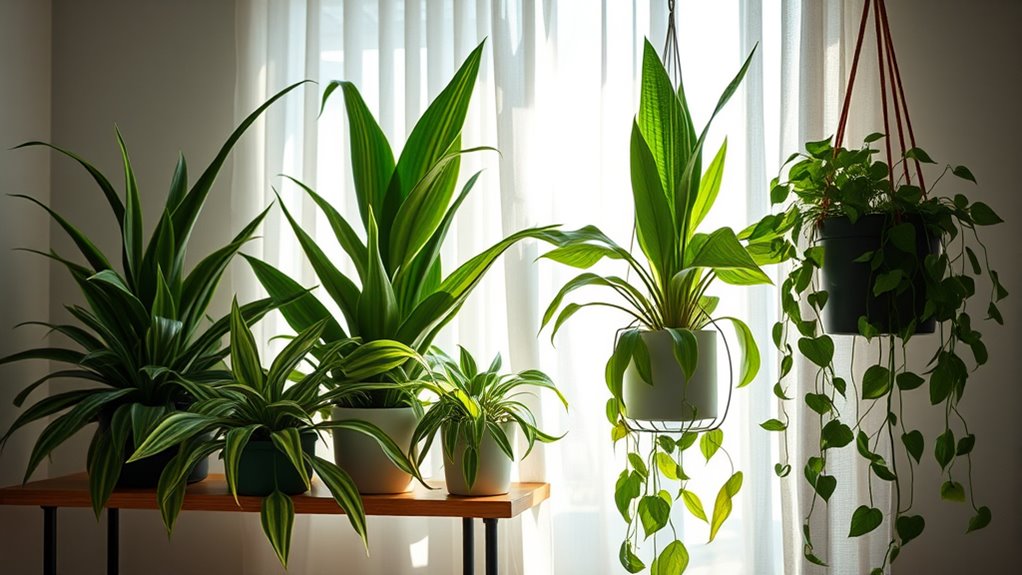

If you’re looking to start indoor gardening with low-light plants, you’ll find options like snake plants, pothos, peace lilies, and ZZ plants perfect for shaded spots. These resilient, easy-care varieties thrive without direct sunlight and need minimal watering, making them ideal for beginners. Position them on shelves, behind furniture, or in dim corners to brighten your space. Keep them healthy with proper placement and care tips, and you’ll discover even more tips to create a lush indoor garden.
Key Takeaways
- Choose resilient, low-maintenance plants like Snake Plants, ZZ Plants, and Pothos that thrive in indirect or minimal light.
- Place plants away from direct sunlight, such as in shaded corners, north-facing windows, or bathrooms, for optimal low-light growth.
- Water sparingly, allowing soil to dry between watering, and use well-draining soil to prevent overwatering and root rot.
- Improve low-light conditions with artificial LED grow lights or rotating plants to ensure even light exposure.
- Monitor for common issues like leggy growth or leaf discoloration, adjusting placement or watering habits as needed.

DREO 6L Humidifiers for Bedroom, Smart Warm & Cool Mist for Large Room, 60Hr Quiet Runtime for Baby, Plant, Humidity Sensor, Indicator Light, 12H Timer, Google/Alexa, HM713S
𝙎𝙪𝙥𝙚𝙧 𝙁𝙖𝙨𝙩, 𝙄𝙣𝙨𝙩𝙖𝙣𝙩 𝙒𝙖𝙧𝙢 𝙈𝙞𝙨𝙩: The humidifiers for bedroom creates a comforting, 133°F smart warm and cool mist...
As an affiliate, we earn on qualifying purchases.
Top Low Light Indoor Plants for Your Home
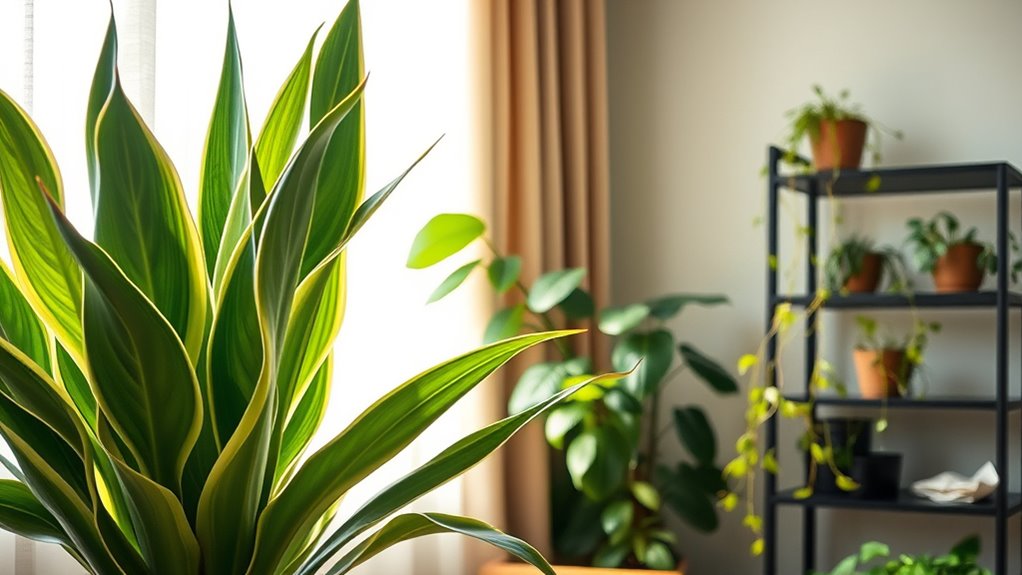
If your home has limited natural light, choosing the right indoor plants can transform your space without requiring much maintenance. The Peace Lily is an excellent choice, with its striking white flowers and air-purifying qualities. Snake Plants are incredibly hardy and tolerate neglect, making them perfect for bedrooms or low-light corners. ZZ Plants thrive with minimal water and are highly resilient, ideal for beginners. Pothos vines easily adapt to low light, growing quickly and needing little care, perfect for shelves or hanging baskets. Philodendrons, such as Heartleaf or Lemon Lime varieties, are adaptable and also help purify the air. These plants not only brighten your home but also improve air quality, all while requiring minimal attention and thriving in shady spots.

LEVOIT Humidifiers for Bedroom Home, Smart Warm and Cool Mist Air Humidifier for Large Room, Auto Customized Humidity, Fast Symptom Relief, Easy Top Fill, Essential Oil, Quiet, OasisMist4.5L, White
𝙍𝙖𝙥𝙞𝙙 𝙈𝙤𝙞𝙨𝙩𝙪𝙧𝙚, 𝙄𝙣𝙨𝙩𝙖𝙣𝙩 𝙍𝙚𝙡𝙞𝙚𝙛: Dealing with sinuses, congestions, and restless sleep. Our humidifier with warm and cool mist,...
As an affiliate, we earn on qualifying purchases.
Essential Care Tips for Low Light Houseplants
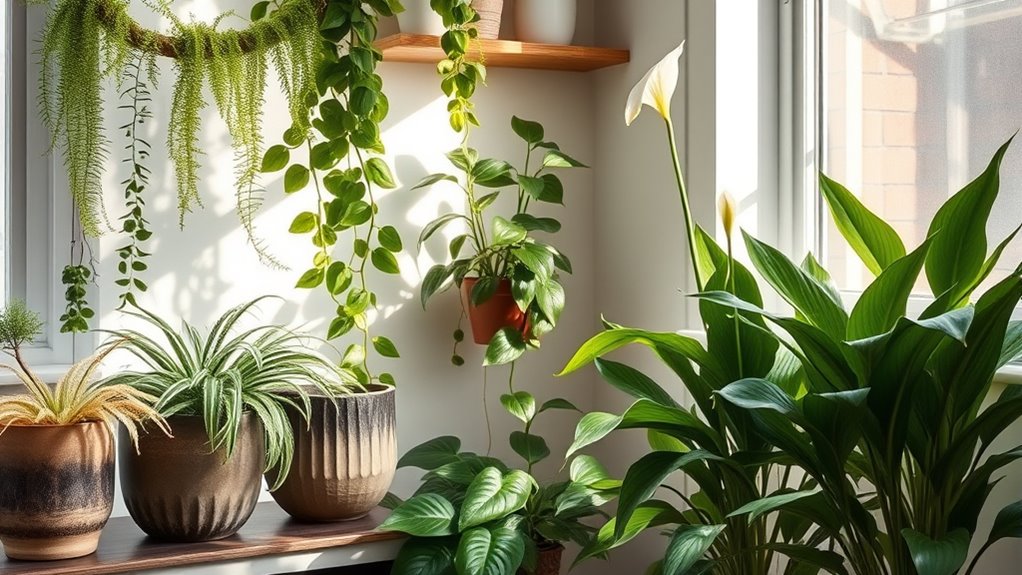
To keep your low light houseplants healthy, you need to focus on proper watering techniques—water sparingly and let the soil dry out between sessions. Choosing the right spots is equally important; place plants away from direct sunlight and in areas with consistent, indirect light. By paying attention to these details, you’ll help your plants thrive in their low-light environment.
Proper Watering Techniques
Proper watering is essential for keeping your low light houseplants healthy, as overwatering can lead to root rot and underwatering can cause stress and leaf issues. To get it right, check the soil’s moisture level before watering—stick your finger an inch deep. If it feels dry, it’s time to water; if it’s still damp, wait a few more days. Use room temperature water and pour thoroughly until excess drains out the bottom. Avoid letting plants sit in standing water, which promotes rot. For plants like the Snake Plant and ZZ Plant, water even less frequently, sometimes once every few weeks. Remember, consistency is key: better to underwater than overwater, especially in low light conditions where plants grow more slowly.
Selecting Suitable Locations
Choosing the right spot for your low light indoor plants is essential to their health and growth. Find areas away from direct sunlight, which can scorch their leaves. Instead, place them near windows with sheer curtains or in shaded corners where they can still receive indirect light. Shelves, countertops, or corners of rooms are ideal locations. For plants like the Snake Plant or ZZ Plant, low-traffic spots with minimal disturbance work well. Bathrooms and bedrooms often provide the humidity and subdued light these plants prefer. Keep in mind, rotating your plants occasionally helps ensure even light exposure and prevents legginess. Additionally, understanding indirect light requirements can help optimize plant health. With careful placement, you’ll create a supportive environment that encourages healthy growth and vibrant foliage.

DREO Humidifiers for Bedroom, 3L Top Fill 30H & 26dB Quiet Runtime for Large Room, Cool Mist Ultrasonic Humidifier with Humidity Sensor, Night Light for Home, Baby, Nursery, Plants, New Edition
𝐅𝐨𝐫𝐠𝐞𝐭 𝐚𝐛𝐨𝐮𝐭 𝐜𝐨𝐧𝐬𝐭𝐚𝐧𝐭 𝐫𝐞𝐟𝐢𝐥𝐥𝐬: With a 3L tank and convenient top-fill design, this humidifier large room for baby...
As an affiliate, we earn on qualifying purchases.
Benefits of Incorporating Low Light Plants Indoors
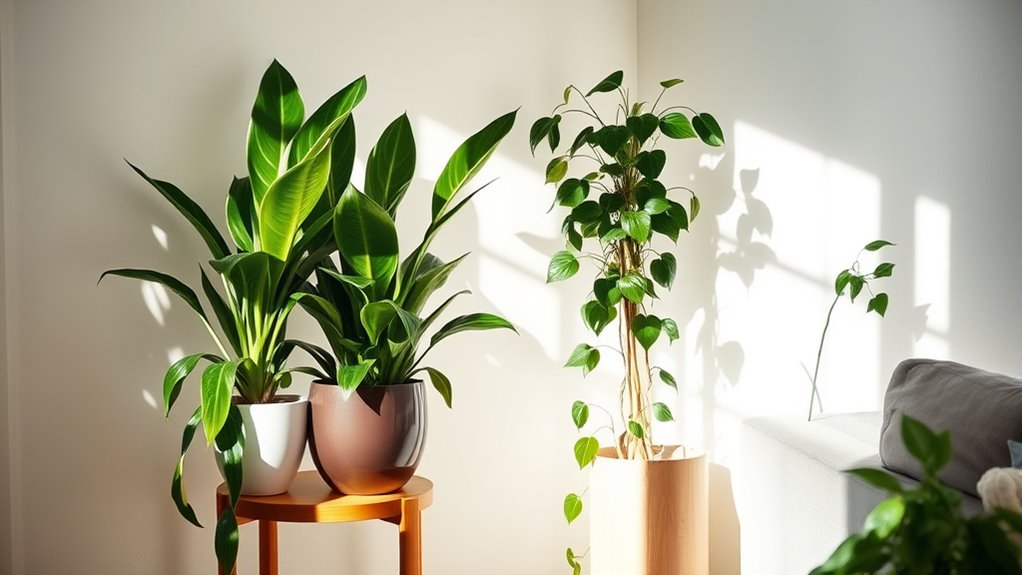
Bringing low light plants into your indoor space offers numerous health and aesthetic benefits. These plants improve air quality by filtering pollutants like formaldehyde, benzene, and xylene, making your environment healthier. They also boost your mood and reduce stress, creating a calming atmosphere. Since low light plants require minimal care, they’re perfect for busy households or offices, saving you time and effort. Additionally, their versatility allows you to decorate dim corners, bathrooms, and shaded areas without sacrificing style. Many varieties, like Peace Lilies and Snake Plants, are pet-friendly, so you can enjoy greenery without worry. Overall, incorporating low light plants enhances your indoor environment, making it more inviting, healthier, and easier to maintain.

LEVOIT OasisMist 1000S (10L) Smart Humidifier for Home Large Room Bedroom, Last 100 Hours Suitable for Indoor Plant, Cover up to 600ft², Easy Top Fill, Remoter & Voice Control, Auto Mode, Quiet, White
𝙎𝙪𝙥𝙚𝙧-𝙡𝙤𝙣𝙜 100 𝙃𝙤𝙪𝙧𝙨, 𝙀𝙣𝙘𝙤𝙪𝙣𝙩𝙚𝙧 𝙔𝙤𝙪𝙧 𝙊𝙖𝙨𝙞𝙨: Maximize your time and minimize refills with the humidifier's extended 100-hour runtime,...
As an affiliate, we earn on qualifying purchases.
Best Spots in Your House for Low Light Plants
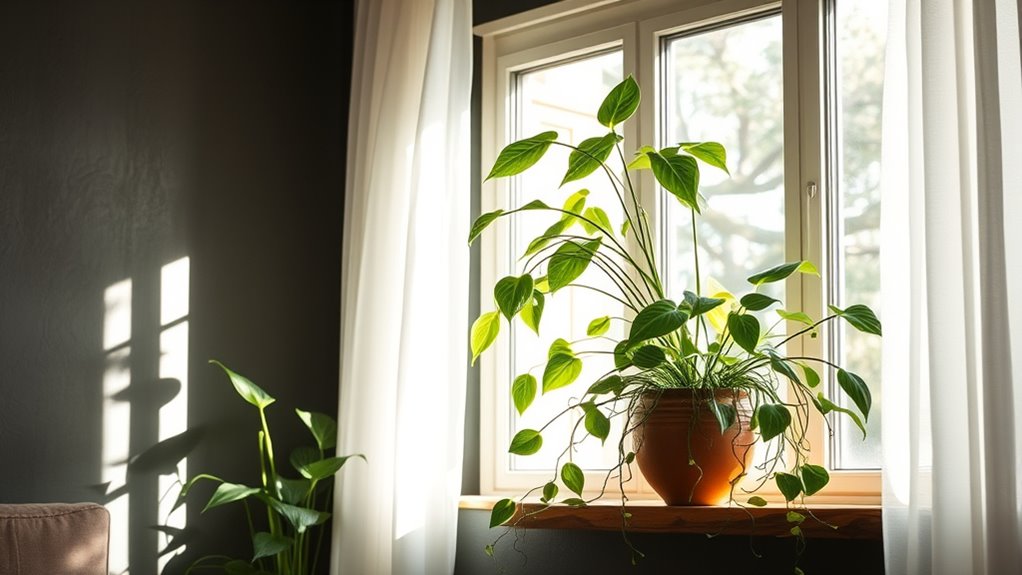
Low light plants thrive in areas where natural sunlight is limited or indirect, making them ideal for various spots around your home. Place them in shaded corners, away from direct sun, such as behind furniture or in north-facing rooms. Bathrooms and kitchens are great options because they often have lower light levels and higher humidity. Shelves, especially those away from windows, are perfect for trailing plants like Pothos and Philodendrons. Tall plants like Snake Plant and Dracaena can fill dim corners or stand beside desks. You can also hang plants in baskets or wall-mounted planters to maximize space in low-light areas. Avoid placing plants in direct sunlight or near heating vents, which can cause stress and damage. Indoor gardening can be a rewarding hobby, especially when choosing plants suited for low-light environments.
Troubleshooting Common Issues With Low Light Plants
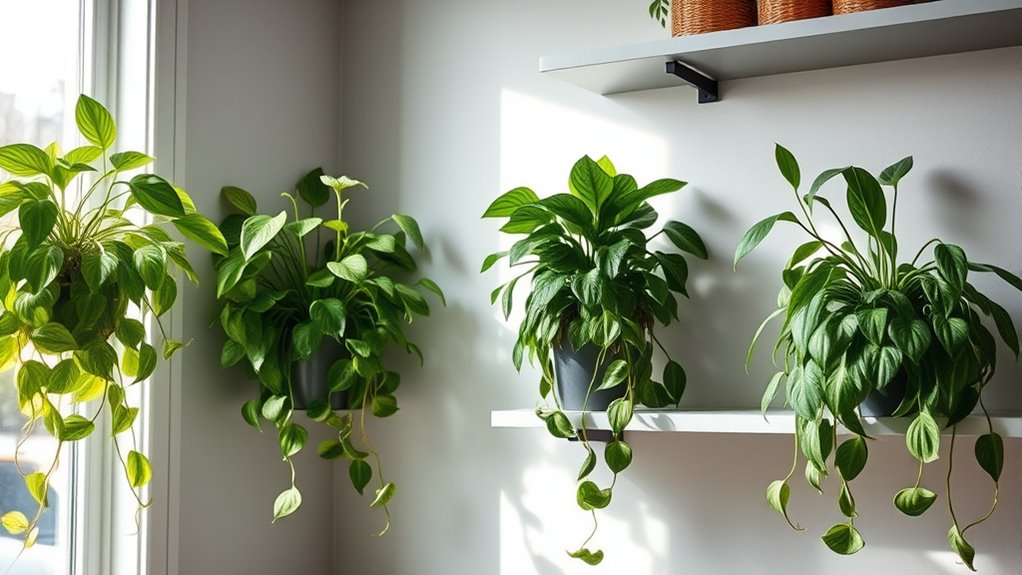
Many common issues with low light plants stem from improper watering, placement, or neglect, which can lead to problems like yellowing leaves, leggy growth, or pest infestations. Overwatering is a frequent mistake; allow the soil to dry out between waterings, especially for succulents like Snake Plant and ZZ Plant. Make certain your plant isn’t in direct sunlight, as too much light can cause leaf scorch. Leggy growth occurs when plants stretch toward available light—rotate your plant regularly or move it to a brighter spot nearby. Discoloration, such as yellow leaves, often signals overwatering, while brown tips may result from dry air or underwatering. Regularly inspect for pests and keep leaves clean to prevent infestations. Proper drainage and soil help prevent root rot, keeping your low light plants healthy. Additionally, understanding Kia Tuning can help improve your vehicle’s performance, similar to how proper care enhances plant health.
Air-Purifying Plants Perfect for Dim Spaces

If you want to improve indoor air quality in dimly lit spaces, choosing the right plants makes a big difference. Certain plants excel at filtering pollutants even without much sunlight. The Peace Lily is a top choice; it’s known for removing formaldehyde and benzene. Snake Plants are incredibly hardy and effectively filter toxins like benzene and formaldehyde. Spider Plants reduce carbon monoxide and xylene levels, and they’re easy to propagate. The ZZ Plant, while less studied, still helps improve air quality by absorbing toxins and releasing oxygen.
- Peace Lily: Elegant white flowers, filters VOCs
- Snake Plant: Tolerant, filters multiple toxins
- Spider Plant: Non-toxic, reduces indoor pollutants
- ZZ Plant: Resilient, enhances air quality
Creative Ways to Display Low Light Indoor Plants
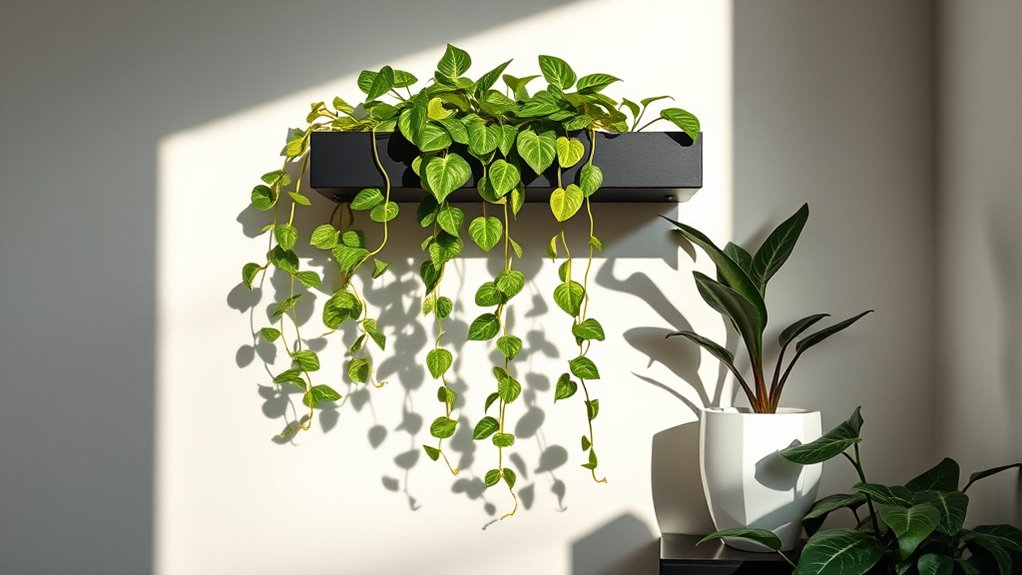
With limited natural light, finding creative ways to display your indoor plants can transform even the dimmest corners into lush, inviting spaces. Use wall-mounted planters or floating shelves to maximize vertical space and keep plants accessible. Hanging baskets or macramé hangers add visual interest while saving surface area. Place plants on tiered stands or stack decorative boxes to create varying heights, drawing attention to different layers. Incorporate plant corners with tall, low-light favorites like Snake Plants or Peace Lilies to add depth. Mix plants with decorative pots or baskets to enhance style. Consider placing plants near reflective surfaces, like mirrors, to bounce light around. Additionally, understanding the light requirements of different plants can help you choose the right spots and ensure their healthy growth. These creative displays make your low-light plants a striking part of your home décor.
Choosing the Right Low Light Plant for Beginners
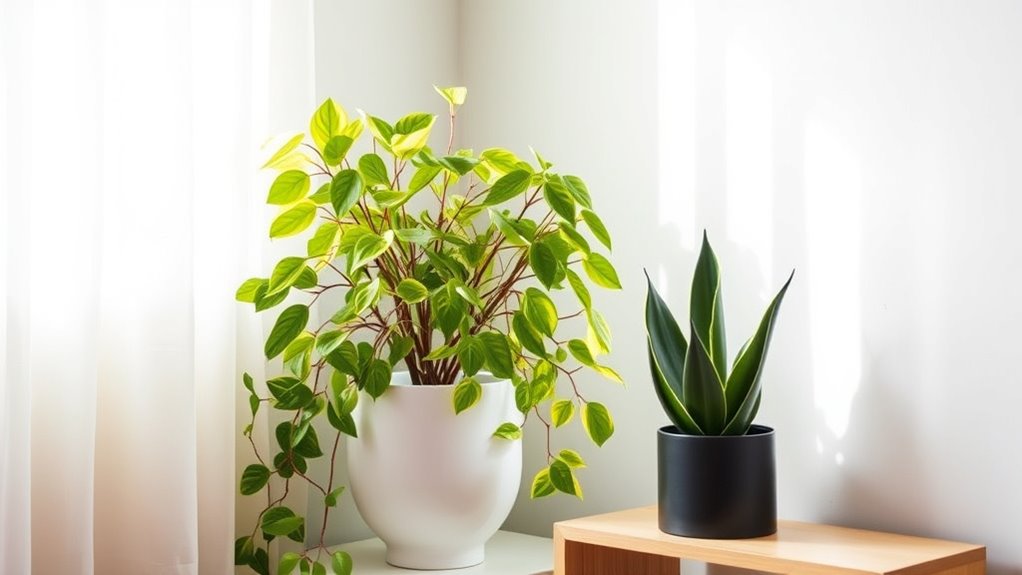
When choosing a low light plant for beginners, consider options that are easy to care for and forgiving of mistakes. Think about where you’ll place the plant to guarantee it gets the right amount of indirect light and avoid spots prone to drafts or temperature fluctuations. Keep in mind common growth challenges, like slow growth or leaf discoloration, and select plants that handle these issues with minimal fuss. Additionally, understanding the importance of plant weight and stability can help ensure your plant remains secure and healthy in your chosen spot.
Easy Maintenance Tips
Choosing the right low light plant for beginners starts with selecting varieties that are known for their resilience and easy care. Once you’ve picked your plant, maintaining it becomes straightforward. Focus on simple routines to keep your plant healthy:
- Water sparingly: Let the soil dry out between waterings to prevent overwatering and root rot.
- Avoid direct sunlight: Keep plants away from bright windows to prevent leaf burn.
- Clean leaves regularly: Wipe with a damp cloth to remove dust and ensure efficient light absorption.
- Use well-draining soil: Prevent water retention and promote healthy roots.
- Select low-light plants with strong resilience, which are better suited for indoor environments with limited natural light.
Following these easy tips helps your low light plants thrive with minimal effort, making indoor gardening enjoyable and stress-free.
Ideal Placement Ideas
Selecting the right spot for your low light indoor plants can make a big difference in their health and appearance. Place them in areas with indirect or filtered light, such as corners, shaded windows, or behind furniture. Avoid direct sunlight, which can scorch their leaves. For beginners, spots like north-facing windows, shaded shelves, or bathroom corners work well. Keep plants away from drafts, heaters, or vents that can cause temperature fluctuations. If natural light is limited, consider placing them near artificial light sources like LED grow lights. Rotate your plants periodically to ensure even light exposure. Remember, these plants thrive in low light, so don’t stress about bright spots. Proper placement enhances their growth, keeps them healthy, and makes your space more inviting.
Common Growth Challenges
Beginners often face growth challenges with low light indoor plants because they may select varieties that require more care or ideal conditions than their space can provide. To succeed, choose hardy plants suited for low light, like Snake Plants or ZZ Plants. Common issues include:
- Leggy growth: Stems stretch toward light; rotate plants or move to slightly brighter spots.
- Slow growth: Typical in low light; avoid over-fertilizing or overwatering.
- Discolored leaves: Yellow indicates overwatering; brown tips suggest dry air or underwatering.
- Pest problems: Regularly inspect for pests like spider mites and treat early with insecticidal soap.
Frequently Asked Questions
How Often Should I Water Low Light Indoor Plants?
You should water your low light indoor plants sparingly, typically every 1 to 2 weeks. Check the soil first; if the top inch feels dry, it’s time to water. Avoid overwatering, as it can cause root rot. Remember, plants like Snake Plant and ZZ Plant need less water, so always tailor your watering schedule to each plant’s needs. Consistent, moderate watering keeps them healthy and thriving.
Can Low Light Plants Survive in Very Dark Corners?
Yes, low light plants can survive in very dark corners, but their growth will slow down considerably. To help them thrive, you should choose hardy varieties like Snake Plants, ZZ Plants, or Peace Lilies, which tolerate minimal light. Keep in mind, they may become leggy or less vibrant over time. Rotate them occasionally to avoid uneven growth, and make sure you don’t overwater, as moisture can cause root issues in low-light spots.
Are Low Light Houseplants Safe for Pets?
You should be cautious with low light houseplants around pets. While some, like the Spider Plant, are non-toxic and safe for animals, others such as Peace Lily and Philodendron can be toxic if ingested. Always check the specific plant‘s safety status before bringing it into your home. Opt for pet-friendly options and place plants out of your pets’ reach to keep everyone safe and healthy.
How Do I Prevent Pests on Low Light Indoor Plants?
To prevent pests on your low light indoor plants, regularly inspect the leaves and stems for signs of pests like spider mites or mealybugs. Keep your plants clean by wiping leaves with a damp cloth, and avoid overwatering, which attracts pests. Quarantine new plants before introducing them. Use insecticidal soap or neem oil as a natural remedy if you notice pests. Proper airflow and healthy watering habits also help keep pests at bay.
Do Low Light Plants Require Fertilization?
Ever wonder if your low light plants need fertilizer? They do, but sparingly. Since these plants grow slowly, over-fertilizing can cause more harm than good. Use a diluted, balanced liquid fertilizer once a month during active growing seasons, like spring and summer. In winter, skip fertilizing altogether. This gentle approach helps maintain their health without encouraging leggy growth or salt buildup, keeping your plants happy and thriving.
Conclusion
With the right low light plants, your home becomes a lush, green sanctuary that whispers life into every corner. Think of these plants as quiet guardians, thriving in the shadows while quietly purifying your air and adding a touch of natural elegance. Embrace their resilience, and watch your indoor jungle flourish, turning dull spaces into vibrant havens. With a little care, your low light plants will grow like stories unfolding in the cozy corners of your home.