The secret to layering lighting like a pro is blending different light sources—ambient, task, and accent—in thoughtful ways. Start by placing fixtures strategically for even coverage and choose bulbs that match the mood you want, such as warm for coziness or cool for clarity. Mix styles and adjust placement to create depth and interest, making your space both functional and inviting. Keep exploring, and you’ll discover how to master this art seamlessly.

Get travel and outdoor gear delivered free — and shop member deals
- Fast, free delivery on millions of items
- Access to Prime Big Deal Days deals on October 6–7
- Prime Video, Amazon Music and more included
Key Takeaways
- Combine ambient, task, and accent lighting to create a balanced, versatile space.
- Strategically place lamps to ensure even illumination and avoid harsh shadows.
- Select bulb temperatures to match desired ambiance—warm for coziness, cool for clarity.
- Use layering techniques by mixing different light sources and styles for visual interest.
- Incorporate dimming and varied heights to enhance flexibility and mood control.
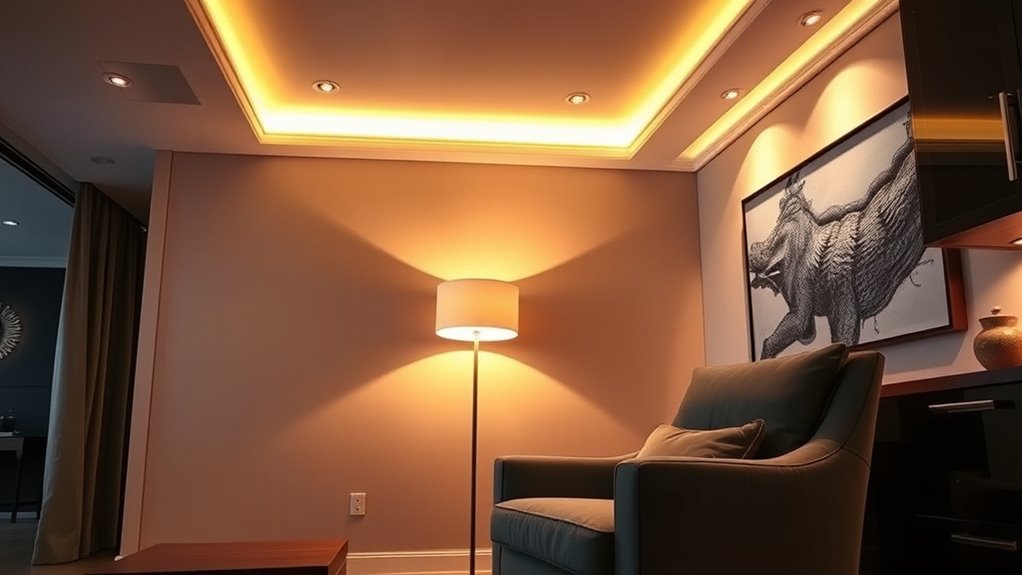
Layering lighting is fundamental for creating a balanced and functional space, and mastering it can transform any room from flat to fabulous. The key lies in understanding how different types of lighting work together to enhance your environment. One of the most important steps is paying attention to lamp placement. You want your lamps to be strategically positioned so that light fills the space evenly without creating harsh shadows or glare. For example, place table lamps on either side of a sofa or bed to provide symmetrical, ambient illumination, and avoid clustering all your light sources in one corner. This distribution helps the eye move naturally around the room, making it feel inviting and well-balanced.
Bulb selection plays a critical role in achieving the right ambiance. You should consider the color temperature of bulbs—whether you want warm, soft light for a cozy feel or cooler, bright light for tasks. Warm bulbs with a color temperature around 2700K to 3000K create a welcoming, relaxed atmosphere, perfect for living rooms and bedrooms. On the other hand, higher Kelvin bulbs (around 4000K to 5000K) are ideal for task lighting in kitchens or workspaces, where clarity and focus are essential. Dimming options can also add flexibility, allowing you to adjust the lighting based on the mood or activity. When selecting bulbs, think about energy efficiency and longevity, opting for LED bulbs that offer both benefits without sacrificing brightness.
The relationship between lamp placement and bulb selection is also essential. For example, a desk lamp with a bright, cool bulb helps you focus while working or reading, whereas a floor lamp with a warm bulb can add a cozy glow to a living area. You don’t want all your bulbs to be identical; instead, mix and match different types and styles to create layers of light that serve distinct functions. Use task lighting for specific activities, such as reading or cooking, and combine it with ambient lighting to fill the room with a gentle glow. Accent lighting, like wall sconces or picture lights, can highlight artwork or architectural features, adding depth and interest. Incorporating layered lighting techniques ensures your space is both practical and visually appealing.
In essence, mastering lamp placement and bulb selection is about thoughtfully combining different light sources to suit your space’s needs. When you do this, you’ll find your room becomes more visually appealing, versatile, and comfortable—exactly what you want from a well-layered lighting scheme.
Frequently Asked Questions
What Are the Best Lighting Brands for Professional Layering?
When it comes to lighting design and fixture selection, you want brands known for quality and versatility. Consider brands like Lutron for smart controls, Philips Hue for customizable options, and WAC Lighting for innovative fixtures. These brands offer a wide range of styles and technologies, making it easier for you to layer ambient, task, and accent lighting seamlessly. Their reliable products help you achieve professional results in your space.
How Do I Balance Ambient, Task, and Accent Lighting?
You might find that achieving perfect balance with lighting fixtures feels like a subtle art. To master this, use design techniques that blend ambient, task, and accent lighting seamlessly. Start with a warm, diffused ambient light, then add task lighting for specific needs, and finish with accent fixtures to highlight features. Adjust these layers as needed, ensuring no single element overwhelms the others, creating a harmonious, inviting space.
What Is the Ideal Color Temperature for Layered Lighting?
For layered lighting, the ideal color temperature depends on your mood and space. Typically, warm lighting with a color temperature around 2700K to 3000K creates a cozy, inviting atmosphere, perfect for living areas. If you want a more energetic vibe, go for higher temperatures around 3500K to 4100K. Balancing warm lighting with cooler tones helps highlight different areas while keeping the space comfortable and visually appealing.
How Can I Control Multiple Lighting Layers Easily?
To control multiple lighting layers easily, you should use lighting automation systems with dimming controls. These allow you to adjust each layer’s brightness effortlessly, creating the perfect ambiance. Set up smart switches or remote controls to manage different zones or light types, so you can switch between presets or customize lighting levels on the fly. This simplifies your lighting management, giving you seamless control over your layered lighting setup.
Are There Eco-Friendly Options for Layered Lighting Solutions?
You can find eco-friendly options for layered lighting solutions by choosing sustainable bulbs like LED or CFL bulbs, which use less energy and last longer. Pair them with eco-friendly fixtures made from recycled or sustainable materials. This way, you decrease your environmental impact while maintaining versatile lighting layers. Always look for certifications like Energy Star to guarantee you’re selecting genuinely sustainable products that support your eco-conscious goals.
Conclusion
Think of your space as a symphony, where each layer of lighting plays a crucial role. When you layer lights thoughtfully, you create a harmonious balance that guides the eye and sets the mood. Like a lighthouse guiding ships safely home, your lighting design illuminates your home’s personality, inviting warmth and comfort. Embrace these techniques, and watch your space transform into a beautifully lit masterpiece, reflecting your style and making every moment feel just right.
Evergreen bestsellers Picks
bestsellers
As an affiliate, we earn on qualifying purchases.