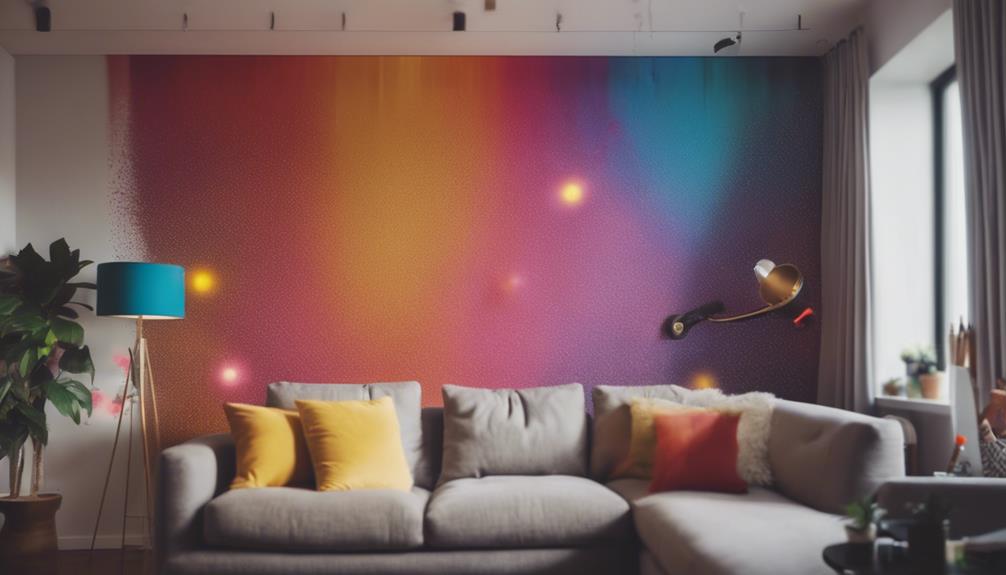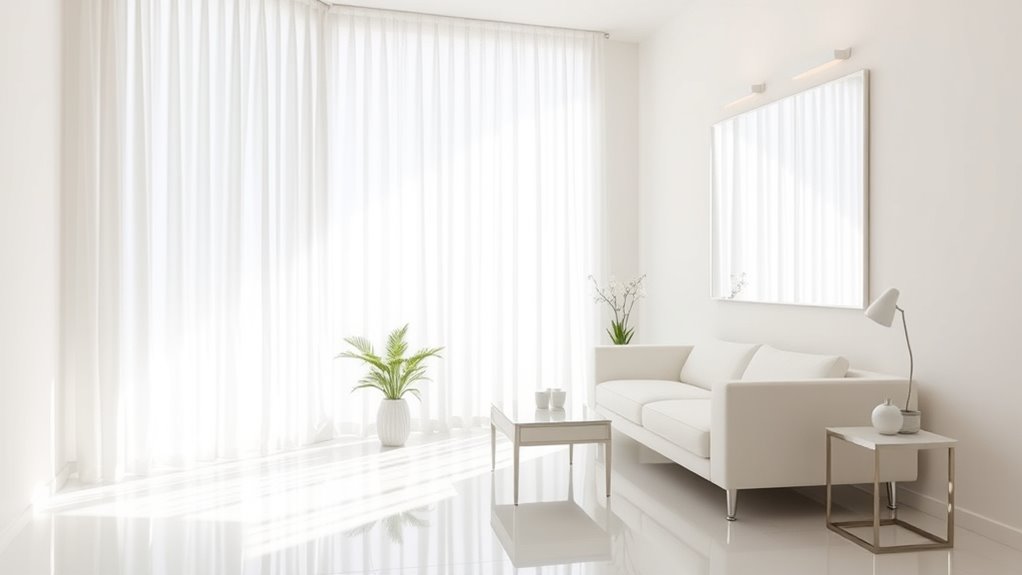

To make your studio feel larger, maximize natural light by keeping windows clear and using sheer curtains. Layer artificial lighting with ambient, task, and accent options to add depth, while choosing slim fixtures and adjustable dimmers for flexibility. Incorporate mirrors and reflective surfaces to bounce light around the space, creating the illusion of more room. Paying attention to light contrast helps features pop without feeling overwhelming. Keep exploring these tips to truly brighten your small space effectively.
Key Takeaways
- Maximize natural light with unobstructed windows and light, sheer curtains to create a sense of openness.
- Layer artificial lighting using ambient, task, and accent fixtures to add depth and dimension.
- Use reflective surfaces like mirrors to bounce light and visually enlarge the space.
- Choose slim, minimalist lighting fixtures and bulbs with high lumen output to avoid clutter.
- Manage contrast carefully to highlight features and maintain a balanced, bright environment.

Have you ever wondered how to make a small space feel brighter and more inviting? The secret often lies in how you use lighting. Proper lighting can transform a cramped studio into an airy, welcoming haven. To do this effectively, you need to focus on maximizing natural illumination while supplementing it with well-placed artificial lighting. Natural light is your best friend in small spaces because it creates a sense of openness and reduces the need for excessive artificial fixtures. If possible, keep your windows unobstructed and use light, sheer curtains that allow sunlight to flow freely. Position your furniture to avoid blocking these light sources, and choose light-colored walls and reflective surfaces that bounce sunlight around the room, amplifying the natural illumination.
But natural light alone isn’t always enough, especially on cloudy days or at night. That’s where artificial lighting steps in to fill the gaps. Instead of relying solely on overhead fixtures, layer your lighting to add depth and dimension. Use a combination of ambient, task, and accent lights. For ambient lighting, opt for recessed or flush-mount ceiling lights that distribute light evenly without cluttering the space. Task lighting, like a sleek desk lamp or under-cabinet lights, helps illuminate specific areas such as your workspace or reading nook. Accent lighting, like small spotlights or LED strips, can highlight artwork or architectural features, making your space feel more dynamic and layered.
The key is to choose fixtures that don’t overpower the room. Slim, minimalist designs work best in small spaces because they don’t add visual bulk. Also, consider using bulbs with a higher lumen output to make your space feel brighter without needing multiple fixtures. Warm white bulbs tend to create a cozy atmosphere, but if you want a more energetic vibe, go for cooler tones. Dimmers are a great addition since they give you control over the light levels, allowing you to adapt the ambiance based on your mood or activity. Keep in mind that well-placed mirrors can reflect both natural and artificial light, further increasing the brightness and creating a sense of spaciousness.
Additionally, understanding the importance of contrast ratio in your lighting setup can significantly influence how spacious your room feels, as higher contrast ratios can make features stand out and add visual depth to the space.
In the end, making a small space feel larger and more inviting is all about smart lighting choices. By balancing natural illumination with thoughtfully planned artificial lighting, you can create a bright, airy environment that feels much more expansive than its actual size. The right lighting setup doesn’t just illuminate—it transforms.

DYNAMIC SAUNAS Barcelona 1- to 2-Person Low EMF FAR Infrared Sauna with Red Light Therapy & Bluetooth Speakers | Personal Indoor Dry Heat Sauna for Home & Gym – Made from Canadian Hemlock
Efficient 360° PureTech Heating: Built with natural Canadian hemlock wood and 6 dynamic low EMF carbon PureTech infrared...
As an affiliate, we earn on qualifying purchases.
Frequently Asked Questions
How Can Natural Light Be Optimized in Small Studios?
To optimize natural light in your small studio, start by choosing window treatments that let in maximum light, like sheer curtains or blinds you can easily adjust. Use light diffusers, such as frosted glass or translucent panels, to soften harsh sunlight and spread it evenly throughout your space. Keep windows unobstructed, and position furniture to reflect light, making your studio feel brighter and more open without sacrificing privacy.
What Lighting Colors Create the Illusion of More Space?
Ever wondered how lighting colors can make your space seem bigger? You should choose lights with a warm or neutral color temperature, as they reflect more natural light and create an open feel. Avoid harsh or overly contrasting colors, which can make a room look cluttered. By using soft, consistent tones and minimal color contrast, you’ll create an illusion of spaciousness and make your studio feel more inviting.
Are There Specific Fixtures That Work Best in Tiny Rooms?
You should choose wall-mounted fixtures and adjustable sconces for tiny rooms because they save space and offer versatile lighting options. Wall-mounted fixtures free up surface area, making the room feel more open, while adjustable sconces let you direct light exactly where it’s needed, enhancing the sense of spaciousness. These fixtures are practical, stylish, and perfect for maximizing small spaces without cluttering them.
How Can Smart Lighting Improve Small Space Ambiance?
Have you wondered if smart lighting really enhances small space ambiance? It does. Smart lighting adapts to your needs, allowing you to adjust brightness and color temperature instantly. You can create cozy, vibrant, or relaxing atmospheres with just a tap or voice command. This flexibility boosts ambiance enhancement, making your tiny space feel more inviting and personalized. You’ll love how smart lighting transforms your environment effortlessly.
What Are Common Lighting Mistakes That Make Small Spaces Feel Cramped?
You often make small spaces feel cramped by relying on overhead glare, which can create harsh shadows and overwhelm the room. Inadequate task lighting leaves corners dim and uninviting, reducing functionality and making the space appear smaller. To avoid this, use layered lighting with softer, well-placed fixtures, and eliminate overly bright overhead lights. This approach helps your space feel open, inviting, and well-balanced.

OUTEXER Far Infrared Sauna Home Sauna Spa Room Canadian Hemlock Wood 1200W Indoor Saunas Low EMF 110V with 7 Color Light and Tempered Glass Door, Room: 35.2 * 27.6 * 61.6Inch
Good materials:This gorgeous sauna is constructed with high-quality Natural Canadian Hemlock wood. A beautiful and durable wood that...
As an affiliate, we earn on qualifying purchases.
Conclusion
By mastering strategic lighting, you can turn your small studio into a space that feels much bigger than it is. Brighten every corner, choose the right fixtures, and embrace natural light to make your space feel open and inviting. Remember, a well-lit room can change everything—it’s the secret sauce that transforms a cramped area into a cozy haven. With these tricks, you’ll be shining brighter than you think, proving that sometimes, the light at the end of the tunnel is right in your space.

KASUE Upgraded 2 Person Sauna Box, Portable Infrared Sauna with 5-Layer Waterproof, 2 Steamers, 2 Folding Chair, 71”x 36”x 49” for Indoor, Outdoor, Gym, Spa, Carbon Black
Extra-Large Space: Unwind in the generous interior of this 2 person sauna (71" x 49" x 36"). The...
As an affiliate, we earn on qualifying purchases.

DYNAMIC SAUNAS Andora 2-Person Low EMF FAR Infrared Sauna with Red Light Therapy - Personal Indoor Dry Heat Wooden Sauna with Bluetooth Speakers for Home & Gym - Made from Canadian Hemlock Wood
Efficient 360° PureTech Heating: Built with natural Canadian hemlock wood and 6 dynamic low EMF carbon PureTech infrared...
As an affiliate, we earn on qualifying purchases.