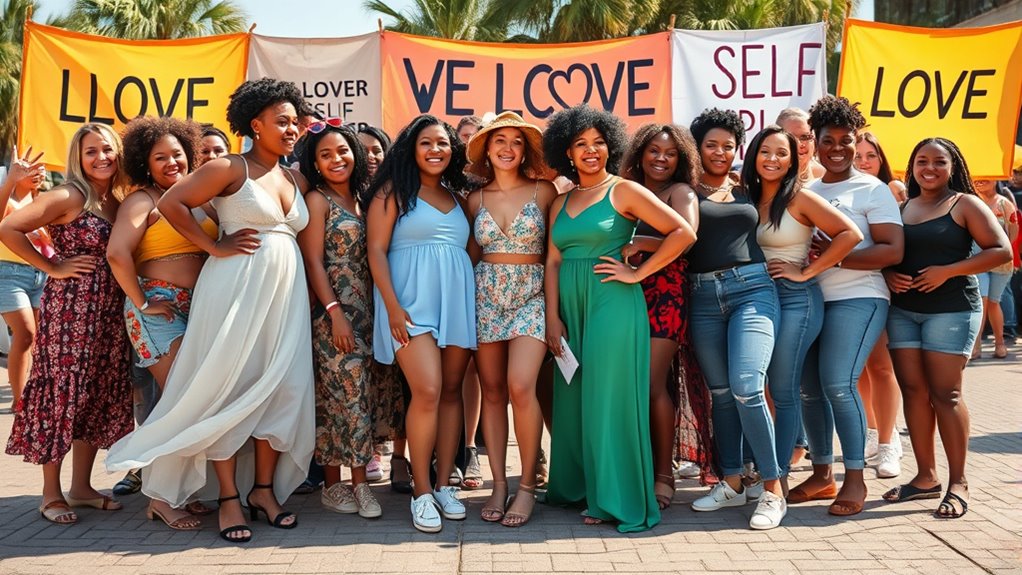

The body positivity movement is transforming how society views beauty by challenging strict standards and promoting self-acceptance for all. It began in the 1960s, grew through social media, and now includes diverse voices and identities, from race to ability. The movement invites you to rethink dieting, embrace holistic well-being, and celebrate your unique body. If you want to understand how these changes are shaping perceptions further, keep exploring the movement’s recent developments.

Get travel and outdoor gear delivered free with Prime
- Fast, free delivery on millions of items
- Prime Video, Amazon Music and more included
- Member-only deals all year
Key Takeaways
- The movement challenges traditional beauty standards by promoting diverse body representations and inclusive narratives.
- Social media platforms amplify body positivity messages, fostering global communities and visibility for marginalized groups.
- Intersectionality ensures the movement addresses race, gender, ability, and sexuality, promoting authentic inclusivity.
- It advocates for holistic well-being, self-love, and intuitive eating, shifting focus from appearance to health and mental resilience.
- Mainstream brands and media increasingly feature diverse bodies, transforming societal perceptions of beauty and acceptance.
Products Worth Considering

Samsonite Freeform Hardside Expandable Carry-On Luggage, Black

Kindle Paperwhite Signature Edition 32GB (2024) – Auto-adjusting front light, wireless charging, weeks battery life – Metallic Jade

GoPro HERO Compact Waterproof 4K Action Camera
As an affiliate, we earn on qualifying purchases.
The Origins and Evolution of Body Positivity

The body positivity movement began in the 1960s as part of the broader fat acceptance movement, aiming to challenge societal beauty standards and combat discrimination against fat people. You see, it started with grassroots activism, like the 1967 “fat-in” protest in Central Park, where people gathered to protest weight discrimination. Soon after, in 1969, the National Association to Advance Fat Acceptance (NAAFA) was founded to fight anti-fat bias. Early on, the movement focused on fat rights and breaking societal norms that favored thinness. It was driven by marginalized groups, including fat, queer Black women, who pushed for respect and visibility. Over decades, the movement evolved to include feminist critiques, body diversity, and health-focused approaches, shaping its ongoing development. Additionally, the movement has increasingly embraced body diversity, promoting acceptance of all shapes and sizes as part of its core principles.
Key Movements and Milestones Over the Decades

You’ve seen how early fat rights activism challenged societal beauty norms and fought discrimination. The rise of social media in the last decade has amplified body positivity messages and created global communities. Milestones like mainstream media recognition have propelled the movement into broader cultural conversations, shaping its ongoing evolution. Additionally, the incorporation of aesthetic home decor principles in promoting body positivity has helped foster inclusive and welcoming environments that celebrate diverse beauty standards.
Early Fat Rights Activism
Early fat rights activism emerged as a response to widespread discrimination and societal stigma against larger bodies. You likely encountered stereotypes or bias, prompting activists to challenge these injustices. The 1967 “fat-in” protest in Central Park marked a pivotal moment, where advocates demanded respect and equal treatment. In 1969, the National Association to Advance Fat Acceptance (NAAFA) was founded, uniting people fighting anti-fat bias. These early efforts focused on ending fat-shaming and redefining beauty standards, often led by marginalized groups like queer Black women. Additionally, the movement emphasized energetic alignment to empower individuals to embrace their bodies and challenge societal norms. Below is a snapshot of key milestones:
| Year | Event |
|---|---|
| 1967 | Fat-in protest in Central Park |
| 1969 | Formation of NAAFA |
| 1980s | Grassroots activism and community building |
| 1990s | Broader inclusion of feminist critiques |
Rise of Social Media
Social media has dramatically transformed the body positivity movement by providing a platform for marginalized voices and fostering community-driven activism. You now have access to diverse stories and perspectives that challenge traditional beauty standards, making the movement more inclusive. Hashtags like #bodypositivity and #effyourbeautystandards create spaces where people share their journeys, celebrate differences, and support one another. Social media also amplifies activist campaigns, helping to hold brands and media accountable. Additionally, the ability to share real-time feedback allows for immediate responses to harmful representations, further empowering advocates. However, it’s a double-edged sword—while visibility increases, so does the risk of superficial portrayals and commercialized content that can dilute radical messages. Still, social platforms empower individuals to shape the conversation, pushing for a broader, more authentic acceptance of all bodies in ways that weren’t possible before.
Mainstream Acceptance Milestones
How did the body positivity movement break into mainstream consciousness? It happened through pivotal moments like the 2010s social media surge, where hashtags like #bodypositivity and #effyourbeautystandards gained millions of followers. Major brands began featuring diverse bodies in their campaigns, signaling a shift in advertising standards. In 2014, the publication of “The Body Is Not an Apology” by Sonya Renee Taylor brought radical acceptance to a wider audience. The 2016 “All Sizes” runway shows and the rise of inclusive fashion labels pushed body diversity into mainstream fashion. Media coverage of influencers and celebrities openly embracing their bodies further normalized acceptance. These milestones marked a turning point, transforming body positivity from a niche activism into a broad cultural conversation about redefining beauty standards for everyone. Additionally, the movement’s emphasis on Personality Traits like confidence and self-love helped solidify its place in contemporary discourse.
Embracing Intersectionality and Diverse Identities

You play an essential role in recognizing that true body positivity includes all identities and experiences. When you prioritize inclusive representation, you help elevate underrepresented voices and challenge societal biases. By embracing intersectionality, you foster a movement that truly reflects the diversity of bodies and lived realities. Additionally, understanding the importance of affiliate disclosures ensures transparency and trust within the movement.
Inclusive Representation Matters
Why does inclusive representation matter so much in the body positivity movement? Because when you see yourself reflected honestly, it validates your experience and fosters genuine acceptance. Representation that includes different sizes, races, genders, ages, and abilities challenges narrow beauty standards and breaks down stereotypes. It also promotes diverse designs that celebrate a broad spectrum of body types and identities. It helps you recognize that beauty isn’t limited to a specific mold but is diverse and multifaceted. When media and communities showcase varied bodies, you’re more likely to feel seen, valued, and empowered. Inclusive representation also amplifies marginalized voices, ensuring the movement’s goals aren’t just superficial but rooted in real, lived experiences. By embracing diversity, the body positivity movement becomes more authentic, impactful, and accessible to everyone seeking to redefine beauty on their own terms.
Addressing Intersectional Marginalization
Inclusive representation is a foundational step toward genuine body acceptance, but addressing intersectional marginalization takes the movement further by recognizing that people’s experiences of body image are shaped by multiple identities. You need to understand that factors like race, gender, ability, and sexuality influence how individuals face body shaming and discrimination. Historically, the movement was led by fat, queer Black women advocating for visibility and respect. Today, many voices remain underrepresented, especially non-binary, transgender, and disabled communities. To truly promote acceptance, you must listen to these diverse experiences and challenge stereotypes that marginalize specific bodies. Embracing intersectionality means creating space for all identities, acknowledging their unique struggles, and ensuring that body positivity isn’t one-size-fits-all but a movement that lifts everyone.
Amplifying Underrepresented Voices
How can the body positivity movement truly be representative if it overlooks the diverse experiences of marginalized groups? Your voice matters in shaping an inclusive conversation. Authentic change requires amplifying voices from all backgrounds, especially those historically unheard. Recognizing intersectionality means embracing varied identities—race, gender, ability, and more—so everyone feels seen and valued. Without this, the movement risks remaining superficial or exclusionary. Here’s a quick look at some underrepresented groups:
| Group | Key Challenges | How You Can Help |
|---|---|---|
| Queer and Trans People | Discrimination, invisibility | Support diverse representation |
| People of Color | Stereotyping, cultural erasure | Elevate their stories and voices |
| Disabled Bodies | Inaccessibility, stigma | Promote accessible, inclusive spaces |
A deeper understanding of intersectionality can help foster empathy and drive meaningful progress in the movement.
Challenging Diet Culture and Promoting Holistic Well-Being

Challenging diet culture requires disrupting the societal norms that equate thinness with worth and health. You’re encouraged to question the idea that weight loss equals success or happiness. Instead, focus on holistic well-being—prioritizing mental, emotional, and physical health over restrictive eating or unrealistic body standards. Embrace intuitive eating, which encourages listening to your body’s needs rather than following fad diets. Recognize that dieting can cause harm, both physically and psychologically, and that sustainable health doesn’t depend on a specific weight. Shift your mindset toward body acceptance, celebrating what your body can do and fostering self-care practices that support overall resilience. By doing so, you challenge harmful norms and promote a healthier, more inclusive approach to well-being.
The Role of Media and Social Platforms in Shaping Perspectives

Media and social platforms play a powerful role in shaping how society perceives body image and acceptance. They amplify diverse stories, challenge stereotypes, and create communities that celebrate all bodies. Platforms like Instagram and TikTok allow you to find images and voices that promote self-love and inclusivity. However, they can also perpetuate unrealistic beauty standards through filters and edited images, making it hard to distinguish genuine acceptance from perfectionism. Below is a quick look at how media influences perspectives:
| Positive Impact | Negative Impact |
|---|---|
| Promotes diverse representation | Reinforces narrow beauty ideals |
| Builds supportive communities | Spreads unattainable standards |
| Encourages self-love and acceptance | Creates comparison and dissatisfaction |
| Highlights marginalized voices | Can dilute radical inclusivity |
Understanding this dual role helps you navigate media critically.
Impacts on Mental Health and Societal Attitudes

The body positivity movement has substantially improved mental health by helping you develop a more compassionate relationship with your body. When you embrace acceptance, you reduce feelings of shame, anxiety, and depression tied to appearance. This shift encourages healthier self-esteem and resilience, allowing you to challenge societal pressures that promote unrealistic beauty standards. As communities grow more inclusive, you’re more likely to find support and validation, which boosts confidence and reduces isolation. Societal attitudes shift when more people speak out against body shaming and discrimination, fostering a culture that values diversity. This change creates a more accepting environment, lessening the mental health toll of body dissatisfaction. Ultimately, body positivity helps you see worth beyond appearance, promoting emotional well-being and a healthier self-image. Recognizing the role of media representation in shaping perceptions is crucial for advancing these positive attitudes.
Frequently Asked Questions
How Has the Movement Addressed Issues of Economic Inequality and Access?
You might notice the movement increasingly highlights economic inequality and access issues by advocating for affordable, inclusive fashion and wellness resources. It pushes brands to offer diverse sizes and price points, making self-love accessible regardless of income. Activists also call for dismantling systemic barriers that prevent marginalized communities from accessing health care, representation, and body-positive spaces, ensuring body acceptance isn’t just a privilege for the wealthy but a universal right.
What Are the Main Challenges in Maintaining Inclusivity Today?
You face the challenge of balancing radical inclusivity with mainstream commercialization. As the movement grows, it risks losing its core message, overshadowed by whitewashed narratives and narrow beauty standards. While social media amplifies diverse voices, it also fosters superficial trends. Maintaining genuine representation of marginalized identities, especially non-binary and disabled bodies, becomes harder amid profit-driven motives. Staying true to the movement’s roots requires vigilance against dilution and superficial acceptance.
How Do Different Cultural Standards Influence Global Body Positivity Efforts?
Different cultural standards greatly influence your global body positivity efforts. In some cultures, curvier bodies are celebrated, making acceptance easier, while others prioritize thinness, creating barriers. You might find that local beauty ideals shape how communities respond to movement messages, sometimes leading to resistance or misinterpretation. Recognize that understanding and respecting these diverse standards helps you foster inclusive conversations, ensuring body positivity resonates across various cultural contexts.
What Role Do Men and Non-Binary Individuals Play in the Movement?
You might be surprised to learn that men and non-binary individuals make up about 30% of body positivity social media content, showing their active role. You can participate by sharing your experiences, challenging stereotypes, and advocating for inclusive representation. Your voice helps broaden the movement beyond women, emphasizing that body acceptance is essential for all genders. Your involvement promotes diversity, fosters community, and pushes society toward a more inclusive definition of beauty.
How Is Body Positivity Adapting to Digital and Virtual Realities?
You see that body positivity adapts to digital and virtual realities through social media platforms where you can share your stories, celebrate diversity, and connect with others worldwide. Hashtags like #bodypositivity foster communities that promote acceptance beyond traditional norms. Virtual events, online workshops, and digital activism also enable you to challenge beauty standards, advocate for marginalized voices, and stay inspired, making inclusivity more accessible and visible in everyday online interactions.
Conclusion
As the body positivity movement continues to evolve, you’re at the forefront of a powerful shift in how society sees beauty. But the true impact lies ahead—will it be enough to dismantle deep-rooted standards and challenge centuries of bias? The next chapter depends on your voice and actions. Stay engaged, stay aware—because the future of true acceptance hinges on what you do next. The conversation is far from over, and the most significant change is still coming.